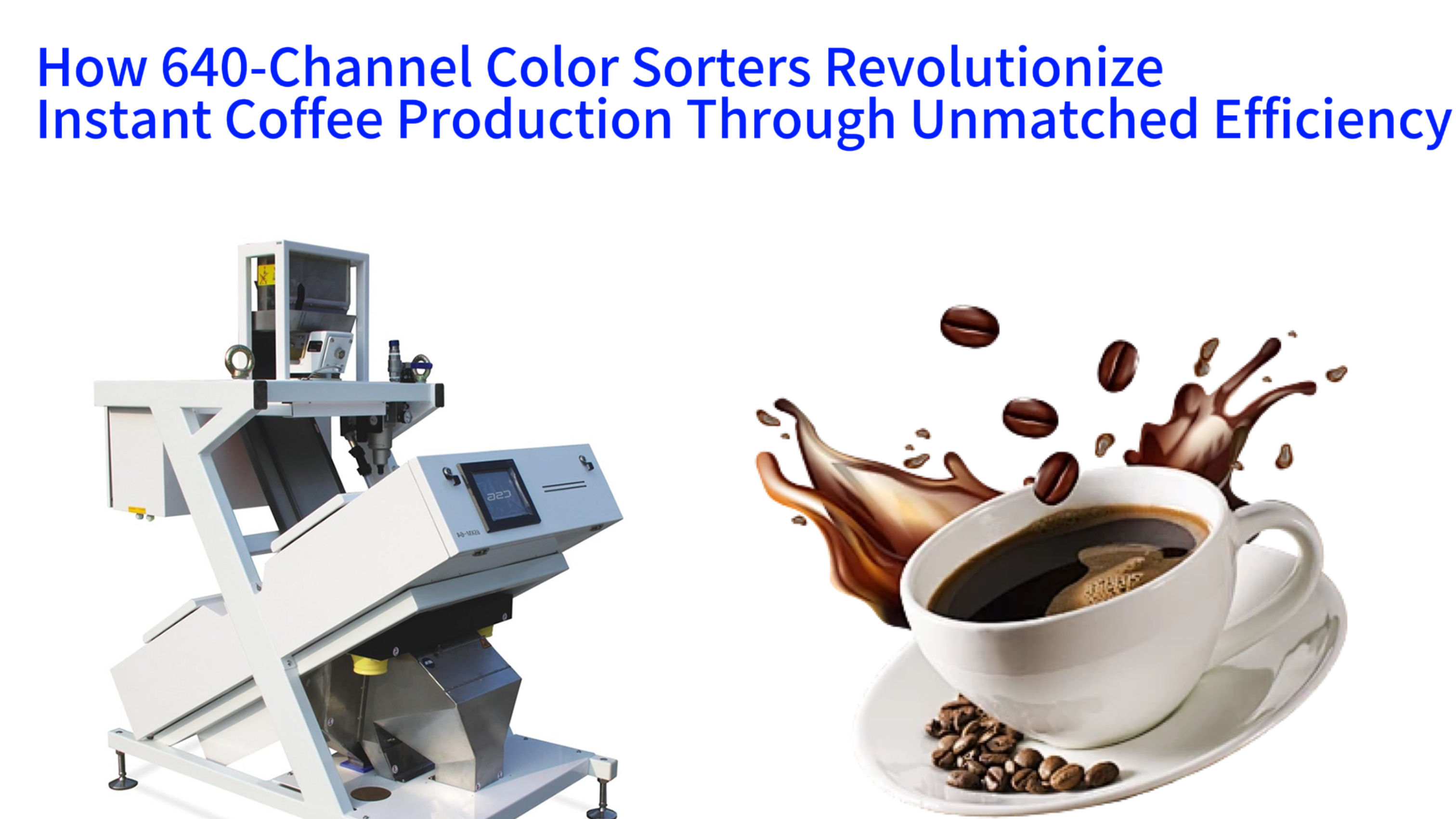
640-Channel Color Sorter Integration in Instant Coffee Production
Raw Bean Reception
Quality Screening Initiation
Final Product Enhancement
Premium Quality Output
In the competitive world of instant coffee manufacturing, raw material screening represents one of the most critical stages determining final product quality and production costs. The introduction of 640-channel color sorting technology has transformed this process, delivering unprecedented efficiency gains that ripple throughout the entire production chain. This comprehensive examination explores how advanced optical sorting technology specifically enhances instant coffee production through superior throughput, accuracy, and operational economics.
Jump to sections: Raw Material Screening Role | System Architecture | Throughput Benefits | Economic Impact | Future Developments
The Fundamental Role of Raw Material Screening in Instant Coffee Quality
Defect Impact on Coffee Quality
Quality Requirements Comparison
| Parameter | Standard Grade | Premium Grade |
|---|---|---|
| Max Defect Concentration | 1.2% | 0.3% |
| Color Uniformity | 92% | 98.5% |
| Foreign Material | 0.5% | 0.05% |
| Flavor Impact Threshold | 5% defective beans | 3% defective beans |
Instant coffee production begins with the careful selection of green coffee beans, where even minor defects can significantly impact the final product's flavor profile and consumer acceptance. Traditional sorting methods often struggle to maintain consistency across large production volumes, creating quality control challenges that directly affect market positioning and brand reputation.
The chemical composition of defective beans differs markedly from high-quality beans, with studies indicating that as little as 3-5% defective beans in a batch can alter flavor characteristics and reduce overall product shelf life. Modern instant coffee manufacturers face increasing pressure to maintain stringent quality standards while managing production costs, creating the perfect environment for advanced sorting technologies to demonstrate their value.
Quality Requirements for Instant Coffee Production
Instant coffee manufacturers establish precise specifications for raw material quality, with particular emphasis on bean color uniformity and absence of physical defects. The extraction process used in instant coffee production amplifies the impact of raw material quality, making consistent screening absolutely essential for maintaining product standards across different production batches and throughout the entire year.
Limitations of Conventional Sorting Methods
Traditional sorting approaches, including manual selection and basic mechanical systems, typically achieve sorting accuracy rates between 85-92% while processing approximately 1,000-1,500 kilograms per hour. These methods frequently miss subtle color variations and smaller defects, creating quality inconsistencies that become apparent only during later production stages or, worse, after the product reaches consumers.
Economic Impact of Raw Material Quality
The financial implications of inadequate sorting extend beyond immediate production concerns, affecting brand equity, customer retention, and market positioning. Industry analysis indicates that poor raw material quality can increase production costs by up to 18% through reduced extraction efficiency, higher energy consumption, and increased product rejection rates at final inspection stages.
Technical Demands of Modern Instant Coffee Production
Contemporary manufacturing facilities operate with increasingly automated production lines that require consistent input quality to maintain optimal efficiency. The integration points between sorting systems and subsequent processing equipment have become more sophisticated, demanding sorting solutions that can provide reliable performance while adapting to varying production requirements and raw material characteristics.
Technical Architecture of 640-Channel Sorting Systems
640-Channel System Component Breakdown
Technical Performance Specifications
| Component | Specification |
|---|---|
| Optical Resolution | >16 million color shades |
| Ejection Response Time | 0.04 milliseconds |
| Processing Capacity | 2.4 million beans/hour |
| Sorting Accuracy | >99.5% |
| Channels Configuration | 640 independent channels |
The 640-channel color sorter represents the current pinnacle of optical sorting technology, incorporating multiple advanced subsystems that work in perfect synchronization to achieve remarkable sorting precision at industrial-scale throughput rates. These systems leverage sophisticated optical principles combined with robust mechanical engineering to deliver performance characteristics previously unattainable in coffee processing applications.
Each of the 640 individual sorting channels operates as an independent detection and ejection unit, working in parallel with other channels to create a comprehensive sorting matrix that examines every bean multiple times from different angles. This multi-layered inspection approach ensures that even the most subtle defects receive adequate attention, significantly reducing the probability of defective beans progressing to subsequent production stages.
Optical Detection Subsystem Design
The heart of the 640-channel system comprises high-resolution CCD cameras capable of detecting minute color variations across the entire visible spectrum. These cameras capture detailed images of each bean as it passes through the detection zone, with specialized lenses ensuring consistent focus and illumination across all inspection points. The optical system can distinguish between more than 16 million color shades, providing the granularity needed to identify subtle defects that might escape less sophisticated systems.
Processing Architecture and Computational Power
Advanced digital signal processing technology forms the computational backbone of these systems, employing specialized algorithms that analyze captured images in real-time to make accurate sorting decisions. The processing subsystem must handle enormous data volumes, with typical systems analyzing approximately 2.4 million individual beans per hour while maintaining sorting accuracy exceeding 99.5% for most common defect types.
Precision Ejection Mechanism Engineering
The physical removal of defective beans represents one of the most technically challenging aspects of high-speed sorting. The 640-channel system employs precisely calibrated air ejection valves that can activate within 0.04 milliseconds of defect detection, creating focused air pulses that remove individual defective beans without disturbing adjacent acceptable product. This precision ensures maximum product recovery while maintaining the highest quality standards.
System Integration and Control Infrastructure
Modern sorting systems function as integrated components within broader production environments, requiring sophisticated control and communication capabilities. The system architecture includes comprehensive monitoring and reporting functions that provide production managers with real-time performance data, quality metrics, and operational statistics essential for maintaining optimal production efficiency and quality control.
Throughput Advantages in Industrial-Scale Processing
Throughput Comparison: Channel Configurations
Production Line Economic Impact
| Metric | 256-Channel System | 640-Channel System | Improvement |
|---|---|---|---|
| Processing Rate (kg/hour) | 1,500 | 3,500 | 133% |
| Operational Cost ($/ton) | 85 | 50 | 41% |
| Required Units per Facility | 4 | 2 | 50% reduction |
| Floor Space Requirement | 100m² | 50m² | 50% reduction |
The transition from conventional sorting systems to 640-channel technology delivers the most immediate and measurable benefits in processing capacity, with typical installations achieving throughput increases of 160-220% compared to 256-channel systems previously considered industry-standard. This substantial capacity improvement directly addresses one of the primary constraints in instant coffee production – the ability to process sufficient raw material volumes to meet production targets without compromising quality standards.
Industrial-scale instant coffee facilities typically operate continuous production cycles spanning multiple shifts, with raw material processing representing a potential bottleneck that can limit overall plant capacity. The implementation of 640-channel sorting technology effectively eliminates this constraint, enabling facilities to process in excess of 3,500 kilograms per hour while maintaining sorting accuracy that meets or exceeds international quality standards for premium instant coffee products.
Quantitative Throughput Measurements
Independent performance verification demonstrates that 640-channel systems consistently achieve processing rates between 3,200-3,800 kilograms per hour under standard operating conditions, with specific performance varying based on raw material characteristics and defect concentration. This represents a significant advancement over previous generation systems, which typically maxed out at approximately 1,400-1,600 kilograms per hour while maintaining comparable accuracy levels.
Impact on Production Line Economics
The substantial throughput improvement directly influences production economics through multiple mechanisms, including reduced capital equipment requirements, lower operational costs, and improved facility utilization. Facilities implementing 640-channel technology typically achieve a 35-45% reduction in sorting-related operational costs per ton of processed coffee, creating a compelling economic case for technology adoption even without considering quality improvements.
Scalability for Future Production Requirements
The modular architecture of 640-channel systems provides inherent scalability that supports future production expansion without requiring complete system replacement. Production facilities can incrementally add capacity by installing additional sorting units while maintaining consistent quality standards and operational procedures, creating a flexible infrastructure that adapts to evolving market demands and production requirements.
Operational Flexibility and Adaptability
Modern instant coffee manufacturers frequently process multiple coffee varieties and cater to diverse market segments with different quality requirements. The 640-channel systems provide the operational flexibility to quickly adjust sorting parameters for different product specifications, enabling manufacturers to optimize sorting efficiency for each specific production run without sacrificing throughput or requiring extended changeover periods.
Accuracy and Selectivity in Defect Identification
Defect Detection Accuracy by System Type
Defect Type Detection Performance
| Defect Type | Conventional Systems | 640-Channel Systems | False Rejection Rate |
|---|---|---|---|
| Discolored Beans | 92% | 99.6% | 0.4% |
| Insect-Damaged | 88% | 99.2% | 0.3% |
| Foreign Material | 95% | 99.8% | 0.2% |
| Mold Contamination | 85% | 99.0% | 0.5% |
The remarkable processing speed of 640-channel systems would provide limited value without corresponding advances in sorting accuracy and defect detection capabilities. Contemporary systems achieve unprecedented sorting precision through the combination of advanced optical technology, sophisticated image processing algorithms, and precision ejection mechanisms that work in perfect synchronization to identify and remove even the most challenging defect types.
Industry studies consistently demonstrate that 640-channel systems reduce defective bean concentration in sorted output to less than 0.3% across most common defect categories, including discolored beans, insect-damaged beans, and foreign material contamination. This exceptional sorting performance directly translates to improved product quality, enhanced production efficiency, and reduced waste throughout subsequent processing stages.
Detection Capabilities for Critical Defect Types
The system's sophisticated optical subsystem can reliably identify multiple defect categories that commonly affect coffee quality, including color variations, surface defects, and size abnormalities. The technology demonstrates particular effectiveness in detecting subtle color differences indicative of early-stage fermentation or mold development – defects that often escape detection in lower-resolution systems but significantly impact final product quality.
Advanced Algorithm Development
The image processing algorithms employed in modern sorting systems have evolved significantly through machine learning techniques, with current-generation systems capable of recognizing complex defect patterns that might not be explicitly programmed. This adaptive capability enables the system to maintain high accuracy even when presented with new defect types or variations in raw material characteristics, providing robust performance across diverse production scenarios.
Minimizing False Rejection Rates
Maintaining high product recovery rates represents an equally important aspect of sorting efficiency, with advanced systems achieving acceptable bean retention rates exceeding 99.2% under standard operating conditions. This careful balance between defect removal and product preservation directly impacts production economics, as excessive rejection of acceptable product can significantly increase raw material costs and reduce overall production yield.
Consistency Across Production Cycles
Unlike human sorting operations that experience performance variations due to fatigue, distraction, or environmental factors, automated systems deliver consistent sorting performance throughout extended production runs. This consistency ensures uniform product quality across different production batches and throughout entire shifts, eliminating quality variations that can complicate subsequent processing stages or affect final product characteristics.
Integration with Modern Instant Coffee Production Lines
Production Line Integration Architecture
Data Collection & Reporting Capabilities
| Data Category | Metrics Tracked | Reporting Frequency |
|---|---|---|
| Performance | Throughput, efficiency, uptime | Real-time |
| Quality | Defect rates, rejection analysis | Batch-based |
| Maintenance | Component health, calibration status | Daily |
| Operational | Energy usage, material efficiency | Shift-based |
The successful implementation of advanced sorting technology requires careful consideration of integration points with existing production equipment and processes. Modern 640-channel systems incorporate multiple features specifically designed to simplify integration while maximizing the operational benefits throughout the entire production chain, from raw material reception through final packaging.
Contemporary instant coffee production facilities typically employ highly automated processing lines where each component must function as part of a cohesive system. The 640-channel sorters include comprehensive communication capabilities that enable seamless data exchange with upstream and downstream equipment, creating an integrated production environment where each component operates with full awareness of overall system status and production requirements.
Material Handling Interface Design
The physical interface between sorting systems and adjacent equipment represents a critical integration consideration, with improper design potentially creating bottlenecks that negate the sorting system's capacity advantages. Modern systems include optimized material handling interfaces that ensure smooth product flow both into and out of the sorting chamber, maintaining optimal processing conditions while minimizing product damage or degradation.
Control System Integration Architecture
Advanced sorting systems employ sophisticated control architectures that support multiple integration protocols, enabling seamless communication with facility management systems, production monitoring software, and quality control databases. This comprehensive integration capability provides production managers with complete visibility into sorting performance and production metrics while enabling centralized control of all production line components.
Data Collection and Reporting Capabilities
The comprehensive data generated during sorting operations represents a valuable resource for production optimization and quality management. Modern systems capture detailed information regarding defect rates, throughput performance, and system efficiency, providing the quantitative foundation for continuous improvement initiatives and strategic production planning. This data-driven approach enables manufacturers to identify trends, predict maintenance requirements, and optimize overall production efficiency.
Operational Workflow Considerations
The implementation of high-speed sorting technology frequently necessitates adjustments to established operational procedures and workflow patterns. Successful integration requires careful planning regarding material flow, staffing assignments, and quality control protocols to ensure that the full benefits of advanced sorting technology are realized throughout the production environment rather than being limited to the sorting operation itself.
Economic Analysis and Return on Investment
ROI Timeline & Cost-Benefit Analysis
Economic Benefits Breakdown
| Benefit Category | Annual Value | Percentage of Total |
|---|---|---|
| Increased Throughput | $240,000 | 40% |
| Labor Cost Reduction | $150,000 | 25% |
| Quality Premium | $180,000 | 30% |
| Waste Reduction | $30,000 | 5% |
| Total Annual Benefit | $600,000 | 100% |
The substantial capital investment required for advanced sorting technology necessitates careful economic analysis to validate the financial viability of implementation. Comprehensive evaluation must consider both quantifiable financial benefits and strategic advantages that might not immediately translate to direct cost savings but significantly influence long-term competitiveness and market positioning.
Industry data indicates that well-executed implementations of 640-channel sorting technology typically achieve complete return on investment within 14-22 months of operation, with specific timelines varying based on production volume, raw material costs, and product pricing structure. The most significant financial benefits typically derive from increased production capacity, improved product recovery, and reduced labor requirements, though secondary benefits frequently prove equally valuable over the equipment's operational lifespan.
Direct Cost Reduction Mechanisms
The implementation of advanced sorting technology generates direct cost savings through multiple mechanisms, including reduced manual sorting labor, decreased raw material waste, and lower energy consumption per unit of processed product. Facilities typically report overall sorting-related cost reductions of 30-40% following implementation, with specific savings varying based on previous technology utilization and operational efficiency.
Quality-Based Economic Advantages
The consistent high quality achieved through advanced sorting frequently enables manufacturers to access premium market segments with corresponding price advantages. Additionally, reduced product rejection at later production stages and decreased customer returns contribute significantly to overall economic benefits, though these advantages often prove more challenging to quantify during initial investment analysis.
Operational Flexibility and Strategic Positioning
The capability to quickly adapt to changing raw material characteristics or quality requirements provides manufacturers with strategic flexibility that transcends immediate financial considerations. This adaptability enables producers to respond effectively to market opportunities, supply chain variations, and evolving customer expectations, creating competitive advantages that extend beyond direct cost reduction.
Lifecycle Cost Analysis Considerations
Comprehensive economic evaluation must extend beyond initial acquisition costs to consider the complete lifecycle expenses associated with equipment operation, including maintenance requirements, spare parts consumption, and potential productivity losses during service intervals. Advanced sorting systems typically demonstrate favorable lifecycle economics compared to conventional alternatives, though these advantages become apparent only through extended operational periods.
Future Development Trends in Coffee Sorting Technology
Future Technology Capability Comparison
Technology Development Timeline
| Technology | Current Status | Commercialization | Industry Adoption |
|---|---|---|---|
| Hyperspectral Imaging | R&D | 2025-2026 | 2027+ |
| AI Self-Optimization | Limited Deployment | 2024 | 2025-2026 |
| Integrated Industry 4.0 | Emerging | 2024-2025 | 2026+ |
| Sustainable Systems | Development | 2025 | 2026-2027 |
The rapid pace of technological advancement suggests that current sorting capabilities represent merely an intermediate stage in the ongoing evolution of coffee processing technology. Emerging developments across multiple technical domains promise to deliver even greater efficiency, accuracy, and operational flexibility in future sorting systems, continuing the trend of performance improvement that has characterized the industry in recent decades.
Research initiatives currently underway at leading technical institutions and corporate laboratories focus on multiple aspects of sorting technology, with particular emphasis on enhanced detection capabilities, improved processing algorithms, and reduced operational costs. These developments will likely enable even more sophisticated sorting decisions based on characteristics beyond simple color differentiation, potentially including chemical composition, density variations, and structural integrity assessment.
Advanced Sensing Technology Integration
Future sorting systems will likely incorporate additional sensing modalities beyond conventional optical imaging, including hyperspectral imaging, laser scanning, and advanced x-ray technologies. These enhanced detection capabilities will enable identification of defect types currently undetectable through color analysis alone, potentially including internal defects, moisture content variations, and early-stage contamination that affects product safety rather than merely visual characteristics.
Artificial Intelligence and Machine Learning Applications
The application of advanced artificial intelligence techniques represents perhaps the most promising development direction for sorting technology, with potential to dramatically improve sorting accuracy while reducing system configuration requirements. Self-optimizing systems capable of adapting to varying raw material characteristics without manual intervention could significantly reduce operational complexity while maintaining optimal performance across diverse production scenarios.
Sustainability and Environmental Considerations
Increasing emphasis on environmental responsibility and sustainable manufacturing practices will likely influence future sorting system design, with particular focus on energy efficiency, material utilization, and waste reduction. Emerging technologies that enable more precise sorting decisions directly contribute to sustainability objectives by minimizing product waste and reducing the environmental impact associated with rejected material disposal.
Integration with Industry 4.0 Manufacturing Concepts
The ongoing evolution toward fully digitalized production environments will increasingly incorporate sorting systems as integral components of smart manufacturing infrastructure. Future systems will feature enhanced connectivity, comprehensive data analytics capabilities, and sophisticated interfaces with other production equipment, creating fully integrated manufacturing ecosystems where each component operates with complete awareness of overall system status and production objectives.