Aflatoxin Detection Process Flow
Optical Scanning
Multispectral imaging captures peanut characteristics
AI Analysis
Advanced algorithms identify contamination patterns
Contamination Detection
Aflatoxin presence is identified with high accuracy
Defective Removal
Contaminated peanuts are separated from the product stream
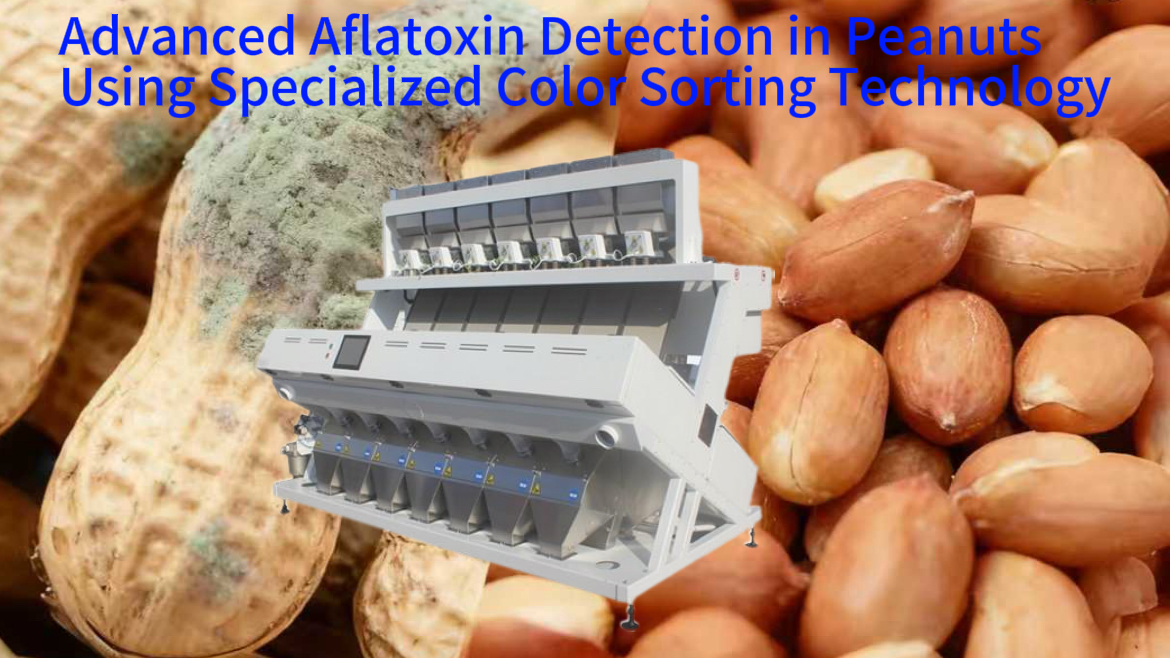
Modern food processing facilities increasingly rely on sophisticated optical sorting systems to address critical safety challenges. The detection and removal of aflatoxin-contaminated peanuts represents a significant technological advancement in food safety management. These specialized sorting machines employ multispectral imaging and artificial intelligence to identify peanuts with potential toxin contamination that would otherwise escape visual inspection. The integration of advanced recognition technologies has transformed quality control processes within the peanut industry, enabling processors to meet stringent international safety standards. This comprehensive approach to contamination detection ensures consistent product quality while protecting consumer health. The technological evolution in color sorting equipment has established new benchmarks for food safety protocols across global supply chains.
The Critical Challenge of Aflatoxin Contamination in Peanuts
Global Regulatory Standards for Aflatoxin Limits (µg/kg)
Comparison of maximum allowable aflatoxin levels across major markets
Aflatoxin contamination poses substantial risks to food safety and public health due to the potent carcinogenic properties of these fungal metabolites. These toxins develop when Aspergillus fungi colonize peanut crops under specific environmental conditions, particularly during periods of high humidity and temperature stress. The stable chemical structure of aflatoxins enables them to persist through various processing stages, making early detection essential for effective risk management. Regulatory agencies worldwide have established strict maximum limits for aflatoxin concentrations in food products, typically mandating levels below 20 micrograms per kilogram for total aflatoxins. These regulatory requirements have driven technological innovation in detection methodologies, with optical sorting emerging as a crucial intervention point. The economic implications of contamination events extend beyond immediate product losses to encompass potential market restrictions and brand reputation damage.
Understanding Aflatoxin Properties and Health Implications
Aflatoxins represent a group of closely related mycotoxins produced primarily by Aspergillus flavus and Aspergillus parasiticus fungi. These compounds demonstrate remarkable thermal stability and can survive most conventional food processing treatments, presenting persistent challenges for food manufacturers. Chronic exposure to aflatoxin-contaminated foods has been linked to various health conditions including liver cancer, immune suppression, and impaired child development. The International Agency for Research on Cancer has classified aflatoxins as Group 1 carcinogens, confirming their demonstrated carcinogenicity in humans. This classification underscores the importance of implementing effective control measures throughout the food production chain.
Environmental Factors Influencing Aflatoxin Development
Climatic conditions play a decisive role in aflatoxin contamination, with drought stress followed by high humidity periods creating ideal circumstances for fungal growth and toxin production. Improper post-harvest handling and storage practices significantly contribute to contamination risks, particularly when moisture levels exceed safe thresholds. The changing global climate patterns have introduced new challenges, with previously unaffected regions now experiencing conditions conducive to aflatoxin development. Agricultural management practices including crop rotation, irrigation management, and timely harvesting can mitigate but not eliminate contamination risks, necessitating robust detection systems at processing facilities.
Global Regulatory Standards and Compliance Requirements
International regulatory frameworks governing aflatoxin limits continue to evolve, with major markets including the European Union, United States, and Japan maintaining particularly stringent standards. The European Union's regulatory framework establishes maximum levels of 4 micrograms per kilogram for aflatoxin B1 in peanuts intended for direct human consumption. These regulatory differences create complex compliance challenges for international food traders, requiring sophisticated quality assurance systems. Documentation of compliance has become increasingly important, with many buyers requiring verification through certified testing protocols and traceability systems.
Economic Consequences of Aflatoxin Contamination
The global economic impact of aflatoxin contamination extends to billions of dollars annually through crop losses, reduced livestock productivity, and human health costs. Individual processing facilities face direct financial consequences when contamination events trigger product recalls or import rejections. Market access limitations represent significant indirect costs, with many premium markets becoming inaccessible to producers with inconsistent quality control records. Reputational damage from contamination incidents can have long-term commercial implications, affecting customer trust and brand equity across product portfolios.
Fundamental Principles of Peanut Color Sorting Technology
Color Sorting Technology Workflow
Step-by-step process of peanut inspection and sorting
Modern peanut color sorters operate through integrated systems combining optical sensors, processing units, and ejection mechanisms to achieve precise separation. These machines examine individual peanut kernels as they pass through an inspection zone, capturing detailed visual information across multiple spectral bands. The core components include high-resolution cameras, specialized lighting systems, and sophisticated processing algorithms that analyze captured images in real-time. This technological foundation enables the detection of subtle visual defects and contamination indicators that human inspectors would likely miss. The continuous operation of these systems allows processing volumes exceeding several tons per hour while maintaining consistent quality standards. The integration of these technologies has revolutionized quality control processes in peanut processing facilities worldwide.
Optical System Configuration and Imaging Capabilities
Advanced color sorting machines utilize high-resolution CCD or CMOS sensors capable of capturing detailed images of each peanut kernel at rapid processing speeds. These optical systems typically operate with resolutions exceeding 5 megapixels, enabling detection of minute surface irregularities and color variations. The integration of multiple light sources including visible spectrum, near-infrared, and ultraviolet illumination enhances detection capabilities for various contamination types. Specialized lens systems maintain consistent focus across the entire inspection area, ensuring uniform image quality regardless of product position. The optical path is engineered to minimize distortions and aberrations that could compromise detection accuracy during high-speed operation.
Image Processing Algorithms and Defect Recognition
Sophisticated algorithms analyze captured images to identify defective peanuts based on predefined quality parameters and learned patterns. These processing systems employ neural network architectures trained on extensive image libraries containing examples of both acceptable and contaminated products. The real-time analysis occurs within milliseconds, allowing the system to make ejection decisions before peanuts exit the inspection chamber. Continuous algorithm optimization occurs through machine learning processes that incorporate new data from operational experience. The system's discrimination capabilities extend beyond simple color differences to include texture analysis, shape recognition, and spatial pattern identification.
High-Speed Ejection Mechanism Operation
Precision air valve systems create targeted air bursts that remove defective peanuts from the product stream without disrupting the flow of acceptable product. These ejection systems demonstrate response times measured in microseconds, achieving precise timing despite high product velocities. The compressed air supply requires careful conditioning to ensure consistent pressure and moisture levels, maintaining ejection accuracy throughout extended operation periods. Valve design innovations have significantly increased operational lifetimes, with modern systems rated for billions of actuation cycles. The strategic positioning of ejection nozzles maximizes removal efficiency while minimizing compressed air consumption. For detailed technical specifications, refer to Technical Information of Color Sorter.
System Integration and Operational Control
Centralized control systems coordinate all sorting machine functions through intuitive interfaces that enable operators to adjust parameters for different product types. These control platforms provide comprehensive monitoring capabilities, tracking performance metrics including throughput rates, ejection percentages, and quality outcomes. Modern systems incorporate network connectivity for remote monitoring and data collection, facilitating continuous improvement through operational analytics. The integration with upstream and downstream equipment creates seamless processing lines that optimize overall system efficiency. Automated calibration routines maintain consistent performance despite environmental variations or component wear over time.
Specialized Recognition Technologies for Aflatoxin Detection
Aflatoxin Detection Technology Comparison
Comparative performance of different aflatoxin detection technologies
The identification of aflatoxin contamination requires advanced sensing technologies that exceed conventional color sorting capabilities. Multispectral imaging systems capture visual information across specific wavelength bands that reveal contamination indicators invisible to standard RGB cameras. These specialized systems analyze spectral signatures associated with aflatoxin presence, detecting subtle chemical changes in peanut tissues. The integration of hyperspectral imaging further enhances detection sensitivity by examining narrow, contiguous spectral bands throughout the visible and near-infrared ranges. Artificial intelligence algorithms process this spectral data to identify patterns correlated with aflatoxin contamination, continuously improving recognition accuracy through machine learning. This technological approach represents a significant advancement beyond traditional sorting methods that relied primarily on visible defect identification.
Multispectral and Hyperspectral Imaging Applications
Multispectral imaging systems employed in advanced sorting platforms typically operate across 5-20 discrete wavelength bands selected specifically for aflatoxin detection. These systems capture spectral reflectance data at key absorption wavelengths where aflatoxin-contaminated tissues demonstrate distinct signatures. Hyperspectral imaging extends this capability by collecting spectral information across hundreds of narrow adjacent bands, creating detailed spectral profiles for each inspected point. The resulting data cubes contain both spatial and spectral information, enabling precise localization of contamination within individual kernels. Computational analysis of these spectral patterns identifies aflatoxin presence through characteristic absorption features that develop as fungal metabolites interact with peanut tissues.
Artificial Intelligence and Machine Learning Implementation
Deep learning architectures process complex spectral data to identify subtle patterns indicative of aflatoxin contamination at various concentration levels. These neural networks train on extensive datasets containing spectral profiles of peanuts with laboratory-confirmed aflatoxin concentrations. The training process enables the system to recognize contamination patterns that may not be explicitly programmed, adapting to natural variations in peanut appearance and growing conditions. Continuous learning mechanisms incorporate new data from routine operation, progressively enhancing detection capabilities over time. The system's decision-making process evaluates multiple contamination indicators simultaneously, reducing false positives while maintaining high sensitivity for genuine contamination events.
Real-Time Processing Architecture and Computational Requirements
Field-programmable gate arrays (FPGAs) provide the computational power necessary for real-time analysis of complex spectral data at high processing speeds. These specialized processors execute parallel computations that would overwhelm conventional central processing units, enabling millisecond-level decision making. The system architecture balances processing speed with analytical depth, employing optimized algorithms that maintain detection accuracy without compromising throughput. Distributed processing approaches allocate specific analytical tasks to dedicated processing units, preventing computational bottlenecks during high-volume operation. The integration of these advanced computing technologies has enabled detection capabilities that were previously limited to laboratory environments.
Sensor Fusion and Multi-Method Verification
Advanced sorting platforms combine multiple sensing technologies to cross-verify detection results and enhance overall system reliability. The integration of ultraviolet-induced fluorescence detection provides secondary confirmation for aflatoxin identification, as certain fungal metabolites exhibit characteristic fluorescence patterns. Laser-induced breakdown spectroscopy offers elemental analysis capabilities that can indicate contamination through changes in mineral composition. These complementary technologies create redundant detection pathways that improve system robustness against false positives from individual sensing methods. Data fusion algorithms synthesize information from all sensing modalities to reach consensus decisions regarding contamination status, significantly enhancing detection certainty.
Performance Advantages and Operational Benefits
Performance Metrics of Advanced Sorting Systems
Key performance indicators for modern aflatoxin detection systems
The implementation of specialized aflatoxin detection systems delivers measurable improvements in product safety, operational efficiency, and economic performance. Modern sorting machines achieve aflatoxin detection rates exceeding 95% while maintaining false rejection rates below 5%, representing a substantial advancement over manual inspection methods. This detection performance enables processors to consistently meet the most stringent international regulatory standards for aflatoxin limits in peanut products. The automation of contamination detection reduces labor requirements by approximately 70% compared to manual sorting operations, while simultaneously improving consistency and documentation capabilities. These systems typically process between 2-4 metric tons per hour depending on configuration and product characteristics, providing scalability for operations of various sizes. For industrial-scale applications, consider Industrial Color Sorter solutions.
Detection Accuracy and Process Efficiency Metrics
Comprehensive performance validation demonstrates that advanced sorting systems correctly identify aflatoxin-contaminated kernels with sensitivity rates between 95-98% under typical operating conditions. The specificity of these systems, measured by their ability to correctly retain uncontaminated product, generally exceeds 96%, minimizing economic losses from unnecessary rejections. Processing speeds ranging from 2,000 to 4,000 kilograms per hour enable integration with high-volume production lines without creating bottlenecks. The consistent operation of these systems maintains detection performance across extended production runs, with performance variations of less than 2% over 8-hour operating periods. These operational characteristics represent significant advancements over previous generation equipment and manual inspection methods.
Economic Optimization and Resource Utilization
The automation of aflatoxin detection generates direct labor cost savings while simultaneously increasing throughput and product recovery rates. Modern systems demonstrate electrical power consumption between 3-6 kilowatt-hours per ton processed, representing efficient utilization of energy resources compared to alternative detection methodologies. The reduction in product loss through improved sorting accuracy typically delivers payback periods of 12-24 months for capital investment in advanced sorting technology. Operational cost savings extend beyond direct labor reduction to include decreased costs associated with product recalls, regulatory compliance, and quality management. These economic benefits accumulate throughout the equipment lifecycle, generating substantial return on investment for processing facilities.
Regulatory Compliance and Market Access Enhancement
Implementation of advanced sorting technology enables processors to consistently achieve aflatoxin levels below regulatory limits in major international markets. The documentation capabilities of modern systems create comprehensive quality records that simplify regulatory compliance and customer certification processes. This compliance foundation supports market diversification by enabling access to regions with the most stringent food safety standards, including the European Union and Japan. The demonstrable commitment to food safety through technological investment enhances brand reputation and facilitates relationships with quality-conscious buyers. These market access advantages create competitive differentiation that supports premium positioning in increasingly globalized supply chains.
System Flexibility and Adaptability to Processing Requirements
Modular system architectures enable customization to specific processing requirements through configurable optical systems, processing algorithms, and mechanical components. This flexibility supports application across diverse product forms including in-shell peanuts, raw kernels, blanched peanuts, and various processed peanut products. Quick-change parameter sets allow rapid transition between different peanut varieties and product types without extended downtime or recalibration. The scalability of these systems facilitates capacity expansion through additional sorting channels or parallel processing lines as business requirements evolve. This adaptability ensures continued relevance of the technological investment despite changing market demands and product mix variations.
Implementation Considerations and Operational Integration
Implementation Roadmap for Sorting Technology
Timeline and key milestones for successful technology integration
The successful implementation of specialized sorting technology requires careful planning across technical, operational, and human resource dimensions. Processing facilities must evaluate spatial requirements, utility infrastructure, and material handling interfaces to ensure seamless integration with existing operations. The installation process typically encompasses mechanical integration, electrical connections, compressed air systems, and network infrastructure to support full system functionality. Operational integration requires alignment with upstream cleaning and preparation equipment as well as downstream packaging and material handling systems. Commissioning activities include comprehensive performance validation using representative product samples to verify detection capabilities and throughput specifications. These implementation phases collectively establish the foundation for sustained operational performance and reliability.
Facility Preparation and Infrastructure Requirements
Successful installation begins with adequate facility preparation including reinforced flooring, appropriate electrical supply, and compressed air infrastructure meeting specific purity and pressure specifications. The operational environment requires controlled conditions with stable temperature and humidity levels to maintain optical system performance and mechanical reliability. Material handling interfaces must accommodate both input and output product flows while maintaining accessibility for maintenance and operational adjustments. Utility connections including electrical power, compressed air, and network connectivity require professional installation following applicable codes and manufacturer specifications. These infrastructure elements collectively create the operational foundation necessary for consistent sorting performance and equipment longevity.
Staff Training and Operational Proficiency Development
Comprehensive training programs equip operational staff with the knowledge and skills necessary for effective system operation, routine maintenance, and basic troubleshooting. Technical training covers operational principles, parameter adjustment procedures, performance monitoring, and quality verification methods appropriate for different staff roles. Maintenance training focuses on preventive maintenance tasks, component replacement procedures, and basic diagnostic techniques that minimize equipment downtime. Operational documentation including manuals, troubleshooting guides, and maintenance checklists supports consistent procedures and knowledge retention. This investment in human capital development ensures that the technological capabilities translate into sustained operational performance and reliability.
Performance Validation and Quality Assurance Protocols
Initial performance validation establishes baseline capabilities through controlled testing with characterized samples containing known levels of aflatoxin contamination. Ongoing quality verification incorporates routine sampling and analysis to confirm continued sorting effectiveness and identify potential performance degradation. Statistical process control methods monitor key performance indicators including detection rates, false rejection levels, and throughput consistency to maintain operational standards. Correlation with laboratory analytical methods ensures that optical sorting performance aligns with regulatory testing requirements and customer specifications. These systematic approaches to performance management create confidence in sorting outcomes and support continuous improvement initiatives.
Maintenance Planning and Spare Parts Management
Preventive maintenance schedules outline routine tasks including optical system cleaning, mechanical component inspection, and performance verification at appropriate intervals. Critical spare parts inventory management ensures availability of essential components including ejection valves, sensors, and specialized lighting elements to minimize operational disruptions. Maintenance documentation tracks service history, component replacement, and performance trends to support proactive maintenance planning and lifecycle management. Technical support relationships with equipment providers establish response protocols for complex technical issues beyond internal resolution capabilities. These maintenance foundations sustain operational reliability and protect the investment in sorting technology throughout its operational lifecycle.
Future Developments and Technological Evolution
Technology Evolution Roadmap for Aflatoxin Detection
Projected advancements in aflatoxin detection technology over the next decade
The continuing evolution of sorting technology focuses on enhanced detection capabilities, increased operational efficiency, and expanded functionality across broader application ranges. Research initiatives explore advanced sensing modalities including terahertz imaging, Raman spectroscopy, and spatially offset spectroscopy that may enable even earlier detection of contamination. Artificial intelligence architectures continue to evolve toward more sophisticated deep learning approaches that reduce training data requirements while improving generalization across diverse growing conditions and peanut varieties. Integration with broader industrial IoT ecosystems enables predictive maintenance, remote diagnostics, and performance optimization through centralized analytics platforms. These technological trajectories promise continued advancement in food safety assurance while simultaneously reducing operational costs and complexity. For insights into upcoming innovations, refer to Technical Development Trend of Color Sorter.
Advanced Sensing Technologies and Detection Methodologies
Emerging sensing technologies under investigation include laser-induced fluorescence spectroscopy that detects subtle biochemical changes associated with early-stage fungal development. Terahertz imaging systems offer potential for subsurface detection capabilities that could identify internal contamination not visible through surface inspection alone. Photoacoustic spectroscopy represents another promising approach that combines optical excitation with acoustic detection to measure absorption characteristics with high sensitivity. These advanced sensing methodologies may enable detection at earlier contamination stages or lower concentration levels, providing additional safety margins for critical applications. The successful implementation of these technologies will require overcoming challenges including computational requirements, acquisition costs, and integration with high-speed processing environments.
Artificial Intelligence and Computational Architecture Advancements
Next-generation artificial intelligence approaches incorporate transfer learning techniques that accelerate implementation for new geographic regions and peanut varieties with limited training data. Explainable AI methodologies provide transparency in detection decisions, building confidence in automated sorting outcomes and facilitating regulatory acceptance. Edge computing architectures distribute computational workloads across optimized processing elements, balancing performance requirements with power consumption and thermal management constraints. Federated learning approaches enable collaborative model improvement across multiple facilities while maintaining data privacy and security. These computational advancements will enhance sorting performance while reducing implementation barriers through improved adaptability and operational transparency.
System Integration and Industry 4.0 Implementation
The evolution toward fully integrated smart factory environments incorporates sorting systems as data generation nodes within comprehensive digital ecosystems. Standardized communication protocols enable seamless data exchange with enterprise resource planning, manufacturing execution, and quality management systems. Predictive maintenance capabilities utilize operational data and performance trends to anticipate maintenance needs before they impact production schedules or product quality. Digital twin technology creates virtual representations of sorting systems that support operational planning, performance optimization, and staff training without disrupting production. These integration pathways transform sorting systems from standalone quality control points into intelligent components of optimized production networks.
Sustainability Improvements and Environmental Impact Reduction
Ongoing development focuses on reducing the environmental footprint of sorting operations through improved energy efficiency, reduced compressed air consumption, and extended component lifetimes. Advanced materials science applications enable more durable optical components, reduced-wear mechanical elements, and improved corrosion resistance for challenging operating environments. Circular economy principles influence design approaches through enhanced reparability, component reuse protocols, and recycling pathways for system components at end-of-life. These sustainability considerations align sorting technology development with broader corporate responsibility initiatives and environmental regulatory trends. The integration of environmental performance metrics alongside traditional operational indicators represents an important evolution in equipment evaluation and selection criteria.