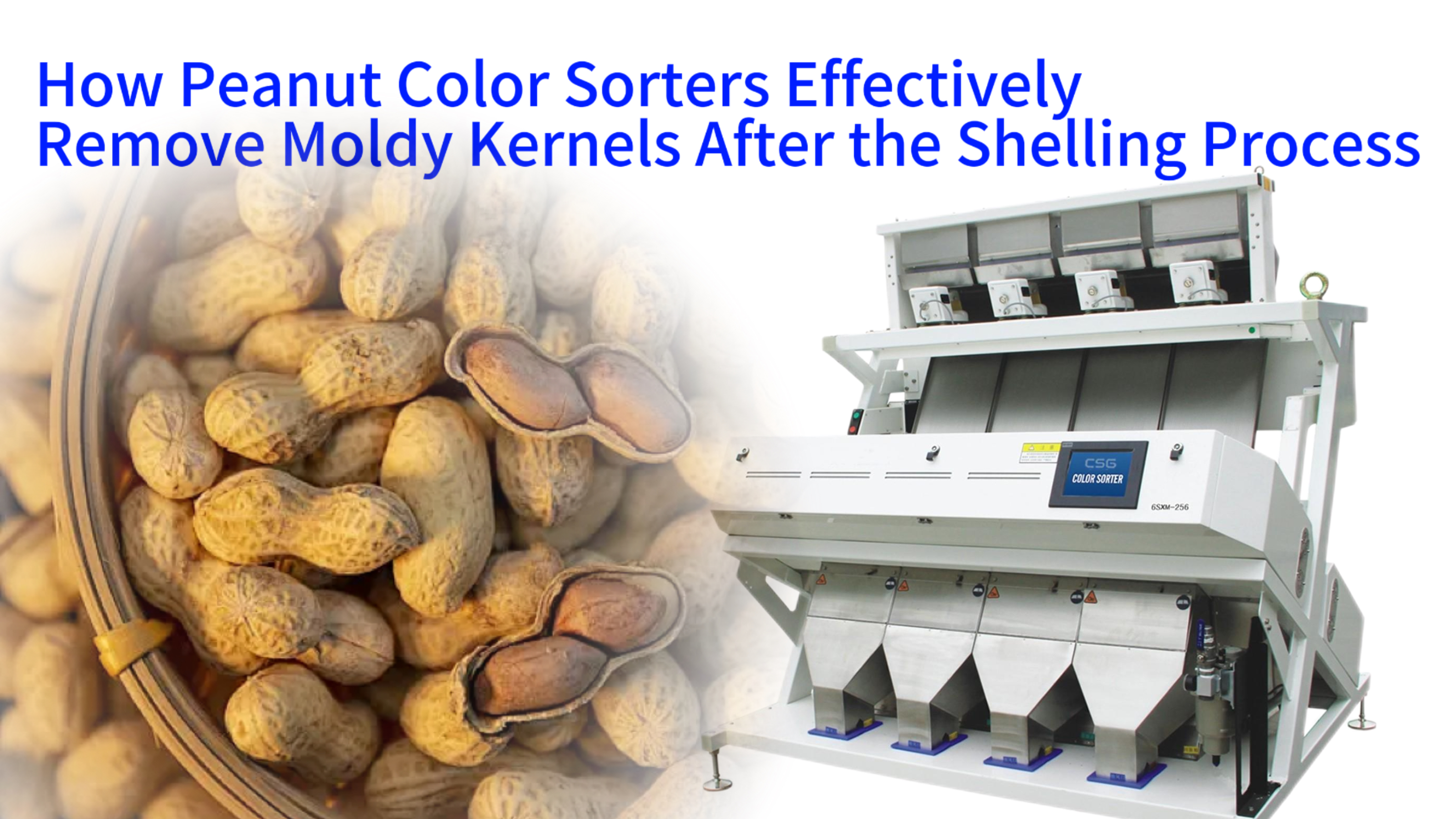
Steps to Remove Moldy Peanut Kernels with Color Sorter
Peanut color sorters function as a critical quality control mechanism in post-shelling operations. Their purpose is the effective identification and removal of moldy kernels. This technology directly confronts significant food safety concerns. It simultaneously elevates the final product quality for end consumers. The shelling process renders peanuts susceptible to subsequent mold growth. This mold can produce harmful toxins, most notably aflatoxins. These substances face global regulation due to their carcinogenic properties. Color sorters employ advanced optical systems combined with artificial intelligence. These systems detect discolored or defective kernels with exceptionally high precision. Implementing such systems within peanut processing lines ensures compliance with international safety standards. It substantially reduces the risk of contaminated products reaching the consumer market. This guide delivers a comprehensive overview of the operational mechanisms and practical benefits of color sorters for mold removal.
The Serious Risks and Sorting Challenges of Moldy Peanut Kernels
Moldy peanut kernels represent a significant hazard. Effective sorting solutions are necessary to protect public health and maintain product integrity. A primary risk involves the presence of aflatoxins. These are toxic compounds produced by specific molds, notably Aspergillus species. Aflatoxins are known causative agents of liver damage and cancer in humans. Their elimination is therefore a paramount priority for food processors. Regulatory agencies, including the World Health Organization, enforce strict limits for aflatoxin levels in food. The challenge in sorting stems from variability in mold appearance. Traditional methods, primarily manual sorting, possess inherent limitations. Manual sorting is inefficient and prone to human error. It frequently fails to detect all contaminated kernels. Advanced sorting technologies, such as optical color sorters, provide a reliable automated alternative for the detection process.
Manual vs Automated Sorting Performance
| Metrics | Manual Sorting | Color Sorter |
|---|---|---|
| Processing Capacity (kg/h) | 50-100 | >2000 |
| Error Rate | >10% | <1% |
| Mold Detection Rate | Low (subtle defects missed) | >99% |
Aflatoxin Contamination Data: 25% of global food crops affected by aflatoxins; Peanuts have high vulnerability due to high oil content. Regulatory limits: 4-20 ppb (Codex Alimentarius: 15 ppb for human consumption).
Aflatoxin and Food Safety Hazards
Aflatoxins are mycotoxins produced by Aspergillus molds. These molds are commonly found on peanuts and pose severe health risks. The risks include carcinogenic effects and suppression of the immune system. These toxins can accumulate in the human body over extended periods. This accumulation leads to chronic health conditions like liver cancer. Growth impairment in children is another documented consequence. International food safety standards, such as those from Codex Alimentarius, set definitive limits. For peanuts intended for human consumption, the maximum is often 15 parts per billion. Color sorters assist processors in achieving these stringent standards. They identify and remove moldy kernels proactively before packaging. Integrating this technology reduces the probability of costly product recalls. It also mitigates potential legal penalties. Ensuring aflatoxin-free peanuts is fundamental for sustaining consumer trust and securing market access.
Research indicates a global aflatoxin contamination problem. It affects approximately one-quarter of all food crops. Peanuts are particularly vulnerable due to their high oil content. Storage in humid conditions increases proneness to mold growth. This environment accelerates aflatoxin production. Color sorters utilize high-resolution imaging systems. These systems detect subtle color changes associated with mold presence. In controlled settings, removal rates exceed 99 percent. This high efficiency is vital for meeting export market requirements. Processors must adhere to guidelines from bodies like the FDA and the European Food Safety Authority. Non-compliance can lead to serious health crises. The use of color sorters constitutes a proactive risk management approach.
Negative Impact on Product Flavor and Brand
Moldy kernels impart undesirable off-flavors to peanut products. Bitterness or mustiness are common sensory defects. These flavors degrade the overall product quality and consumer acceptance. The defects result from microbial metabolites that alter the product's chemical composition. Even a minimal number of moldy kernels can contaminate an entire batch. This leads to widespread spoilage and significant material waste. Brand reputation suffers when consumers associate a company with low-quality or unsafe products. The potential for long-term financial loss is considerable. Color sorters prevent these issues through consistent mechanical removal of defective kernels during processing. Maintaining high flavor standards is not optional; it is essential for competitive advantage within the food industry.
Studies confirm that consumer perception of food quality is heavily influenced by taste and aroma. Mold-related off-flavors directly lead to product rejections. Within the peanut industry, brands investing in advanced sorting technologies report measurable benefits. Higher customer satisfaction and repeat purchase rates are documented. Color sorters contribute directly to flavor preservation. They ensure only sound, high-quality kernels proceed to final packaging. This technology supports brand integrity by delivering uniform product quality across all production batches. The economic impact of flavor contamination is multifaceted. Reduced sales and increased product return rates are direct consequences. Implementing color sorters provides a safeguard against these negative commercial outcomes.
Limitations of Traditional Manual Sorting
Manual sorting relies entirely on human vision and dexterity. These are inherently limited by factors like fatigue, inconsistency, and subjective judgment. Workers may miss moldy kernels due to visual strain. High processing speeds exacerbate this problem, resulting in inadequate quality control. The average human error rate in manual sorting often exceeds ten percent. This rate fluctuates based on workload and shift duration. The method is also highly labor-intensive. It increases operational costs and reduces scalability for large-scale production. Automated color sorters overcome these distinct limitations. They provide high-speed sorting with minimal human intervention. The transition from manual to automated systems enhances overall line efficiency and accuracy.
Historical data from processing facilities provides clear comparisons. Manual sorting processes handle approximately 50 to 100 kilograms per hour per worker. In contrast, modern color sorters can process over 2000 kilograms per hour. This disparity highlights the substantial productivity gains achievable through automation. Manual sorting is less effective for detecting subtle mold discolorations. Variable lighting conditions in factories further hinder performance. Color sorters use standardized, controlled illumination and electronic sensors. This ensures consistent and repeatable performance. The cumulative cost of labor, training, and management for manual sorters is significant. It often justifies the capital investment in automated technology. Automated systems offer a sustainable, long-term solution for contemporary food safety demands.
Visibility of Mold After Shelling
The shelling process physically exposes peanut kernels. This makes any existing mold contamination visually apparent. The kernels become accessible for optical sorting technologies at this stage. Before shelling, molds may develop internally or on hidden surfaces. These hidden defects can evade detection. Once shells are removed, kernels clearly display surface indicators. Discolorations, spots, or textural changes are indicative of mold growth. Color sorters capitalize on this newfound visibility. They use high-speed cameras to capture detailed images of each individual kernel. The technology analyzes these images in real-time. It identifies optical anomalies specifically associated with mold. This procedural step is critical for intercepting contaminated kernels. Interception occurs before kernels enter the downstream food supply chain.
Post-shelling, peanuts typically undergo cleaning and preliminary sorting. The goal is to remove debris and major defects. Color sorters are integrated at this precise stage to maximize detection efficiency. The average peanut kernel size ranges from 0.5 to 1.5 centimeters. This size requires high-resolution sensors for accurate mold identification. The optical systems within advanced color sorters are highly sensitive. They can detect color variations as small as 0.1 millimeters. This sensitivity ensures comprehensive mold removal. The timing of sorting, immediately after shelling, reduces the risk of cross-contamination between different batches. This systematic approach aligns completely with established industry best practices for quality assurance.
Core Technological Principles of Peanut Color Sorters for Mold Identification
Peanut color sorters employ an integrated combination of components. Optical, computational, and mechanical systems work in unison. Their collective goal is precise mold detection and subsequent removal. These systems are designed to simulate and surpass human visual capabilities. They achieve this through advanced imaging and processing algorithms. The core principles involve a sequential process. First, capturing high-definition images of each kernel. Second, analyzing these images for specific mold indicators. Third, executing the rapid ejection of defective items. This entire process occurs within a few milliseconds. It ensures high material throughput without compromising sorting accuracy. The integration of artificial intelligence and multi-spectral analysis provides a key enhancement. It significantly improves the system's ability to distinguish mold from normal kernels. A thorough understanding of these principles is essential for optimizing sorter performance in industrial settings.
Core Technological Principles of Peanut Color Sorter
Role of High-Resolution CCD Cameras
High-resolution CCD cameras act as the primary sensor in a color sorter. They capture detailed images of peanut kernels in motion. The kernels pass through a specially designed sorting chamber. These cameras detect minute color differences and subtle surface textures. Both characteristics are associated with mold growth. The image resolution typically exceeds 2 megapixels. This allows for the identification of physical features as small as 0.05 millimeters. This capability is crucial for recognizing early-stage mold. Such mold may not be visible to the naked human eye. The cameras operate at very high frame rates. They synchronize perfectly with kernel movement to eliminate motion blur. The image data collected forms the essential basis for all subsequent analysis and decision-making by the machine's processor.
Modern color sorters utilize CCD cameras equipped with global shutter technology. This technology captures an entire scene instantaneously. It effectively reduces image distortion. The cameras function under meticulously controlled lighting conditions. Consistent LED systems provide this illumination, eliminating shadows and reflections. The cameras transmit captured image data to dedicated processors. This transmission enables real-time analysis. It allows sorters to handle conveyor belt speeds of up to 4 meters per second. This high-speed operation is necessary to prevent bottlenecks in fast-moving processing lines. The inherent reliability and durability of industrial-grade CCD cameras are vital. They contribute directly to the overall longevity and consistent performance of the entire sorting system.
Advances in Multi-Spectral and AI Recognition
Multi-spectral imaging and artificial intelligence represent significant technological advancements. They enable defect detection beyond the visible light spectrum. Multi-spectral systems analyze kernels using multiple specific wavelengths. This includes the near-infrared (NIR) band. The analysis identifies chemical and structural changes caused by mold. AI algorithms learn from vast curated datasets. These datasets contain images of both moldy and healthy kernels. Recognition accuracy improves continuously over time through this learning. These advanced systems can achieve extremely high detection rates. For moldy kernels, rates often exceed 99.5 percent. This high performance is maintained even when visible color differences are subtle. The use of AI reduces false positive ejections. It adapts intelligently to natural variations in peanut appearance. This technology is particularly effective for complex or atypical mold patterns. Such patterns often challenge conventional, rule-based sorting systems.
AI models within color sorters are trained using thousands of annotated kernel images. This training allows them to make fine distinctions. They can differentiate between mold, innocuous dirt, and natural kernel markings. Multi-spectral analysis provides complementary data. It detects variations in moisture content and kernel density. These variations are often associated with mold infiltration. This combined capability enables sorters to identify a serious problem: internally moldy kernels. Surface imaging alone might miss these defective kernels. Integrating AI requires a commitment to continuous data input. Periodic model updates are necessary to maintain high accuracy. This approach marks a definitive shift in industrial sorting. It moves from static, rule-based logic to dynamic, learning-based systems. The result is enhanced operational adaptability and sorting precision across diverse processing environments.
Specialized LED Lighting for Stable Imaging
LED lighting systems within color sorters serve a fundamental purpose. They provide uniform and consistent illumination across the sorting area. This stability is essential for accurate image capture and subsequent analysis. These specialized lights eliminate interference from external or ambient light sources. They ensure camera sensors receive reliable, consistent data. The LEDs are engineered to emit specific wavelengths of light. These wavelengths are chosen to enhance optical contrast. The contrast between moldy spots and healthy kernel surfaces is maximized. This spectral specialization improves the signal-to-noise ratio in captured images. A clearer signal facilitates more definitive defect identification. The lighting systems are also highly energy-efficient. They possess long operational lifespans, which reduces long-term maintenance needs. Establishing and maintaining stable imaging conditions is a foundational requirement. It is fundamental for minimizing sorting errors and ensuring repeatable results.
Typical LED arrays in industrial color sorters operate within a specific color temperature range. This range is usually between 5000K and 6500K. It simulates standard daylight conditions for true color representation. The physical positioning of the lights is carefully calculated. It avoids glare and hotspots on the kernels or background. The goal is to provide perfectly even coverage across the entire width of the sorting belt. The lights are calibrated during machine setup. This calibration highlights discolorations caused by common mold types. Greenish or black spots are typical examples. This calibration can be adjusted to suit different peanut varieties. The absolute consistency of the LED lighting output is critical. It ensures that sorting performance remains constant over thousands of hours of operation. This reliability is a key factor supporting continuous, high-volume production in modern processing facilities.
Real-Time Decision-Making by Data Processing Systems
The data processing system is the computational brain of the color sorter. It is often based on DSP (Digital Signal Processor) and FPGA (Field-Programmable Gate Array) technologies. This system analyzes incoming images and makes ejection decisions in real-time. The processors compare each kernel's image against predefined mold profiles stored in memory. A binary decision is made: reject or retain. This entire decision process is remarkably fast, occurring within 10 to 50 milliseconds. This speed is mandatory to match the high velocity of modern processing lines. FPGA technology is particularly valuable. It allows for parallel processing of data from multiple kernels simultaneously. This prevents any processing delay or backlog. The systems are fully programmable. This enables customization for specific mold types or unique customer processing requirements. This capacity for rapid, accurate analysis is critical. It maintains both high material throughput and exceptional sorting accuracy.
DSP chips within the sorter perform complex mathematical operations in real-time. Their function is to extract key features from the raw image data. Color, shape, and texture are the primary features analyzed. They employ sophisticated algorithms for this task. Pattern recognition and machine learning classifiers are commonly used. Once a kernel is classified as defective, an ejection signal is generated. This signal is sent to a precise array of pneumatic nozzles. The nozzles remove the defective kernel using a brief blast of compressed air. The entire process is electronically synchronized with the conveyor belt speed. This synchronization ensures the air blast hits the exact location of the target kernel. Modern sorters include comprehensive data logging capabilities. The processor tracks key performance metrics and error rates. This logged information is invaluable for ongoing machine optimization and proactive quality control management.
Key Settings to Optimize Color Sorter Performance for Mold Removal
Optimizing the configurable settings of a color sorter is an essential operational practice. It maximizes mold removal efficiency and system adaptability. The sorter must adapt to varying peanut characteristics from different sources. Proper calibration ensures the system accurately distinguishes defective from acceptable kernels. Several key parameters require attention and adjustment. Sensitivity settings, background and lighting configurations, nozzle timing, and software model updates are all critical. These settings must be deliberately tailored to specific factors. Peanut variety, average moisture content, and desired processing speed are primary factors. Regular monitoring and systematic fine-tuning help maintain peak operational performance. Effective optimization achieves two main goals. It reduces good product waste and enhances final output quality consistently.
Key Optimization Parameters for Color Sorter
Sensitivity Calibration
Improves mold detection by 5-10%
Adjusted for peanut varieties (Virginia/Spanish/Runner)
Balances detection rate vs false ejection
Nozzle Settings
Delay: 1-5ms (conveyor speed 3-4m/s)
Air pressure: 0.4-0.8MPa
Ejection accuracy >95%
Lighting & Background
LED color temp: 5000K-6500K
Light-colored background boosts contrast by 15-20%
Targeted wavelengths for mold contrast
Sensitivity Calibration for Different Peanut Varieties
Sensitivity calibration is an adjustment of the sorter's detection thresholds. It accounts for natural differences between peanut varieties, such as Virginia or Spanish types. Each variety possesses unique inherent color shades and surface textures. These natural characteristics can affect the visual prominence of mold. Calibration ensures the sorter does not misinterpret these natural variations as defects. The process typically uses representative sample batches of the current stock. The goal is to set optimal sensitivity levels for that specific lot. Proper calibration can improve true mold detection rates by tangible margins. Improvements of 5 to 10 percent are achievable. This step is critical for achieving consistent, reliable sorting results. Consistency is needed when processing diverse raw materials from different growers or regions.
Common peanut varieties like Runner or Valencia have distinct visual profiles. Their specific color profiles require corresponding sensitivity settings. The wrong settings can lead to excessive false ejections of good kernels. Calibration involves a structured testing procedure. The sorter processes samples containing known good and known moldy kernels. This establishes accurate baseline parameters for that batch. The sensitivity controls govern how aggressively the sorter identifies minor color deviations. Higher sensitivity increases the probability of removing moldy kernels. However, it also raises the associated risk of incorrectly rejecting good kernels. The optimal balance is achieved through iterative testing and analysis of the results. This data-driven approach ensures industrial sorting remains both efficient and cost-effective over the long term.
Background and Lighting Color Selection Strategies
Selecting appropriate colors for the background and lighting is a strategic choice. It enhances the optical contrast between moldy kernels and healthy ones. Improved contrast directly leads to improved detection accuracy. Light-colored backgrounds, such as bright white or light blue, are commonly used. They make darker mold spots more visibly distinct to the camera. Lighting colors are chosen based on spectral science. They are selected to highlight specific discoloration tones associated with mold. For instance, green LED light can emphasize reddish or brownish mold tones. This deliberate strategy reduces the chance of missing subtle defects. The physical background material must have a non-reflective, matte surface. This property prevents glare from interfering with the camera. Optimal color combinations are not universal. They are determined through experimental setups and analysis of historical sorting data from the specific facility.
Background panels in industrial sorters are constructed from durable materials. Stainless steel or specially coated plastics are typical choices. These materials maintain consistent reflectivity over time. Lighting color selection depends directly on the predominant mold types in the product. Aspergillus molds may present greenish hues. Penicillium molds often show blue-green colors. Using complementary colors in the lighting scheme increases the perceptual difference. The difference between sound kernels and defective ones is magnified. Industrial trials have demonstrated this method's efficacy. It can boost detection efficiency by 15 to 20 percent. Regular maintenance checks are necessary. They ensure background plates and light lenses remain clean and fully functional. These proactive measures are fundamental for supporting long-term sorting reliability and accuracy.
Precise Adjustment of Nozzle Delay and Air Pressure
Nozzle delay and air pressure are two intertwined mechanical settings. They control the accuracy and effectiveness of the ejection mechanism. Their precise adjustment ensures accurate removal of moldy kernels. A key requirement is avoiding disturbance to adjacent good kernels. Nozzle delay refers to the precise time interval. It is the interval between the detection of a defect and the firing of the corresponding air nozzle. This timing is calibrated based on kernel speed and its precise position on the belt. Air pressure determines the physical force of the air blast. The force must be sufficient to dislodge the defective kernel from the product stream. However, excessive force can cause product damage or misdirected ejections. Precise adjustments prevent these costly errors. These settings are optimized using tools like high-speed cameras and electronic feedback systems. Proper configuration minimizes good product loss while maximizing mold removal rates.
Typical nozzle delay settings occupy a very short time window. They range from 1 to 5 milliseconds in most applications. The specific value depends on conveyor speeds, which can reach 3 to 4 meters per second. Air pressure is usually set within a specific force range. A range of 0.4 to 0.8 Megapascals (MPa) balances effectiveness with energy consumption. The nozzles are not single units; they are arranged in dense linear arrays. These arrays cover the entire usable width of the sorting belt. Operational fine-tuning often employs tracer kernels. These are known defective kernels manually introduced into the product stream. Their path is monitored to fine-tune parameters for specific conditions. The ultimate goal is achieving ejection accuracy rates consistently above 95 percent. This level of precision is vital for maintaining high-quality output and maximizing production yield.
Development and Iteration of Mold Feature Models
Developing and iteratively updating mold feature models is a software-centric process. It involves feeding the color sorter's AI system with new data from confirmed moldy kernels. The purpose is to continuously refine its recognition algorithms. These software models store complex digital patterns. The patterns represent the color, shape, and texture signatures associated with mold. Iteration allows the system to adapt dynamically. It adapts to new mold strains or changes in environmental growing conditions. Regular updates systematically incorporate new findings. Sources include internal quality control checks and external customer feedback. This process enhances the sorter's ability over time. It becomes better at handling seasonal variations in peanut crops. The continuous improvement of these AI models is not optional. It is essential for ensuring long-term sorting efficacy and keeping pace with biological variation.
Mold feature models are constructed using machine learning techniques. These techniques analyze many thousands of kernel images to find common defect patterns. Initial models are bootstrapped using historical defect data from the processor. However, the models are not static; they evolve with new operational input. Iteration cycles can be scheduled at different frequencies. Weekly or monthly updates are common, depending on processing volume and raw material variability. Commercial operations have quantified the benefit of this practice. It has been shown to reduce false negative rates by up to 8 percent. A practical advantage exists for multi-machine facilities. Updated models can be shared seamlessly across all sorters on the network. This ensures uniform sorting standards everywhere. The iterative, data-driven approach aligns perfectly with broader industry trends. The trend is toward intelligent, connected, and smart manufacturing systems.
Benefits of Integrating Color Sorters into Peanut Processing Lines
The integration of color sorters into peanut processing lines delivers substantial measurable advantages. The benefits span safety, operational efficiency, and financial profitability. These systems automate the critical quality control function. They reduce reliance on inconsistent manual labor and minimize human error. Direct benefits are easily identifiable. Enhanced food safety compliance is a primary benefit. Lower product rejection rates by customers and improved brand reputation are others. Color sorters also contribute to operational savings. They increase line throughput and reduce material waste simultaneously. Their mechanical and software design allows for adaptable integration. They can be integrated seamlessly with existing processing machinery without major overhauls. Overall, this technology supports a more sustainable and scalable model for modern peanut processing. It future-proofs operations against increasing safety and quality demands.
Benefits of Color Sorter Integration
Note: 1 color sorter replaces 10-20 manual sorters; Payback period: 1-2 years; Aflatoxin compliance rate: 100% with proper setup.
Chart Note: Yield Improvement shows 3-8% range, Safety Incident Reduction shows 30-50% range. Hover over bars for details.
Enhanced Product Safety and Regulatory Compliance
Color sorters enhance final product safety through systematic mechanical action. They remove moldy kernels that contain hazardous substances like aflatoxins. This proactive, technology-driven approach directly assists processors. It helps them meet or exceed stringent regulatory standards. Agencies such as the U.S. Food and Drug Administration (FDA) and the European Commission set these standards. Compliance is not voluntary; it is mandatory for market access and maintaining consumer trust. Modern color sorters provide documented, digital evidence of quality control. Detailed data logs and performance reports are automatically generated. This capability significantly simplifies the audit and certification process for food safety standards. Ensuring product safety through automated technology mitigates a spectrum of risks. Legal liabilities and major financial penalties are the most significant risks managed.
Regulatory limits for aflatoxins in peanuts demonstrate regional variation. Generally, they range from 4 to 20 parts per billion. Color sorters provide the consistency needed to achieve these low levels. They detect and remove contaminated kernels with very high accuracy. The systems are programmable. They can be aligned with specific regulatory requirements for different markets. Organic or premium export products often have stricter requirements. This programming flexibility is highly valuable in a globalized market. Empirical data from the industry shows a clear correlation. The use of advanced color sorters is linked to a 30-50 percent reduction in safety-related incidents. This measurable improvement underscores the technology's central role. It is a cornerstone of modern, responsible food processing.
Reduction in Quality-Related Returns and Claims
Color sorters directly reduce the frequency of quality-related returns and customer claims. They achieve this by ensuring only defect-free peanuts reach the packaging and distribution stages. This mechanical reliability minimizes customer complaints. It also reduces associated costs like refunds, replacements, and freight. High sorting accuracy prevents a critical problem: batch contamination. A single missed moldy kernel can contaminate a large batch, leading to large-scale, costly recalls. The financial impact of returns is multifaceted. Direct costs are only one component. Long-term reputational damage to the brand can be more severe and enduring. Color sorters help maintain consistent product quality across all production runs. This consistency fosters stronger customer loyalty and repeat business. This benefit is especially important in highly competitive food markets where quality is a key differentiator.
Industry analysts have collected relevant data. Quality-related returns can account for a significant portion of revenue. Without adequate automated sorting, this figure can reach up to 5 percent of total revenue in peanut processing. Efficient color sorters can cut this loss figure by more than half. They achieve this through precise, repeatable defect removal. The technology also reduces indirect costs. The need for post-sale inspections and the physical handling of returned goods is diminished. This overall operational efficiency translates directly into improved profit margins. Companies utilizing this technology report fewer commercial disputes. Disputes with retailers and distributors over quality issues decline. The capital investment in sorting technology thus delivers a clear return. It pays off through significantly reduced commercial liability and protected brand equity.
Automation and Labor Cost Savings
Automation via color sorters reduces dependence on manual sorting labor. This leads to significant and predictable cost savings. It also enhances overall operational efficiency. Manual sorting requires a large, dedicated workforce. This involves substantial recurring expenses for wages, continuous training, and personnel management. Color sorters operate continuously, 24 hours a day if needed. They require only minimal supervision. They handle vastly higher product volumes at a lower cost per processed unit. This automation allows company management to reallocate human resources. Workers can be moved to more skilled, value-adding tasks elsewhere in the facility. The reduction in labor requirements also solves ancillary challenges. Challenges like seasonal worker availability and high employee turnover are alleviated. Automated systems contribute to a more streamlined, predictable, and controllable production process.
The labor replacement ratio of a color sorter is compelling. A single modern machine can replace the output of 10 to 20 manual sorters. The exact number depends on processing speed and quality complexity. The resultant labor cost savings are often substantial. They can justify the initial capital investment in the sorting technology within a short period. A typical payback period is 1 to 2 years. Automation also reduces errors stemming from human factors. Fatigue, loss of concentration, and subjective inconsistency are eliminated. This improves overall output quality. Color sorters can operate over multiple consecutive shifts. Their performance does not degrade with time, unlike human workers. This capability reliably supports intensive 24/7 production schedules. The combined economic and operational benefits make automation a strategic, rather than merely tactical, choice for forward-thinking peanut processors.
Increased Yield and Overall Profitability
Color sorters positively impact production yield through accurate separation. They separate defective kernels from high-quality peanuts with great precision. This maximizes the utilization of valuable raw materials. The precision reduces waste and improves a key metric: the ratio of saleable product to raw input. Higher yields have a direct financial impact. They directly boost profitability, as more finished product can be sold from the same initial quantity of raw peanuts. The technology is also designed to minimize a specific type of loss: the loss of good kernels. False ejections of good product are kept to a very low level. Optimized sorting settings are the key. They ensure that only truly defective items are targeted for removal. This operational efficiency supports a philosophy of sustainable resource management. It aligns with corporate goals of reducing waste and maximizing value from agricultural inputs.
Quantifiable yield improvements are consistently reported. From color sorters, improvements typically range from 3% to 8%. The specific gain depends on the initial quality of the raw peanuts and the sorting configuration used. This gain translates into substantial revenue increases when scaled over time. A concrete example illustrates the impact. Processing 1,000 tons of peanuts with a 5% yield improvement adds 50 tons of sellable product to output. Color sorters also reduce hidden processing costs. The need for re-sorting questionable batches or disposing of contaminated product is decreased. The overall impact on a processor's bottom-line profitability makes the sorter a valuable capital asset. This financial advantage is critically important in margin-sensitive industries like food processing. It can determine competitive viability.
Maintenance Essentials for Sustained High Performance of Color Sorters
Regular, scheduled maintenance is a non-negotiable requirement. It ensures that color sorters operate reliably and efficiently throughout their engineered lifespan. Maintenance tasks encompass several key areas. Cleaning optical components, inspecting air supply systems, and updating software are all critical. These activities proactively prevent performance degradation. They also extend the functional life of the capital equipment. A structured, documented maintenance schedule is the best practice. It reduces unplanned downtime and controls long-term repair costs. Proper care also guarantees consistent sorting accuracy shift after shift. Adherence to the manufacturer's maintenance guidelines is important. It helps maintain valid warranty coverage and ensures access to technical service support when needed.
Color Sorter Maintenance Schedule
| Maintenance Item | Frequency | Purpose |
|---|---|---|
| Camera/Lens Cleaning | Daily | Maintain imaging accuracy (reduces error by 10%) |
| Air Filter Replacement | 3-6 months | Ensure stable air pressure for ejection |
| Nozzle Clog Check | Weekly/Monthly | Prevent ejection failure (accuracy >95%) |
| Software/AI Update | Quarterly/Annually | Improve detection rate by 2-5% |
Daily Cleaning Procedures for Cameras and Lenses
Daily cleaning of cameras and lenses is a simple but vital routine. It prevents dust, oil mist, or fine debris from impairing optical performance. Contaminants on these sensitive optical surfaces cause image blurring or false electronic readings. The cleaning procedure should use appropriate tools. Lint-free microfiber cloths and manufacturer-approved solvents are standard. This routine is best performed at the start or end of each production shift. Consistent cleaning maintains the designed sensitivity of the optical detection system. It is a straightforward yet highly effective method. The method upholds the machine's performance to its original engineering standards.
The cameras and lenses in a color sorter operate in a challenging environment. They are exposed to peanut dust, husk fragments, and ambient airborne particles. Accumulation of these materials on lens surfaces reduces light transmission. It also degrades image clarity. Daily visual inspections can identify problematic buildup before it affects sorting accuracy. Standard cleaning protocols often involve two steps. First, using low-pressure compressed air to remove loose particles. Second, gentle wiping with a specialized cloth to remove adhered films. This disciplined practice has a measurable effect. It has been shown to reduce optical error rates by up to 10 percent in field studies. Maintaining impeccably clean optics is therefore fundamental. It is fundamental to achieving the designed sorting efficiency and accuracy promised by the equipment manufacturer.
Regular Inspection and Cleaning of Air Filtration Systems
The air filtration system demands regular inspection and cleaning. This ensures consistent and reliable performance from the pneumatic ejection system. These systems provide a critical resource: clean, dry, compressed air. The air powers the nozzles that physically remove defective kernels. Clogged or dirty filters have immediate negative effects. They reduce air pressure at the nozzles or introduce damaging moisture into the air lines. Both conditions can lead to ejection failures. Inspections should systematically check for blockages, filter wear, and seal integrity. Cleaning involves replacing disposable filters or washing reusable ones. All actions must follow the manufacturer's specific recommendations. A well-maintained air system is a cornerstone of reliable sorter operation. It prevents one of the most common mechanical failure points.
Air filters are consumable items with a finite service life. Typically, they require replacement every 3 to 6 months. The exact interval depends on machine usage hours and the dust level in the facility environment. Moisture in the compressed air supply is a separate hazard. It can cause internal corrosion of nozzle valves. In cold environments, it can lead to freezing within the air lines. Regular draining of the air compressor's moisture trap is essential. Proactive checks for leaks in the air piping are also important. Proper, disciplined maintenance of the entire air system ensures a key metric. It keeps nozzle ejection accuracy rates above 95 percent. This focused attention on the air system minimizes unplanned downtime. It also controls long-term repair costs, making it a key pillar of any preventative maintenance program.
Nozzle Array Clog Checks and Clearing
Checking and clearing the nozzle arrays for clogs is an essential mechanical maintenance task. It maintains the precision of the ejection process for moldy kernels. The small orifices of the nozzles can become blocked. Blocking agents include dust, condensed oil from the air line, or debris from the peanuts themselves. A clogged nozzle fails to fire when commanded. This results in a missed ejection, reducing the overall sorting efficiency for that product lane. Regular checks involve both visual inspection and functional testing. Test runs using calibration materials or tracer kernels verify performance. Clearing methods must be careful. Using fine gauge needles or controlled bursts of compressed air dislodges obstructions. This maintenance task has a clear objective. It ensures every single nozzle in the array functions exactly as intended by the design.
Nozzle arrays are complex assemblies. They consist of dozens or hundreds of individual nozzles. The nozzles are precisely spaced to cover the entire active width of the sorting belt. Each nozzle operates independently. It must target a specific kernel position based on the processor's calculation. Clogging is statistically more common in environments with high airborne particulate levels. A scheduled maintenance frequency is therefore necessary. Weekly or monthly cleaning, based on total operating hours, prevents cumulative blockages. Clearing any identified clogs promptly is crucial. It avoids mis-sorting and potential contamination of the final product stream. This practice is non-negotiable for supporting consistent, high-performance output. It ensures the sorter's rejection capability matches its detection capability.
Software System and AI Model Updates
Updating the sorter's software systems and AI models is a digital form of maintenance. It keeps the machine equipped with the latest algorithms and diagnostic features. Software updates from the manufacturer often contain important improvements. Bug fixes, performance enhancements, and new user functionality are common. AI model updates are more specialized. They incorporate new data and patterns about mold, improving recognition accuracy over time. These updates are typically distributed by the equipment manufacturer. Installation can be performed remotely via network or on-site by a technician. Regular updates ensure the sorter adapts effectively. It adapts to changing raw material conditions or new quality standards. This process is an integral part of the ongoing technological improvement lifecycle. It protects the owner's investment in the technology.
Software update cycles vary by manufacturer and product line. They may occur on a quarterly or annual basis. AI models benefit fundamentally from continuous learning. They learn from the operational data generated by the sorter itself in its specific environment. The benefits of updates are quantifiable. They can increase true detection rates by 2 to 5 percent. They achieve this by refining sensitivity parameters and reducing false positive rates. The update process requires a methodical approach. It involves backing up the current operational settings first. Testing the new software version in a controlled, non-production mode is also standard. This careful, phased approach minimizes potential disruption to live production schedules. Keeping the sorter's digital systems current is not an IT formality. It is a core practice for maximizing the long-term return on the capital investment.
Advanced Strategies for Handling Complex Mold Scenarios
Advanced operational strategies address complex mold scenarios. Standard single-pass color sorters may find these scenarios challenging. Internal mold development or exceptionally high contamination levels are examples. These advanced approaches often involve system-level thinking. Using multiple sorters in a series, integrating additional sensor types, and leveraging big data analytics are all strategies. Their collective aim is to achieve near-perfect mold removal. They also enhance overall quality control traceability. Implementing these strategies requires a higher level of investment and technical understanding. However, they offer significant returns in product safety and market positioning. They are particularly relevant for processors targeting specific markets. Premium, organic, or highly regulated export markets are key examples. Exploring and implementing these options represents the logical next step. It is the step for processors committed to optimizing peanut processing to world-class standards.
Advanced Sorting Strategies Comparison
Tandem Dual Sorter Layout
Primary + secondary sorting stages
Mold removal efficiency >99.9%
Suitable for high-risk products/export markets
Process capacity: >10 tons/hour
NIR + Optical Integration
NIR detects internal mold (700-2500nm wavelength)
Internal defect accuracy: 85-95%
Identifies ergosterol (fungal marker) changes
Organic/High-End Configuration
Zero tolerance for visible mold
Slower processing for thorough inspection
Meets organic certification requirements
Product value increase offsets yield reduction
Application of Tandem Dual Color Sorter Layouts
The tandem dual sorter layout is a powerful configuration. It involves placing two independent color sorters in a sequential series on the production line. The first sorter acts as a high-capacity primary stage. It removes obvious defects and the majority of moldy kernels. The second sorter performs a secondary, fine-sorting function. It acts as a review or quality assurance stage, catching any kernels missed by the first pass. This configuration can increase overall system mold removal efficiency dramatically. Efficiencies exceeding 99.9% are achievable. It is particularly useful for high-risk product categories. Products with stringent "zero tolerance" quality requirements benefit greatly. The layout requires careful coordination between the two machines. Settings must be tuned to avoid over-processing or unnecessary good product loss. This approach enhances final quality reliability. It does so without necessitating a major redesign of the entire processing line.
In a tandem setup, the parameter settings for each sorter are strategically different. The first sorter is typically set to higher sensitivity. Its goal is to remove the bulk of defects aggressively. The second sorter uses finer, more precise sensitivity settings. Its role is precision cleaning. This staged method reduces the mechanical and computational load on each individual machine. This can prolong the operational life of the equipment. This configuration is common in large-scale facilities. Facilities processing over 10 metric tons of peanuts per hour often use it. The configuration has demonstrated a powerful effect in practice. It can reduce final aflatoxin levels in the product to near-undetectable concentrations. The capital investment for a second sorter is not trivial. However, it is often offset by the tangible value created. Reduced waste and higher product market value provide the financial justification. This strategy is a proven, industrial-scale method for achieving superior, certified quality.
Integration of Near-Infrared Technology for Internal Quality Analysis
Integrating Near-Infrared (NIR) technology represents a sensor fusion advancement. It allows the sorting system to analyze internal kernel qualities, not just surface appearance. NIR sensors measure chemical composition based on light absorption principles. Moisture content, oil composition, or specific toxin indicators can be assessed. This capability identifies a critical defect type: internally moldy kernels. These kernels may have a perfectly normal surface, evading optical cameras. NIR systems are rarely used alone. They are most effective when combined with standard optical color sorting in a single machine. This provides comprehensive defect removal. The technology requires careful initial calibration. Calibration uses reference samples with known internal properties. It is especially valuable for processors supplying markets with strict internal quality standards. These markets demand guarantees beyond visual perfection.
NIR technology functions within a specific electromagnetic range. It typically emits light in the 700 to 2500 nanometer wavelength band. It then analyzes the reflected or transmitted signal from each kernel. It can detect biochemical changes associated with mold. An increase in ergosterol, a fungal membrane component, is a key marker. The reported accuracy rates for internal defect detection are high. They range from 85% to 95% depending on the specific property measured. Integration with a standard color sorter involves adding the NIR sensor module. The module is added to the existing sorting chamber alongside the RGB cameras. The machine's processor then fuses the data streams. Combined data from optical color and NIR chemical analysis improves overall detection robustness. This multi-sensor approach is gaining significant traction. It is becoming standard in advanced processing facilities focused on total quality management.
Data Traceability and Process Analysis
Utilizing data traceability and process analysis transforms the color sorter. It changes from a simple removal device to a source of strategic intelligence. Modern sorters record vast amounts of operational data. Ejection rates, categorized defect types, and real-time throughput are all logged. This information can be aggregated and analyzed with software tools. The analysis can pinpoint specific sources of mold contamination. Problematic batches from certain suppliers or harvest dates can be identified. Traceability supports robust quality assurance protocols. It also simplifies mandatory regulatory reporting for food safety. Process analysis uses this data dynamically. It helps engineers optimize machine settings and reduce process variability over time. Leveraging this data ecosystem enhances managerial decision-making. It enables a true culture of continuous, data-driven improvement on the factory floor.
Advanced color sorters now offer connectivity options. Cloud connectivity allows for real-time data access and remote performance monitoring. Sophisticated analysis tools can perform correlation studies. They can correlate sorting defect data with upstream factors. Harvest conditions, farm origin, or storage practices before processing are typical factors. This insight enables truly proactive quality measures. For example, identifying a batch with a high incidence of mold early allows for segregated processing. It prevents the batch from contaminating other, cleaner stock. Data traceability is not just useful; it is often required. Certifications like ISO 22000 for food safety management systems mandate it. This digital capability fundamentally transforms the role of the sorter. It evolves from a standalone machine into an integral, connected component of a smart factory system. It provides the feedback loop necessary for closed-loop quality control.
Special Configurations for Organic and High-End Markets
Special machine configurations cater to niche but valuable market segments. Organic and high-end gourmet markets have unique quality standards. These often include a functional "zero tolerance" for visible mold. The settings on a color sorter can be adjusted to meet this demand. Ultra-high sensitivity modes or additional software-based sorting stages may be used. The goal is to ensure absolute product purity. Organic certifications frequently prohibit the use of chemical fungicides. This makes mechanical sorting the primary and often only defense against mold. Special configurations might involve a trade-off. Slower processing speeds allow for more thorough inspection of each kernel. This approach caters to a specific consumer demographic. Consumers are willing to pay a substantial premium for perceived superior quality and safety. It aligns perfectly with contemporary market trends. Clean labeling, transparency, and proven quality are key trends.
In organic peanut processing, the sorter's acceptance criteria are set stringently. Kernels with any visible mold, however minute, are rejected. This strict standard inevitably reduces the yield from a given batch of raw material. However, the economic equation changes. The significant increase in product value per unit compensates for the lower volume. High-end markets often require more than just the final product. They require documentation of the process itself. Sorting parameters, rejection rates, and quality logs may be part of the delivery. Special configurations to meet these needs can involve custom work. Custom software filters or even hardware modifications like specialized lighting might be needed. The ability to reliably meet these stringent demands provides a processor with a distinct competitive edge. This strategy demonstrates a key principle. Advanced sorting technology is not just for hazard control; it is a direct enabler for accessing and winning in premium, high-margin market opportunities.