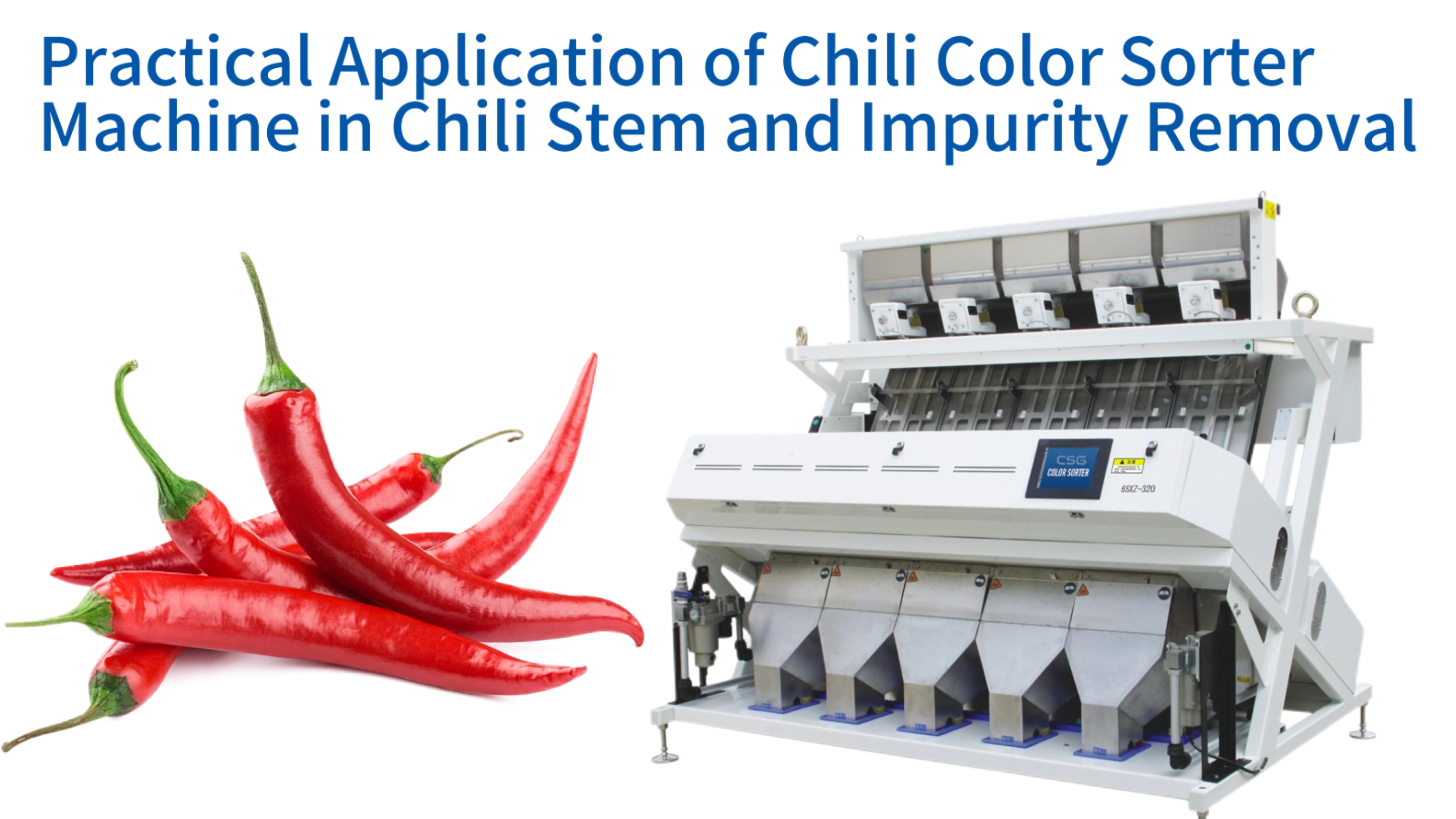
Chili peppers are a fundamental ingredient in cuisines and food processing industries across the globe. The quality of dried chili products is determined largely by their appearance and purity. Stems, leaves, and discolored pods detract from visual appeal and reduce market value. Manual sorting of chilies is labor-intensive, inconsistent, and costly. Modern optical sorting machines solve this problem using advanced camera technology and precision ejection systems. These machines scan every chili pod passing through the inspection area. They identify and remove stems and foreign materials based on color differences and shape characteristics. The technology enables food processors to achieve purity levels exceeding 99.5 percent. This article explores the practical application of chili color sorters. It covers the working principles, machine configurations, and operational factors that contribute to successful stem and impurity removal. The discussion also includes economic benefits and maintenance practices. Understanding these elements helps processors select and operate equipment that maximizes product quality and profitability. The integration of automated sorting technology has transformed chili processing from a manual craft into a precision industrial operation.
The Importance of Removing Stems and Impurities from Chilies
Economic Impact of Effective Chili Sorting
| Metric | Value |
|---|---|
| Product Value Increase | 15 - 25% |
| Equipment ROI Period | 1 - 2 Years |
| Purity Level (After Sorting) | >99.5% |
The presence of stems and foreign materials in chili products creates multiple problems for processors. Stems have a different texture and flavor profile compared to the chili pod itself. When ground into chili powder, stems contribute an undesirable woody taste and fibrous consistency. This degrades the sensory quality of the final product. Whole dried chilies destined for export or retail sale must have a clean appearance. Stems attached to pods or loose stems mixed with the product reduce visual appeal significantly. Buyers in international markets inspect shipments for purity. Rejections due to high stem content can result in financial losses and damage to supplier reputations. Foreign materials such as leaves, stones, and soil particles also contaminate harvested chilies. These materials pose safety risks and are unacceptable in food products. Therefore, effective removal of stems and impurities is not optional but essential for compliance with food safety standards and customer expectations.
Beyond quality concerns, there are strong economic reasons for thorough cleaning. Pure chili pods command higher prices in the market compared to material containing stems and defects. Processors who can guarantee a clean product access premium market segments. The price difference between standard-grade and premium-grade dried chilies can be substantial. Data from food processing facilities indicates that effective sorting increases product value by 15 to 25 percent. This uplift quickly recovers the investment in sorting equipment. Additionally, automated sorting reduces reliance on manual labor. Manual stem removal requires dozens of workers for high-volume processing lines. Labor costs continue to rise in many regions. Finding and retaining workers for repetitive sorting tasks is increasingly difficult. Color sorters operate continuously with consistent performance. They eliminate the variability inherent in human inspection. For chili processors aiming to scale operations and maintain quality, optical sorting technology provides the only viable path forward.
Fundamental Principles of Chili Color Sorting Technology
Working Principle of Chili Color Sorter
Vibratory feeders create uniform monolayer of chilies
High-res cameras & sensors capture images (RGB + NIR)
Algorithms identify stems/impurities vs acceptable product
Air jets deflect rejects (within milliseconds)
Acceptable chilies → Product bin | Rejects → Waste bin
Chili color sorters operate on the principle of optical detection and pneumatic separation. The machine creates a controlled environment where chili pods are presented to sensors in a single layer. High-resolution cameras capture images of every object passing through the inspection zone. These images are analyzed in real-time by processing units running sophisticated algorithms. The analysis compares each object against pre-defined acceptable parameters. Objects falling outside these parameters are identified as rejects. The machine then activates precisely timed air jets that deflect the rejected material into a separate discharge chute. This entire sequence from detection to ejection occurs within milliseconds. The speed and precision of modern sorters allow them to process several tons of chilies per hour while maintaining high accuracy. Understanding this basic workflow helps operators appreciate the capabilities and limitations of the equipment. The core technology shares principles with other applications such as beans color sorter optical sorting machine designs, adapted specifically for chili characteristics.
The effectiveness of a chili sorter depends on several key components working together harmoniously. The feeding system must deliver a consistent stream of material to the inspection area. Vibratory feeders are commonly used to create a uniform monolayer of product. The lighting system provides stable, high-intensity illumination that reveals color and shape details. LED technology is standard in modern machines due to its longevity and consistent output. The optical sensors include both standard RGB cameras and sometimes near-infrared sensors for detecting material differences beyond visible color. The processing unit must have sufficient computational power to analyze millions of pixels per second. The ejection system requires a bank of high-speed solenoid valves connected to precisely positioned air nozzles. Each of these components must be properly maintained for the sorter to perform at its peak. The integration of these elements into a reliable industrial machine represents decades of engineering development.
Camera and Sensor Technology for Chili Inspection
The cameras used in chili sorters are industrial-grade devices capable of capturing images at extremely high speeds. They operate at frame rates that freeze the motion of falling chili pods. This ensures that images are sharp and clear for accurate analysis. Standard color cameras detect variations in red, green, and blue wavelengths. This is particularly relevant for chilies, which exhibit a range of red hues depending on variety and ripeness. Advanced machines incorporate additional sensors that capture information beyond visible light. Near-infrared sensors detect differences in moisture content and cell structure. This capability is valuable for identifying stems that may have similar color to the chili pod but different internal composition. Stems contain different levels of chlorophyll and fibrous material that affect their spectral signature. Multi-spectral analysis significantly improves detection of stems that would otherwise blend in with the product. The combination of visible and near-infrared sensing provides comprehensive inspection capability.
Camera resolution determines the smallest defect that can be reliably detected. Higher resolution cameras see finer details. This is important for spotting small pieces of stem that break off during processing. These small fragments are difficult for manual sorters to remove but can accumulate in the final product. Resolution also affects the machine's ability to distinguish between attached stems and the chili body. The transition zone between stem and pod presents a challenging detection scenario. High-resolution imaging provides the data needed for algorithms to make accurate decisions at this boundary. The placement of cameras around the inspection area also matters. Multiple cameras viewing the product from different angles ensure that defects are not hidden. A stem protruding from the back of a chili pod will be visible to a properly positioned camera. This comprehensive viewing approach maximizes detection rates and ensures thorough cleaning of the product stream.
Image Processing and Defect Recognition Algorithms
The raw image data captured by cameras must be processed and interpreted rapidly. This is the function of the machine's processing unit and software. Modern sorters use digital signal processors or FPGA-based systems designed for high-speed image analysis. These processors apply algorithms that extract relevant features from each image. Color analysis examines the distribution of pixel values across the object. Shape analysis calculates parameters such as aspect ratio, area, and perimeter. Texture analysis looks at patterns of variation across the surface. For chili sorting, the algorithm must recognize the characteristic appearance of stems. Stems typically have a different color, often greenish or brownish, and a different shape compared to the pod. They also have a distinct surface texture. The algorithm combines these features to classify each object as acceptable product or reject. Machine learning techniques allow the system to improve its recognition capabilities over time as it processes more material.
Operators have the ability to adjust sorting parameters through the machine's user interface. They can set thresholds for color deviation, stem size, and other rejection criteria. For a batch of chilies intended for a specific customer, they might tighten the parameters to achieve maximum purity. For a lower-grade product, they might loosen parameters to increase yield. This flexibility allows a single machine to handle different product specifications. The system also provides feedback on sorting performance. Reject rates are displayed in real-time, allowing operators to monitor the process. If the reject rate suddenly increases, it might indicate a change in incoming material quality or a problem with the sorter itself. Data logging capabilities record performance over time. This information helps processors understand their raw material variability and optimize sorting strategies. The combination of powerful algorithms and user control makes modern chili sorters adaptable tools for quality management.
Machine Configurations for Chili Stem Removal
Chute-type vs Belt-type Color Sorter Comparison
| Feature | Chute-type Sorter | Belt-type Sorter |
|---|---|---|
| Feeding Method | Gravity-driven (inclined channels) | Conveyor belt (stable platform) |
| Capacity | High (64-768 channels, tons/hour) | Customizable (300-2800mm belt width) |
| Accuracy Focus | Color-based separation | Shape-based stem detection |
| Best For | Bulk chili processing | Premium product/picky stem removal |
| Product Handling | High-velocity (risk of breakage) | Gentle (minimizes breakage) |
Chute-type Sorter Structure
Belt-type Sorter Structure
Chili processors can select from different sorter configurations based on their specific needs. The two primary types are chute-type sorters and belt-type sorters. Each design has strengths that make it suitable for particular applications. Chute-type sorters use gravity to accelerate chili pods down inclined channels. The product flows in a thin stream past the sensors. This design is simple and effective for free-flowing materials like dried chilies. It offers high throughput in a relatively compact footprint. The number of channels determines the machine's capacity. Processors can choose from configurations ranging from small units with 64 channels to large machines with 768 channels. The 12 chutes 768 channels configuration provides maximum throughput for high-volume operations. Chute-type sorters excel at color-based separation and are widely used in chili processing facilities around the world.
Belt-type sorters use a conveyor belt to transport chilies through the inspection area. The belt provides a stable platform that holds the product in a consistent orientation. This allows for more detailed inspection, especially for shape-based detection. Belt-type machines are often preferred when stem removal is the primary objective. The stable presentation helps the cameras clearly see the attachment point between stem and pod. These machines can achieve higher accuracy in distinguishing whole pods from stem fragments. Belt width can be customized from 300mm to 2800mm to match required capacity. A wider belt processes more material per hour while maintaining single-layer presentation. For chili processors dealing with premium products where maximum purity is essential, belt-type sorters offer the ultimate performance. The choice between chute and belt depends on the processor's volume requirements and quality goals. Some facilities use both types in series, with a chute sorter for bulk cleaning followed by a belt sorter for final polishing.
Chute-Type Sorter Operation for Bulk Chili Processing
Chute-type sorters are the workhorses of the chili processing industry. Their operation begins with the feeding system, which uses vibration to move chilies from the hopper into the chutes. The chutes are precision-engineered components that accelerate the product to a consistent speed. This acceleration separates the chilies from each other, creating space for individual inspection. The angle and surface finish of the chutes are carefully designed to maintain stable product flow. As chilies leave the chutes, they enter the optical inspection zone. Here they pass between banks of cameras and lights. The cameras capture images from both sides, ensuring complete coverage. When a defect is detected, the control system calculates the exact time the object will reach the ejection zone. It then triggers the appropriate air valve. The air blast deflects the defective chili into a reject collection area while acceptable product continues its trajectory into the accept bin.
The capacity of chute-type sorters makes them ideal for primary cleaning applications. A single large machine can process several tons of chilies per hour. This throughput allows processors to handle entire harvests efficiently. The compact design relative to capacity saves valuable floor space in processing facilities. Chute-type machines are also simpler in construction with fewer moving parts. This simplicity contributes to reliability and ease of maintenance. The optical windows in chute-type sorters are equipped with automatic cleaning systems. These use wipers or air blasts to prevent dust accumulation that could interfere with detection. For chili processors running continuous operations, these automatic features are essential. The robust design of chute-type sorters enables them to operate for extended periods with minimal supervision. They represent a proven technology that has been refined over many years of industrial use.
Belt-Type Sorter Precision for Challenging Stem Removal
Belt-type sorters offer advantages when dealing with challenging stem removal scenarios. Some chili varieties have stems that closely match the pod color. Others may have irregular shapes that make orientation on a chute unpredictable. The belt conveyor addresses these challenges by providing controlled product presentation. Chilies are spread into a single layer on the moving belt. The belt carries them under line-scan cameras that build continuous images of the passing product. Because the chilies are stationary relative to the belt, there is no tumbling or rotation. The cameras see each chili in a consistent orientation. This stability allows for more sophisticated analysis. Algorithms can measure exact stem length and verify whether a stem is attached or loose. The precision of belt-type sorting is particularly valuable for producing premium products destined for discerning markets where appearance is critical.
Belt-type machines also handle delicate chili varieties with less damage. Some dried chilies are fragile and prone to breaking during high-velocity chute acceleration. The gentler handling of a belt conveyor reduces breakage, preserving product value. After inspection, the ejection system on belt-type sorters must be carefully timed. As chilies leave the belt, they enter a free-fall zone where air jets are positioned. The control system tracks each object's position from detection to ejection point. This requires precise coordination between belt speed, camera position, and valve timing. Modern belt-type sorters achieve this coordination with high reliability. The belt type color sorter design has been optimized over years of development to deliver consistent performance. For chili processors dealing with high-value products or difficult-to-sort varieties, the investment in belt-type technology pays dividends through superior final quality and reduced waste.
Practical Considerations for Effective Chili Sorting
Feed Rate Optimization Impac
Key Factors for Effective Chili Sorting
Material Preparation: Proper drying (consistent moisture), pre-cleaning (dust/debris removal)
Stable Environment: Controlled temperature (avoids sensor/flow issues)
Operator Training: Parameter adjustment, performance monitoring, basic maintenance
Optimal Feed Rate: Avoid overlap (max accuracy) or underutilization (max efficiency)
Variety Adaptation: Custom parameters for different chili types/sizes/colors
Successful chili sorting requires attention to factors beyond the machine itself. The condition of the incoming material significantly affects sorting performance. Chilies should be properly dried and have consistent moisture content. Very dry chilies may be brittle and prone to breakage. Excessively moist chilies can stick together and fail to separate properly. Pre-cleaning to remove dust and loose debris also improves results. Dust can coat optical windows and obscure defects. It can also cause false readings if it accumulates on the chilies themselves. Screening or aspiration before the sorter removes fine particles and improves detection accuracy. The temperature of the product and the sorting environment should be stable. Extreme temperatures can affect sensor performance and material flow. Establishing standard procedures for material preparation ensures that the sorter operates under optimal conditions. Processors who neglect these preparation steps often experience disappointing results despite having good equipment.
Operator training is another critical success factor. Skilled operators understand how to interpret the machine's feedback and make appropriate adjustments. They know how to set parameters for different chili varieties and quality grades. They recognize signs of developing problems such as gradual changes in reject rates or unusual patterns in rejected material. Regular monitoring allows them to intervene before small issues become major disruptions. Operators also perform routine maintenance tasks such as cleaning optical windows and checking air pressure. Their familiarity with the equipment enables them to identify worn components before failure occurs. Investing in thorough operator training yields returns through higher machine uptime and better sorting outcomes. The human element remains essential even with advanced automation. The best results come from combining capable technology with knowledgeable operators who understand the nuances of chili processing.
Optimizing Feed Rate for Maximum Efficiency
Feed rate is one of the most important operational parameters affecting sorter performance. Each machine has a design capacity that balances throughput with accuracy. Operating within this range ensures that every chili receives proper inspection. When feed rate exceeds the design capacity, chilies begin to overlap in the inspection zone. Overlapping hides defects from the cameras, allowing contaminated material to pass into the accept stream. The machine may also struggle to track individual objects for ejection timing. This results in missed defects and false rejects. The economic consequences include both quality failures and yield loss. Conversely, operating far below capacity wastes the machine's potential and reduces overall plant efficiency. Finding the optimal feed rate requires understanding both the machine's capabilities and the characteristics of the material. Different chili varieties may require different feed rates due to variations in size and flow properties.
Modern sorting machines incorporate automatic feed control systems to address this challenge. These systems monitor the load on the sorter and adjust the infeed rate accordingly. Sensors detect the density of material in the inspection zone. If density increases beyond the optimal range, the control system slows the feeder. If density drops, it increases feed rate. This automation maintains consistent performance despite variations in upstream supply. It compensates for changes in material flow that human operators might not detect quickly enough. The result is higher effective capacity and more consistent quality. Data from processing lines shows that automatic feed control can increase throughput by 10 to 15 percent while maintaining or improving quality. This technology represents a valuable enhancement for facilities seeking to maximize productivity. For chili processors running multiple shifts, the consistency provided by automatic control reduces the burden on operators and ensures uniform results around the clock.
Handling Different Chili Varieties and Conditions
The world of chili peppers encompasses tremendous diversity in size, shape, and color. Long thin cayenne peppers differ greatly from small round chilies or large bell peppers. Each variety presents unique sorting challenges. A sorter configured for one type may not perform optimally on another without parameter adjustments. Color thresholds must be set to distinguish acceptable product from defects for each variety. For red chilies, the acceptable color range might be quite broad, encompassing various shades of red. For varieties where uniform color is critical, the acceptable range must be narrower. Shape parameters also need adjustment based on typical chili dimensions. The algorithm must learn what normal looks like for each variety. Modern sorters allow operators to save and recall configuration files for different products. This capability enables quick changeovers between batches of different chili types. A facility processing multiple varieties can switch configurations in minutes rather than hours.
Seasonal variations and growing conditions also affect sorting requirements. Chilies from different harvests may exhibit color variations due to weather during ripening. A batch grown in a particularly sunny season might be darker than average. This does not necessarily indicate poor quality, but the sorter must be adjusted to accept the normal variation. Disease pressure or pest damage can produce defects that require specific detection settings. Processing facilities that maintain good records of raw material characteristics can anticipate these variations. They can develop sorting protocols tailored to typical conditions. The flexibility of modern optical sorters accommodates this variability through adjustable parameters. The technical parameters of color sorter machines are designed to be tuned by experienced operators. This adaptability ensures that regardless of how the chilies arrive at the facility, the sorting equipment can be configured to produce the desired output quality.
Economic Impact of Color Sorting in Chili Processing
Return on Investment (ROI) for Chili Color Sorters
| Product Grade | Average Price (USD/ton) | Premium vs Unsorted |
|---|---|---|
| Unsorted (with stems/impurities) | $800 - $1000 | 0% |
| Standard Grade (sorted) | $920 - $1200 | 15% |
| Premium Grade (high-purity) | $1000 - $1250 | 25% |
The financial case for investing in chili color sorters is compelling for most processing operations. The primary benefit comes from increased product value. Sorted chilies with stems and defects removed command higher prices in the market. The magnitude of this price premium depends on the market segment. Export-grade dried chilies sell at significant premiums over material with visible defects. Even within domestic markets, buyers increasingly expect clean, uniform product. The revenue increase from upgrading a portion of production to premium grade often pays for sorting equipment within one to two years. Additionally, sorting recovers value from material that would otherwise be downgraded. Stems and defective pods removed by the sorter are not waste. They can be sold for lower-value applications such as extract production or animal feed. This generates revenue from material that would otherwise reduce the average price of the entire batch.
Labor cost reduction represents another significant economic factor. Manual stem removal and sorting requires substantial workforce. For a medium-sized processing line, eliminating manual sorting can save tens of thousands of dollars annually in wages and benefits. Beyond direct labor costs, automated sorting reduces management overhead associated with supervising large sorting crews. It eliminates the variability in quality that comes with human fatigue and inconsistency. The consistent operation of machines also enables better production planning. Processors can accurately predict throughput and schedule shipments with confidence. The quality data generated by sorters provides insights that help optimize upstream processes. If defect rates increase, growers and suppliers can be informed and adjustments made. Over time, this feedback loop improves the overall quality of incoming material. All these factors contribute to a strong return on investment that justifies the capital expenditure for most commercial chili operations.
Maintenance Practices for Long-Term Sorting Performance
Chili Color Sorter Maintenance Schedule
| Frequency | Optical System | Air/Ejection System | Mechanical Components |
|---|---|---|---|
| Daily | Clean optical windows (auto + manual spot check), check lighting | Drain air filters, check air pressure, listen for valve operation | Visual inspection for unusual noise/vibration |
| Weekly | Thorough optical window cleaning, check seal integrity | Test ejection valves, inspect air tubing for leaks | Clean interior compartments, check belt tracking (belt-type) |
| Monthly/Quarterly | Sensor calibration, replace dim LED modules | Clean air nozzles, check valve alignment, replace worn seals | Inspect chutes/belts for wear, lubricate bearings, check electrical connections |
Optical System Maintenance Workflow
Regular maintenance is essential to preserve sorting accuracy and machine reliability. A well-maintained sorter delivers consistent performance year after year. Neglected machines gradually lose effectiveness, with increasing false rejects or missed defects. The maintenance program should include daily, weekly, and monthly activities. Daily tasks focus on cleaning and visual inspection. Operators check optical windows for dust or residue that could obscure detection. They ensure that lighting systems are functioning properly. They listen for unusual sounds from fans, valves, or conveyors. These simple checks take minimal time but catch many developing problems early. Weekly maintenance involves more thorough cleaning of interior compartments. Air filters are inspected and replaced if dirty. Ejection valves are tested to confirm proper operation. Belt tracking on belt-type machines is checked and adjusted if necessary. These scheduled activities prevent gradual performance degradation.
Monthly and quarterly maintenance addresses components that wear over time. Technicians inspect chutes for wear on chute-type machines. Worn chutes can affect material flow and cause inconsistent presentation. They check belt condition on belt-type machines, looking for cracks or surface damage. Sensor calibration is performed using reference materials to ensure continued accuracy. Calibration corrects any drift in sensor sensitivity that may have occurred. Moving parts such as bearings in conveyor systems receive lubrication according to manufacturer specifications. Electrical connections are checked for tightness and signs of corrosion. Records of all maintenance activities should be maintained. These records help predict when major components will need replacement. They also provide valuable history if problems arise. A disciplined approach to maintenance maximizes uptime and ensures that the sorter continues to deliver the quality performance that justified its purchase. For facilities running continuous operations, preventive maintenance is not optional but essential for business success. Understanding these requirements is part of the knowledge base that experienced operators develop, sometimes through resources like the maintenance guide documentation provided by manufacturers.
Cleaning Protocols for Optical Systems
The optical system is the most critical and sensitive part of the color sorter. Its ability to see clearly directly determines sorting accuracy. Most machines include automatic cleaning systems that operate during production. These use compressed air to blow dust off optical windows. Some also incorporate wipers that periodically sweep the glass. These automatic systems handle routine dust accumulation effectively. However, they cannot remove all deposits. Chili processing creates fine dust that can contain oils. Over time, this mixture can form a film on optical surfaces. Manual cleaning during scheduled stops removes these stubborn deposits. Operators must use approved cleaning solutions and soft, non-abrasive materials. Harsh chemicals or rough cloths can scratch optical surfaces. Scratches scatter light and create artifacts in images, degrading detection performance. The cleaning frequency depends on the nature of the material being processed. Chilies with high oil content may require more frequent cleaning.
Protecting optics during maintenance activities is also important. When working inside the machine, technicians should place protective covers over camera lenses and light sources. This prevents accidental scratches or contamination. The seals and gaskets that protect the optical compartment from dust ingress should be inspected regularly. Worn seals allow dust to enter, accelerating the fouling of optical surfaces. Replacing deteriorated seals during routine maintenance prevents this problem. The lighting system also requires attention. LED modules have long operational lives but eventually dim. Reduced light output affects detection capability, especially for subtle color differences. Some machines monitor light levels and alert operators when replacement is needed. Keeping spare LED modules on hand allows prompt replacement during maintenance windows. By giving proper attention to the optical system, facilities ensure their sorter maintains the clear vision needed for accurate stem and impurity removal over many years of service.
Air System Maintenance for Reliable Ejection
The ejection system depends entirely on compressed air. High-speed solenoid valves must open and close rapidly and reliably. The air supply must be clean, dry, and at consistent pressure. Moisture in the air causes valves to stick or corrode. Dirt particles can block nozzle orifices or damage valve seats. Therefore, the air preparation system is critical. It includes filters to remove particulates, regulators to maintain pressure, and dryers to remove moisture. Operators should check these components daily. They drain water from filter bowls and verify that pressure gauges show the correct settings. They listen for the characteristic sound of valve operation. A valve that fails to fire means defects are not being removed from that channel. Periodic valve testing identifies issues before they affect quality. Some sorters have self-diagnostic routines that fire valves in sequence and verify operation. This automated testing saves time and ensures reliability.
The air nozzles themselves can become partially blocked over time. Fine dust can accumulate in the nozzle tips, reducing the force of the air blast. This can cause defects to be only partially deflected, potentially falling into the wrong discharge stream. Cleaning nozzles during scheduled maintenance prevents this problem. Compressed air blown through the nozzles clears minor blockages. For stubborn blockages, nozzle removal and cleaning may be required. The alignment of nozzles with the material stream is also important. Misaligned nozzles may miss their target entirely. Checking alignment during setup and after any maintenance that could affect positioning ensures effective ejection. The tubing that delivers air from valves to nozzles should be inspected for kinks or leaks. Any restriction in airflow reduces ejection force. The entire air system, from compressor to nozzle tip, must work together. Facilities that invest in quality air preparation equipment and follow systematic maintenance procedures see fewer sorting errors and longer valve life. This attention to the air system pays off in consistent product quality and reliable machine operation.
Future Trends in Chili Sorting Technology
Current vs Future Chili Sorting Technology
Current Technology
RGB cameras (visible light detection)
Basic NIR sensors (limited material analysis)
Rule-based defect recognition algorithms
Standalone machine operation
Reactive maintenance (fix after failure)
Purity level: >99.5%
Future Technology (Emerging)
Multi-spectral/hyperspectral imaging (internal defect detection)
AI/deep learning (adaptive defect recognition)
Plant-wide connectivity (Industry 4.0 integration)
Remote diagnostics & predictive maintenance
Real-time quality data analytics
Target purity level: >99.8%
The technology used for chili sorting continues to advance. Manufacturers invest in research and development to improve detection capabilities and machine intelligence. One significant trend is the integration of more sophisticated sensors. Multi-spectral and hyperspectral imaging systems provide detailed information about material composition. These technologies can detect defects invisible to standard color cameras. For chili sorting, they offer potential for identifying internal damage or early decay that does not yet show on the surface. They can distinguish between chili material and stem material based on spectral signatures even when colors are similar. While currently more expensive, these advanced sensors are becoming more affordable as technology matures. Another trend is the application of deep learning and artificial intelligence to image analysis. Neural networks trained on vast datasets of chili images can recognize subtle defect patterns. They adapt to new varieties and conditions with minimal human intervention.
Automation and connectivity are also advancing. Sorters increasingly integrate with plant-wide control systems. They share data on throughput, reject rates, and quality metrics. This information supports overall equipment effectiveness monitoring and continuous improvement programs. Remote diagnostics allow manufacturer technicians to access machine data and assist with troubleshooting. This reduces downtime by enabling faster problem resolution. Predictive maintenance algorithms analyze operating data to forecast when components will need attention. They alert maintenance staff before failures occur. These Industry 4.0 capabilities enhance the value of sorting equipment beyond its basic function. For chili processors, staying informed about these trends helps in planning future investments. The core principle remains the same: using optical technology to remove stems and impurities. However, the tools available to accomplish this task become more powerful each year. Facilities that embrace these advances position themselves for continued success in competitive markets. The evolution of sorting technology reflects the ongoing commitment of the industry to deliver the highest quality products to consumers worldwide.