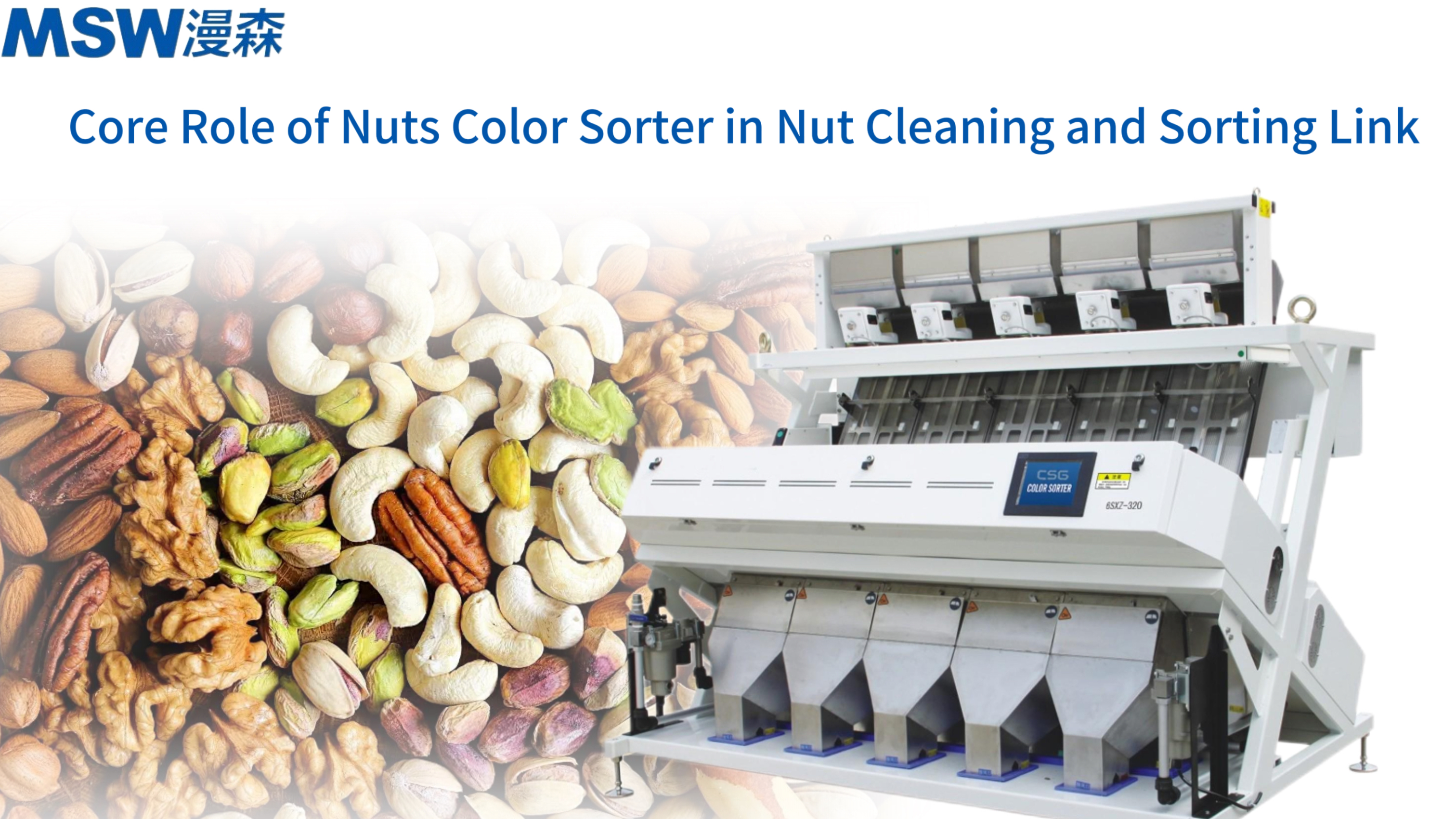
Nuts are a high-value agricultural commodity consumed worldwide as snacks, ingredients, and health foods. Their quality is judged by visual appearance, size uniformity, and the absence of defects such as insect damage, mold, shriveling, or shell fragments. Traditional manual sorting is labor-intensive, inconsistent, and unable to keep pace with modern processing volumes. The nuts color sorter, an advanced optical sorting machine, has become an indispensable tool in nut processing facilities. It automates the removal of defective products and foreign materials while simultaneously grading nuts by color and shape. This technology ensures that only premium nuts reach consumers, protecting brand reputation and reducing food safety risks. By integrating a nuts color sorter into the cleaning and sorting line, processors achieve higher throughput, lower labor costs, and consistent quality that meets international standards.
1. The Challenges of Traditional Nut Cleaning and Sorting
Manual Sorting vs Automated Color Sorting Performance
| Performance Metric | Manual Sorting | Color Sorter |
|---|---|---|
| Accuracy | 70-80% | >99.5% |
| Throughput | 0.1-0.5 tons/hour | 1-10 tons/hour |
| Fatigue Impact | Significant (after 1 hour) | None (24/7 operation) |
| Labor Cost | High ($20-30/hour per worker) | Low (electricity + maintenance) |
| Consistency | Variable (subjective judgment) | Uniform (precise algorithms) |
Nuts arrive at processing facilities with a variety of contaminants and imperfections. Field debris such as stones, twigs, and soil clods must be removed. Additionally, nuts themselves may be discolored, moldy, insect-damaged, or broken. These defects not only affect appearance but can also harbor mycotoxins and other health hazards. Manual sorting, even with multiple inspectors, is prone to fatigue and inconsistency. Studies show that human sorters typically achieve only 70-80% accuracy in defect removal under continuous operation. This leaves a significant portion of substandard product in the final batch, leading to customer complaints and potential recalls.
Furthermore, the increasing demand for nut products has outpaced the capacity of manual sorting lines. A single processing line may need to handle several tons per hour, a task impossible for manual labor alone. The need for a reliable, high-speed, and accurate sorting solution has driven the adoption of optical sorting technology. Modern nuts color sorters can process up to 10 tons per hour with detection accuracy exceeding 99.5%, completely transforming the economics and quality assurance of nut processing. The integration of such machines begins with understanding the working principles of color sorters and how they fit into the overall cleaning line.
Common Defects and Contaminants in Raw Nuts
Common Defects and Contaminants in Raw Nuts
Distribution
Raw nuts contain a diverse range of unwanted materials. Foreign matter includes stones, glass, metal fragments, sticks, and hulls. Biological defects encompass moldy nuts, insect-damaged kernels, shriveled or rancid meats, and discolored pieces. Even within a single batch, color variations due to uneven roasting or natural variation can affect grade. Each defect type has a distinct optical signature that a color sorter can be trained to recognize. For instance, aflatoxin-producing molds often fluoresce under UV light, enabling detection beyond visible spectrum. Advanced sorters use a combination of cameras and sensors to identify these contaminants at high speed.
Limitations of Manual Inspection in High-Volume Processing
Manual inspection relies on human visual acuity and attention. However, humans tire quickly, and their performance degrades after the first hour. Studies indicate that manual sorters miss up to 30% of defects during a shift. Moreover, the speed of conveyor belts must be slowed to allow inspectors to see individual nuts, limiting throughput. In contrast, automated sorters operate continuously without fatigue, maintaining consistent rejection criteria. They also eliminate the subjectivity inherent in human judgment, ensuring that every nut is evaluated against the same standards. This consistency is vital for processors supplying multiple retailers with strict quality specifications.
Economic Pressures Driving Automation
Labor costs are rising globally, and finding skilled sorters is increasingly difficult. At the same time, nut prices are volatile, and processors must maximize yield from every batch. A nuts color sorter pays for itself quickly by reducing labor and increasing the value of the final product. For example, removing just 2% more defective nuts can increase the premium grade yield by a corresponding amount, directly boosting revenue. Additionally, automation reduces the risk of product liability claims and recalls, which can be devastating to a brand. These economic realities make optical sorting not just an option but a necessity for competitive nut processing.
Regulatory and Food Safety Requirements
Food safety regulations worldwide mandate strict controls on contaminants in nuts. The European Union and United States have established maximum limits for aflatoxins and other mycotoxins. Exporters must certify that their products meet these standards. Manual sorting alone cannot provide the traceability and assurance required. Optical sorters generate data on rejection rates and can be integrated with quality management systems to document compliance. Some sorters even incorporate advanced sensors that detect chemical properties, adding another layer of safety. Thus, color sorters are essential tools for meeting regulatory demands and accessing premium markets.
2. Working Principle of Nuts Color Sorters
Nuts Color Sorter Working Process
Singulate & Accelerate
Camera/Sensor Scanning
Defect Identification
Precision Rejection
Accept/Reject Streams
A nuts color sorter operates on a simple yet powerful concept: it illuminates each nut as it passes through a detection zone, captures images or spectral data, and uses high-speed processors to decide whether to accept or reject it based on pre-defined criteria. The machine typically consists of a feeding system, optical sensors, a processing unit, and an ejection mechanism. Nuts are singulated and accelerated to ensure they pass the sensors one by one, allowing for individual inspection. The entire process happens in milliseconds, enabling throughputs of several tons per hour.
The core of the sorter is its optical system. Modern sorters use a combination of high-resolution color cameras, infrared sensors, and sometimes laser or X-ray detectors. Color cameras capture images in the visible spectrum, detecting color deviations, while infrared sensors can identify differences in moisture content or organic composition. Some machines also employ near-infrared (NIR) technology to detect chemical signatures of mold or foreign materials. The data from these sensors is fused in real time to make a sorting decision. When a defective nut is identified, a precisely timed blast of compressed air ejects it from the product stream into a reject chute, while good nuts continue their path.
Optical Detection Technologies Used in Nut Sorting
Optical Detection Technologies for Nut Sorting
| Technology Type | Detects | Nut Applications | Accuracy Level |
|---|---|---|---|
| Color Camera (CCD/CMOS) | Discoloration, shape, foreign material | All nuts (basic sorting) | 98-99% |
| NIR (Near-Infrared) | Moisture, mold, chemical defects | Peanuts (aflatoxin), almonds | 99-99.5% |
| Laser Profilometry | Size, shape, cracks | Almonds, walnuts, cashews | 99.2-99.7% |
| X-Ray | Internal defects, dense foreign material | Pistachios, macadamias | >99.5% |
| Fluorescence | Aflatoxin, mold spores | Peanuts, pistachios | 99.0-99.8% |
High-resolution CCD or CMOS cameras are the workhorses of nut sorters. They capture images in multiple spectral bands (e.g., red, green, blue, and sometimes near-infrared) to differentiate subtle color variations. For example, a peanut with a dark spot from Aspergillus mold appears different from a healthy peanut under specific wavelengths. Advanced sorters may also include laser profilometers to measure shape and size, identifying broken or misshapen nuts. Fluorescence sensors can detect aflatoxin by exciting specific compounds and measuring the emitted light. Combining these technologies in a single machine ensures comprehensive inspection.
The Role of AI and Machine Learning in Modern Sorters
While traditional sorters used simple threshold-based algorithms, today's nuts color sorters leverage artificial intelligence. Machine learning models are trained on thousands of images of good and defective nuts, learning to recognize patterns that human eyes might miss. These models can adapt to new defect types or variations in nut varieties without manual reprogramming. For instance, if a new pest affects almond color, the sorter can be retrained with a few hundred images to identify the defect. This flexibility is crucial as agricultural conditions change. AI also enables the sorter to handle borderline cases with greater accuracy, reducing false rejects and maximizing yield.
Ejection Mechanisms: Precision Air Jets
After detection, the rejection system must act with extreme speed and precision. High-speed solenoid valves control arrays of air nozzles that fire bursts of compressed air at individual nuts. The timing is critical: the air jet must hit the exact nut at the exact moment it passes the ejection point. Modern valves can cycle in less than a millisecond, allowing for precise targeting even at high belt speeds. The number of nozzles and their arrangement (often in rows) determines the resolution of rejection. In chute-type sorters, multiple channels each have their own ejection system, enabling independent control of each stream. This design is common in multi-channel sorters that handle large volumes.
Integration with Downstream Equipment
A nuts color sorter is not a standalone machine; it is part of a larger processing line. It typically sits after cleaners (destoners, aspirators) that remove light debris and before graders or packaging stations. The sorter must be synchronized with upstream and downstream conveyors to ensure smooth material flow. Some sorters include feedback systems that adjust feed rate based on the reject rate, preventing overloading. Data from the sorter can also be sent to a central control room for real-time monitoring of quality trends. This integration maximizes line efficiency and provides valuable production insights.
3. Integration of Color Sorters into Nut Cleaning Lines
Nut Cleaning and Sorting Line Configuration
The placement of a color sorter within a nut cleaning line is critical to its effectiveness. Typically, the line begins with coarse cleaning: magnets remove ferrous metals, and vibrating screens or destoners separate large stones and debris. Next, an aspirator removes light chaff and dust. Only after these preliminary steps are nuts ready for optical sorting. If a color sorter is placed too early, it may become overwhelmed by foreign material, leading to excessive valve wear or clogging. If placed too late, defects that could have been removed earlier may contaminate the product stream. Therefore, engineers design the line to gradually refine the product, with the color sorter as the final quality gatekeeper before packaging.
In many facilities, the color sorter is followed by a manual inspection belt for spot checks, but the reliance on manual labor is minimal. The sorter's reject stream may be re-sorted by a second machine to recover any good nuts accidentally ejected, improving yield. This two-pass configuration is common in high-value nut processing where every kernel counts. The entire line is often controlled by a centralized PLC that coordinates speeds and alarms, ensuring seamless operation. For processors handling multiple nut types, such as peanuts, almonds, and cashews, the color sorter must be easily reconfigurable. Many manufacturers offer quick-change settings for different products, stored in the machine's memory.
Pre-Sorting Steps: Cleaning and Grading Before Optical Sorting
Before nuts reach the color sorter, they must be cleaned of impurities that could interfere with optical detection or damage the machine. Destoners use air and vibration to separate stones based on density. Screens sized to the nut's dimensions remove over-sized or under-sized particles. Magnets capture ferrous metals. These steps ensure that only nuts and nut-like materials enter the sorter. Additionally, nuts may be sized into fractions so that each stream has a uniform particle size, which improves sorting accuracy. For instance, peanut sorters often process peanuts in specific size ranges to optimize defect detection.
Post-Sorting Handling: Accept and Reject Streams
The accept stream from the color sorter goes directly to packaging or further processing (e.g., roasting, blanching). The reject stream, however, requires attention. It contains primarily defective nuts but may also include some good nuts that were rejected due to borderline color or shape. To minimize waste, many processors install a secondary sorter dedicated to re-sorting the reject stream. This secondary machine, often with higher sensitivity, recovers good product and sends it back to the accept line. The final reject, consisting of true defects, is disposed of or sold for oil extraction. This two-tier sorting can increase overall yield by 2-5%, significantly impacting profitability.
Line Balancing and Throughput Considerations
The color sorter's capacity must match the line's overall throughput. If the sorter is undersized, it becomes a bottleneck; if oversized, capital is wasted. Typical nuts color sorters handle between 1 and 10 tons per hour, depending on the model and nut type. Processors must consider peak harvest seasons when throughput requirements are highest. Some sorters allow for parallel operation of multiple units. Line balancing also involves coordinating the speeds of feeders, conveyors, and the sorter itself. Modern systems use variable frequency drives to adjust speeds automatically, maintaining a constant product layer thickness for optimal detection.
Customization for Specific Nut Varieties
Different nuts present unique sorting challenges. Almonds require detection of dark shells versus light meats, while pistachios need to separate split shells from closed ones. Walnuts may have internal mold that is not visible externally, requiring X-ray or NIR sensors. A versatile nuts color sorter should accommodate these variations through adjustable settings and sensor configurations. Some processors opt for customized solutions that include specific lighting wavelengths or ejection configurations tailored to their product mix. Working closely with the manufacturer ensures the machine is optimized for the actual nut varieties processed.
4. Quality Improvements Achieved by Nuts Color Sorters
Quality Improvement Metrics with Color Sorters
| Quality Metric | Before Color Sorter | After Color Sorter | Improvement |
|---|---|---|---|
| Aflatoxin Levels | 10-20 ppb | 1-2 ppb | 90% reduction |
| Foreign Material | 0.1-0.5% | <0.01% | 98% reduction |
| Defective Nuts | 5-8% | <0.5% | 90% reduction |
| Color Uniformity | 70-80% | 98-99% | 20% improvement |
| Premium Grade Yield | 75-80% | 90-95% | 15% increase |
The primary benefit of installing a nuts color sorter is the dramatic improvement in product quality. By removing defective nuts, foreign materials, and off-color kernels, the sorter ensures that the final product meets the highest visual and safety standards. This consistency builds trust with buyers and allows processors to command premium prices. In blind tests, nuts sorted by machine consistently outperform manually sorted batches in terms of uniformity and absence of defects. Moreover, the sorter's ability to detect subtle defects invisible to the human eye—such as early-stage mold or internal discoloration—adds a layer of food safety that manual sorting cannot provide.
Quantifiable quality metrics often improve significantly. For example, aflatoxin levels can be reduced by up to 90% when using optical sorters equipped with fluorescence detection. The percentage of foreign material in the final product can drop to below 0.01%, meeting the strictest export requirements. Color sorters also enable processors to create multiple grade levels from a single raw material stream. For instance, almonds can be separated into whole naturals, splits, and pieces, each with its own market value. This ability to grade precisely maximizes revenue from every nut.
Removal of Foreign Material and Inerts
Foreign material in nuts poses serious risks: stones can break teeth, glass can cause injury, and sticks may harbor bacteria. A color sorter can identify these items based on their different color, texture, or density. Inerts that are visually similar to nuts, such as certain weed seeds, can be distinguished by their shape or chemical signature using NIR. The result is a product stream virtually free of physical contaminants. This level of purity is essential for export to markets with zero-tolerance policies for foreign matter. It also protects the brand from costly recalls and liability lawsuits.
Detection of Mold, Mycotoxins, and Decay
Moldy nuts are not only visually unappealing but also dangerous due to mycotoxins like aflatoxin. These toxins are carcinogenic and strictly regulated. While not all moldy nuts contain detectable levels of aflatoxin, their removal is a critical control point. Advanced sorters use fluorescence or hyperspectral imaging to identify nuts with elevated fungal metabolites. Some systems can even sort individual kernels based on their aflatoxin risk, significantly reducing the overall toxin load in the batch. This technology is particularly important for peanuts, which are highly susceptible to aflatoxin contamination. By incorporating such sorters, processors can meet stringent food safety standards without relying solely on destructive sampling.
Color Sorting for Grade Uniformity
Color is a key quality attribute for nuts. For roasted nuts, uniform color indicates even roasting and freshness. A nuts color sorter can be set to accept only nuts within a specific color range, ejecting those that are too light (under-roasted) or too dark (over-roasted or scorched). This creates a visually consistent product that appeals to consumers. In natural (raw) nuts, color variations may indicate immaturity or defects. Sorting by color allows processors to offer multiple grades: premium (uniform light color), standard (slight variation), and cull (dark or discolored). Each grade commands a different price, optimizing revenue.
Yield Optimization and Reduction of False Rejects
While removing defects is essential, ejecting good nuts is costly. Modern AI-based sorters minimize false rejects by learning the precise boundary between good and bad. They can also use shape and size data to distinguish between a broken nut (reject) and a small whole nut (accept). Some sorters offer a "recovery" mode where borderline nuts are sent to a separate channel for re-evaluation rather than immediate rejection. These features boost overall yield by 1-3%, which can translate into substantial annual savings. For a processor handling 10,000 tons per year, a 2% yield improvement means an extra 200 tons of saleable product.
5. Applications Across Different Nut Types
Color Sorter Configuration by Nut Type
| Nut Type | Key Defects to Detect | Recommended Sensors | Typical Throughput (tons/hour) |
|---|---|---|---|
| Peanuts | Aflatoxin, mold, discoloration, foreign seeds | Color + NIR + Fluorescence | 5-8 |
| Almonds | Shell fragments, insect damage, discoloration | Color + Laser + NIR | 3-6 |
| Pistachios | Closed shells, mold, shell color | Color + X-Ray + NIR | 2-5 |
| Cashews | Dark skin, burnt pieces, splits | Color + Laser | 2-4 |
| Walnuts | Internal mold, shell stains, shriveling | Color + NIR + X-Ray | 1-3 |
| Macadamias | Discoloration, shell fragments | Color + Laser | 1-2 |
Nuts color sorters are versatile machines that can be adapted to virtually any nut variety. The sorting parameters—camera sensitivity, lighting wavelength, ejection timing—are adjusted based on the physical characteristics of the nut. Almonds, for example, are often sorted for shell color, meat color, and the presence of wormholes. Peanuts require detection of mold, shriveled kernels, and foreign seeds like castor beans. Pistachios are sorted for shell integrity and color uniformity, with split shells being a desirable trait for some markets. Each application demands a thorough understanding of the product's optical properties and defect types.
In addition to common nuts, sorters are used for specialty nuts such as macadamias, walnuts, pecans, and hazelnuts. Macadamias have extremely hard shells that must be cracked before sorting; the kernels are then sorted for color and size. Walnuts often have light-colored meats that can be stained by the shell's tannins; sorting removes stained pieces. The flexibility of modern sorters allows processors to switch between nut types with minimal downtime. Preset programs stored in the machine's memory recall the optimal settings for each product, ensuring consistent results across different runs.
Peanuts: Aflatoxin Control and Size Grading
Peanuts are one of the most challenging nuts to sort due to their high susceptibility to aflatoxin and the presence of similar-sized foreign objects. A typical peanut line includes multiple sorters: one for raw in-shell peanuts, one for shelled kernels, and sometimes a final sorter for blanched peanuts. The raw in-shell sorter removes rocks, sticks, and obviously rotten pods. After shelling, a color sorter with NIR capability identifies discolored kernels and those with aflatoxin risk. Finally, a size grader may separate kernels into jumbo, medium, and splits. This multi-stage approach ensures that the final product meets the strictest export standards. The peanut color sorter is a critical component of this process.
Almonds: Shell and Kernel Sorting
Almonds are sorted at various stages. First, in-shell almonds are cleaned of hulls, sticks, and stones. Then, after shelling, the kernels must be separated from shell fragments and defective meats. Almond kernels are graded by color: extra light, light, and light amber are typical grades. Dark kernels are rejected or sold for lower-value uses. Additionally, insect damage, shriveling, and double kernels need removal. Advanced almond sorters use high-resolution color cameras and laser shape detectors to achieve this. They can also detect chip marks from mechanical harvesting, which can lead to rancidity if not removed.
Pistachios: Split Shell Detection and Color Sorting
Pistachios are unique because split shells are desirable for roasting and salting; closed shells are considered defects for most snack applications. Therefore, pistachio sorters must distinguish between split and closed shells while also evaluating shell color (natural tan) and meat color (greenish). Some sorters use X-ray to see inside the shell and detect kernel size and defects. The sorted streams are then processed separately: splits are roasted and salted, while closed shells may be cracked for kernel removal. This application demonstrates the need for multi-sensor integration in a single machine.
Cashews, Walnuts, and Other Nuts
Cashews are often sorted after peeling to remove dark-skinned kernels and burnt pieces. Walnuts are sorted for light-colored halves and pieces, with dark or shriveled meats removed. Macadamias require sorting for uniform white color and size. Each of these applications benefits from the flexibility of modern color sorters. The ability to quickly adjust settings and even change sensor modules (e.g., swapping in a NIR camera) makes a single machine suitable for a range of products. This versatility is particularly valuable for contract processors who handle different nuts seasonally.
6. Selecting the Right Nuts Color Sorter for Your Operation
Nuts Color Sorter Selection Criteria
Technical Factors
-
Throughput capacity (tons/hour)
-
Sensor type and configuration
-
Channel count (sorting resolution)
-
AI/machine learning capabilities
-
Air consumption and ejection precision
-
Footprint and installation requirements
Business Factors
-
Initial capital investment
-
Total cost of ownership (energy, air, maintenance)
-
Payback period (typically 1-2 years)
-
Manufacturer support and warranty
-
Spare parts availability
-
Training and technical assistance
Operational Factors
-
Compatibility with existing line
-
Ease of cleaning and maintenance
-
User interface and ease of operation
-
Flexibility for multiple nut types
-
Data logging and traceability features
-
Remote monitoring capabilities
Performance Factors
-
Defect detection accuracy
-
False reject rate
-
Sorting consistency over time
-
Ability to handle varying nut sizes
-
Calibration stability
-
Mean time between failures (MTBF)
Choosing a nuts color sorter involves evaluating several factors: throughput requirements, nut types, defect profiles, budget, and available space. Processors should start by defining their quality targets: what percentage of defects are acceptable? What is the desired throughput in tons per hour? Next, they must consider the physical characteristics of their nuts—size range, color variation, and typical defects. This information will guide the selection of sensor types, channel count, and ejection system. It is also essential to consider the machine's footprint and how it will integrate with existing equipment.
Another critical factor is the manufacturer's support and service. A sorter is a complex machine that may require occasional tuning and maintenance. Look for a supplier with a strong local presence, quick response times, and a comprehensive spare parts inventory. Some manufacturers offer on-site testing with the processor's own product samples to demonstrate performance before purchase. This test can reveal the machine's true accuracy and yield, helping to justify the investment. Finally, consider the total cost of ownership, including energy consumption, compressed air usage, and expected lifespan of components like LED lights and valves.
Throughput and Channel Configuration
Sorters come in various channel configurations, from single-channel units for low-volume specialty products to multi-channel machines with up to 12 chutes and 768 channels for high-volume lines. The number of channels directly affects throughput: more channels mean more nuts processed simultaneously. For a given belt width or chute count, the throughput also depends on nut size and the desired sorting sensitivity. A 8-chute 512-channel sorter might handle 5-8 tons per hour of peanuts, but only 2-3 tons per hour of larger walnuts. Processors should request capacity estimates based on their specific product.
Sensor Suite: Cameras, NIR, Laser, and X-Ray
The choice of sensors depends on the defects to be detected. For basic color sorting (e.g., removing discolored kernels), high-resolution color cameras suffice. For foreign material like plastic or glass, NIR or X-ray may be needed. For internal defects (e.g., hidden mold), X-ray or hyperspectral imaging is required. Some nuts, like almonds, benefit from laser shape detection to identify broken pieces. It is often wise to invest in a multi-sensor machine that can handle future needs, even if only color sorting is needed now. Upgradability should be discussed with the manufacturer.
Ease of Cleaning and Maintenance
Nut processing involves oils and dust that can coat optical windows and affect performance. A well-designed sorter allows easy access to cameras and lights for cleaning. Some machines have automatic cleaning systems that periodically blow air or wipe lenses. The reject system's nozzles should also be accessible for clearing blockages. Maintenance requirements, such as valve replacement intervals, should be understood upfront. Regular maintenance is essential for long-term reliability; therefore, the machine's design should facilitate quick and safe servicing. Review the manufacturer's recommendations and ensure that your team can perform routine tasks without specialized tools.
Software and User Interface
Modern sorters feature touchscreen interfaces that allow operators to adjust settings, view real-time statistics, and recall product recipes. The software should be intuitive, with clear visual feedback on what is being rejected and why. Some systems include remote monitoring capabilities, enabling off-site experts to assist with troubleshooting. Data logging is important for quality assurance and traceability. Ensure the software can export reports in formats compatible with your quality management system. A user-friendly interface reduces training time and the risk of operator errors.
Cost-Benefit Analysis and ROI
Investing in a nuts color sorter requires a clear understanding of the financial return. Calculate the savings from reduced labor, the value of recovered good product (reduced false rejects), and the premium price achieved for higher quality. Also factor in the cost of rejects disposal versus the income from selling defect-free nuts. Many processors find that the payback period is less than two years. Additionally, consider the avoided costs of recalls or lost customers due to quality issues. A detailed ROI analysis, perhaps with the help of the manufacturer, will confirm whether a particular model is justified.
7. Maintenance and Long-Term Performance of Nuts Color Sorters
Nuts Color Sorter Troubleshooting Guide
| Fault Symptom | Likely Cause | Immediate Action | Preventive Measure |
|---|---|---|---|
| High False Reject Rate | Dirty optics, incorrect settings, sensor drift | Clean optical components, recalibrate, adjust sensitivity | Daily cleaning schedule, weekly calibration checks |
| Missed Defects | Low light intensity, blocked nozzles, feed rate too high | Check LED modules, clean nozzles, reduce feed rate | Replace LEDs per schedule, air filter maintenance |
| Erratic Ejection | Low air pressure, worn valves, timing issues | Check air supply, replace valves, re-calibrate timing | Regular air system maintenance, valve replacement schedule |
| Image Quality Issues | Dirty lenses, lighting imbalance, camera malfunction | Clean lenses, adjust lighting, run camera diagnostics | Protective covers for optics, regular camera checks |
| System Slowdown | Software overload, memory leaks, hardware issues | Restart system, clear logs, run hardware diagnostics | Regular software updates, scheduled system restarts |
Proper maintenance is essential to ensure consistent performance and extend the lifespan of a nuts color sorter. Most manufacturers recommend a tiered maintenance schedule: daily cleaning, weekly inspections, monthly calibrations, and annual overhauls. Neglecting routine maintenance can lead to reduced accuracy, increased false rejects, and costly downtime. A well-maintained sorter can operate reliably for 10-15 years, making it a long-term asset for nut processing facilities.
Daily and Routine Maintenance Tasks
Daily maintenance should take less than 30 minutes and focuses on cleaning critical components. Operators should wipe down optical lenses and windows with a lint-free cloth to remove dust and oil buildup. The feeding system, chutes, and ejection nozzles should be inspected for blockages or debris. Air filters should be checked and cleaned to maintain consistent air pressure for ejection. Additionally, the reject collection bins should be emptied and cleaned to prevent contamination. A daily log should record any issues, such as unusual reject rates or equipment noises, for follow-up.
Calibration and Performance Testing
Weekly calibration ensures that the sorter's sensors and ejection system are functioning correctly. This involves running a test batch of nuts with known defects to verify detection accuracy and reject timing. Calibration may include adjusting lighting intensity, camera sensitivity, or air pressure settings. Some modern sorters offer automated calibration routines that can be initiated with a single button press. Monthly performance testing should measure key metrics like defect removal rate, false reject rate, and throughput to identify any gradual degradation in performance.
Preventive Maintenance Schedules
Preventive maintenance addresses wear and tear before it causes downtime. Typical quarterly tasks include inspecting and lubricating moving parts (e.g., feed rollers, conveyor belts), checking electrical connections for corrosion, and testing backup systems like emergency stops. Annual maintenance should include a complete system audit: replacing worn valves and nozzles, testing sensor performance against factory benchmarks, and updating software to the latest version. Manufacturers often offer service contracts that include scheduled preventive maintenance by certified technicians, ensuring compliance with warranty terms and optimal performance.
Common Wear Parts and Replacement Intervals
Certain components of a color sorter are subject to regular wear and require replacement:
-
Air nozzles/valves: 6-12 months (depending on usage)
-
LED lighting modules: 2-3 years (gradual brightness degradation)
-
Conveyor belts/rollers: 3-5 years
-
Air filters: 1-3 months (more frequently in dusty environments)
-
Camera lenses: 5-7 years (or if scratched/damaged)
Keeping a small inventory of critical spare parts minimizes downtime when replacements are needed. Manufacturers can provide estimates of replacement intervals based on typical operating conditions for nut processing.
Troubleshooting Common Issues
Most sorter issues can be resolved with basic troubleshooting. High false reject rates are often caused by dirty optics or incorrect sensitivity settings; cleaning and recalibration usually fix the problem. Missed defects may indicate low light intensity (replace LEDs) or blocked nozzles (clean the ejection system). Erratic ejection is typically related to air pressure problems or worn valves. For more complex issues like software errors or sensor malfunctions, manufacturers offer remote diagnostics or on-site service. Training operators to recognize and resolve common issues reduces reliance on external technicians and minimizes downtime.
8. Future Trends in Nut Color Sorting Technology
Emerging Technologies in Nut Color Sorting
AI & Machine Learning Advancements
-
Self-learning algorithms that adapt to seasonal nut variations
-
Predictive maintenance based on operational data
-
Multi-modal data fusion (visual + spectral + shape)
-
Cloud-based model training and updates
Sensor Technology Innovations
-
Hyperspectral imaging (100+ spectral bands)
-
Quantum dot sensors for enhanced color detection
-
Miniaturized X-ray modules for portable sorting
-
Real-time chemical composition analysis
Operational Efficiency
-
Energy-efficient LED lighting (90% less power)
-
Low-pressure air ejection systems
-
Modular design for easy upgrades
-
IoT connectivity for remote monitoring
Sustainability Features
-
Waterless cleaning systems
-
Recyclable component design
-
Waste reduction through precision sorting
-
Carbon footprint tracking
The future of nut color sorting is driven by advancements in artificial intelligence, sensor technology, and sustainability. Next-generation sorters will be more intelligent, efficient, and connected than current models, further improving quality control and operational efficiency for nut processors.
AI and Predictive Analytics
Future sorters will leverage advanced AI to not only detect defects but also predict quality issues before they occur. Machine learning models will analyze historical data to identify patterns that indicate potential problems, such as increasing aflatoxin levels in a specific batch of peanuts. Predictive analytics will also enable condition-based maintenance, alerting operators to replace parts before they fail. Cloud connectivity will allow manufacturers to provide real-time support and update sorting algorithms remotely, ensuring optimal performance even as nut varieties and defect profiles change.
Hyperspectral and Multi-Spectral Imaging
Hyperspectral imaging, which captures data across hundreds of spectral bands (compared to 3-5 bands in standard color cameras), will become more common in nut sorting. This technology can detect subtle chemical differences in nuts, such as early-stage rancidity or nutrient content, that are invisible to traditional sensors. Multi-spectral imaging combined with AI will enable sorters to classify nuts based on both physical defects and nutritional quality, opening new opportunities for value-added processing (e.g., sorting nuts by protein content for specialized food products).
Integration with Industry 4.0 and Smart Factories
Nut color sorters will become integral components of smart factories (Industry 4.0), connected to other processing equipment via industrial IoT (IIoT) networks. This connectivity will enable seamless data sharing between machines, optimizing the entire production line. For example, data from the sorter about defect types can trigger adjustments in upstream cleaning equipment to reduce specific contaminants. Smart sorters will also provide real-time production metrics to factory management systems, enabling data-driven decision-making and continuous process improvement.
Miniaturization and Mobile Sorting Solutions
While large-scale sorters will remain dominant in central processing facilities, miniaturized, mobile sorting units are emerging for on-farm or regional processing. These compact sorters are ideal for small-scale nut producers who want to improve quality before shipping to large processors. Mobile sorters are typically battery-powered or solar-powered, making them suitable for remote agricultural areas with limited infrastructure. They offer basic color sorting capabilities at a fraction of the cost of industrial models, democratizing access to optical sorting technology.
Sustainability and Energy Efficiency
Future sorters will prioritize sustainability, with energy-efficient components, reduced air consumption, and recyclable materials. LED lighting technology will continue to improve, consuming less power while providing more consistent illumination. Ejection systems will use low-pressure air to reduce energy usage, and modular designs will allow for component replacement rather than full machine replacement, reducing waste. Additionally, precision sorting will minimize food waste by maximizing yield and ensuring that only truly defective nuts are rejected, aligning with global sustainability goals for the food industry.
9. Conclusion: The Indispensable Role of Nuts Color Sorters
Nuts color sorters have transformed the nut processing industry, replacing labor-intensive and inconsistent manual sorting with precise, high-speed optical technology. These machines are no longer optional but essential for processors seeking to meet quality standards, reduce costs, and remain competitive in global markets. From removing dangerous contaminants like aflatoxin to ensuring color uniformity for premium-grade nuts, color sorters deliver measurable benefits across every aspect of nut processing.
The integration of advanced sensors, AI, and machine learning has made modern sorters more capable than ever, adapting to different nut types and defect profiles with minimal manual intervention. Proper selection, integration into processing lines, and routine maintenance ensure that these machines deliver long-term value, with payback periods typically under two years. As technology continues to evolve, future sorters will become even more intelligent and sustainable, further enhancing their role as the cornerstone of nut quality control.
For nut processors, investing in a high-quality color sorter is an investment in product quality, food safety, and business profitability. By leveraging this technology, processors can ensure that only the highest-quality nuts reach consumers, protect their brand reputation, and capitalize on premium market opportunities. In an industry where quality and consistency are paramount, the nuts color sorter is truly an indispensable tool.