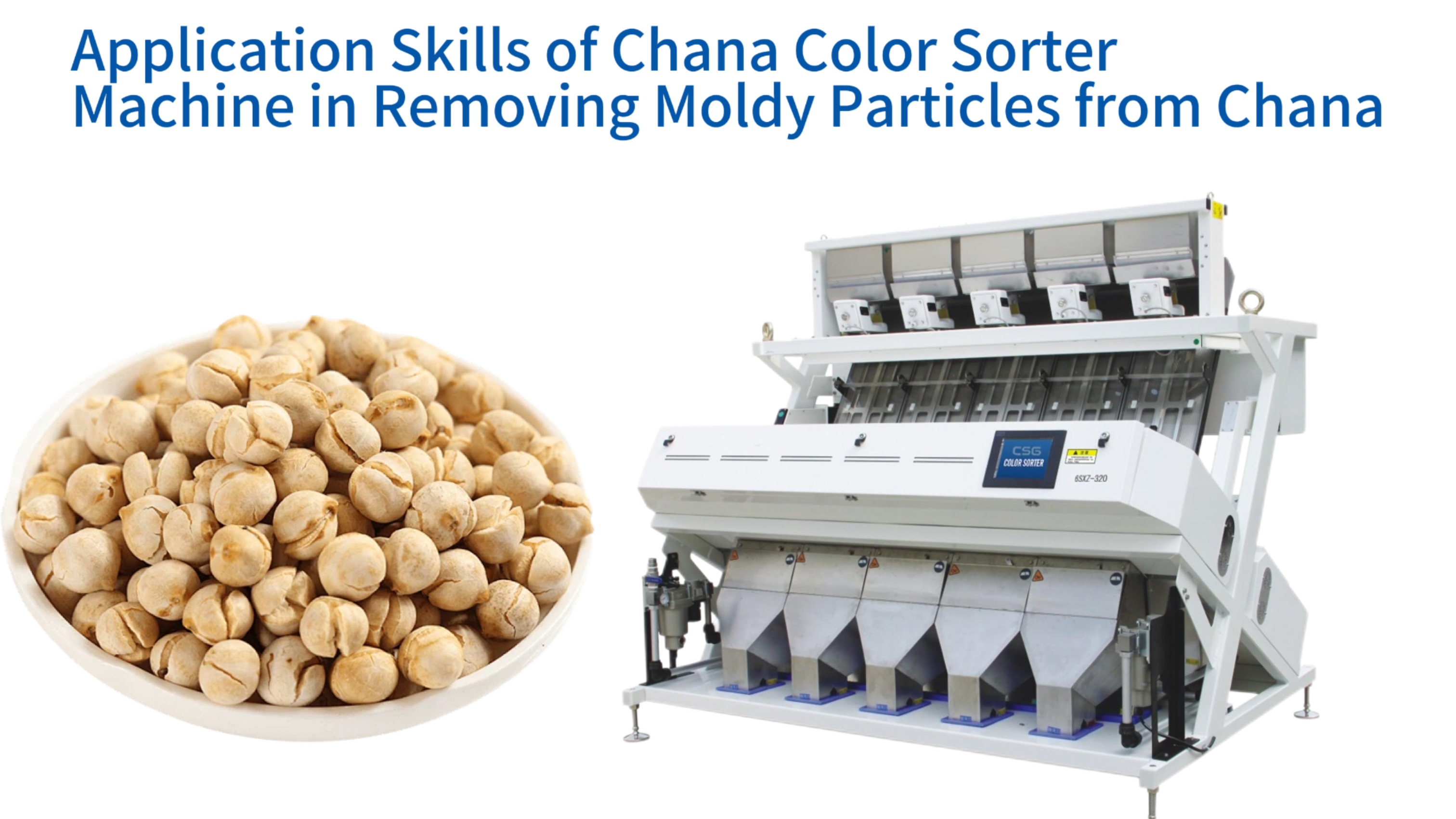
The presence of moldy particles in chana represents one of the most significant quality challenges facing pulse processors today. Mold contamination not only compromises the visual appearance of the final product but also introduces potential health risks through mycotoxin production that can affect consumer safety. Chana color sorter machines have emerged as the primary technological solution for addressing this challenge, offering the ability to detect and remove defective particles at industrial scales with remarkable precision. This comprehensive guide explores the specialized application skills required to maximize the effectiveness of color sorting technology specifically for moldy particle removal from chana. Understanding the optical characteristics of mold contamination, optimizing machine parameters for different chana varieties, implementing proper material preparation protocols, and maintaining consistent performance through systematic calibration all contribute to successful sorting outcomes. Pulse processors who master these application skills can achieve final product purity levels that meet the most stringent international quality standards while maximizing yield and operational efficiency.
Understanding the Nature of Mold Contamination in Chana and Its Detection Challenges
Key Challenges in Moldy Chana Detection
| Challenge Type | Detection Difficulty | Impact on Processing |
|---|---|---|
| Early-stage Mold | High | Subtle color changes within natural variation range |
| Dark Mold on Desi Chana | Very High | Low contrast with dark seed coat |
| Internal Mold | Extreme | No visible surface indicators of contamination |
| Mycotoxin Presence | High | Toxin may exist before visible mold growth |
Mold development on chana typically occurs during critical stages of the production cycle including field growth under humid conditions, improper drying after harvest, or storage in environments with excessive moisture. The fungal growth manifests as visible discoloration on the seed coat, ranging from subtle light patches to obvious dark spots, depending on the specific mold species and the duration of infestation. These visual changes provide the basis for optical detection, but the subtlety of early-stage mold colonization creates significant technical challenges for sorting equipment. Freshly contaminated chana may exhibit only minor color variations that fall within the natural color variation range of healthy chana, making discrimination particularly difficult without advanced sensing capabilities . The economic implications of inadequate mold removal extend beyond simple quality concerns, as many importing countries enforce strict limits on moldy kernel percentages with shipments exceeding these thresholds facing rejection or costly reprocessing.
The optical properties of mold-infected chana differ from healthy grains in ways that sophisticated sorting systems can exploit for effective separation. Mold growth alters the light reflectance characteristics of the seed coat, typically reducing overall reflectance while increasing absorption in specific spectral bands corresponding to fungal pigments. These changes affect both the visible color spectrum that human inspectors rely upon and the near-infrared signatures that advanced sorting machines can detect. Modern chana color sorters utilize high-resolution cameras with sensitivity across multiple spectral bands to capture these differences, generating image data that reveals contamination invisible to the naked eye . The challenge for processors lies in configuring their equipment to recognize these optical signatures consistently while avoiding false rejection of healthy chana that naturally exhibits color variation due to growing conditions or varietal characteristics. Successful mold removal requires a deep understanding of how different mold species affect chana appearance and how to translate that understanding into effective machine parameters.
Mycotoxin Risks Associated with Moldy Chana
The presence of mold on chana raises serious food safety concerns beyond simple aesthetic degradation, as many common fungal species produce toxic secondary metabolites known as mycotoxins. Aflatoxins produced by Aspergillus species represent the most significant health risk, with established regulatory limits in most developed countries set at parts per billion levels due to their potent carcinogenic properties. These toxins can develop during both pre-harvest and post-harvest stages, with warm and humid conditions accelerating fungal growth and mycotoxin production. The thermal stability of mycotoxins means that standard cooking processes do not eliminate them, making prevention through removal of contaminated kernels the only effective control strategy. Regulatory agencies in major importing nations conduct random sampling and testing of pulse shipments, with mycotoxin contamination serving as a primary cause of border rejections that result in significant financial losses for exporters .
The relationship between visible mold and mycotoxin presence is not perfectly correlated, adding complexity to sorting strategies. Early-stage fungal colonization may produce detectable mycotoxins before visible discoloration develops sufficiently for optical detection, while some moldy-looking kernels may contain primarily surface contamination with limited toxin penetration. This variability necessitates the use of safety margins in sorting parameters, with processors typically setting their machines to reject any kernel showing even minimal signs of discoloration to ensure mycotoxin levels remain below regulatory thresholds. Advanced sorting systems incorporating artificial intelligence can improve this situation by learning to recognize subtle spectral signatures associated with mycotoxin presence even when visual changes remain minimal . The ongoing development of hyperspectral imaging technologies promises to further enhance detection capabilities by analyzing the complete light spectrum reflected from each kernel rather than just the three color bands visible to human vision.
Common Mold Species Affecting Chana Quality
The specific fungal species that colonize chana vary depending on geographical origin, harvest conditions, and storage practices, with each species producing distinctive visual patterns on infected kernels. Aspergillus flavus and Aspergillus parasiticus represent the primary concerns in warm growing regions, producing yellow-green spore masses that appear as powdery patches on the seed surface. These species thrive when chana is harvested during humid conditions or stored with moisture content exceeding safe thresholds, rapidly colonizing damaged or cracked seeds before spreading to healthy kernels. Fusarium species cause different visual symptoms including pink or reddish discoloration and kernel shrinkage, often developing in field conditions before harvest and continuing progression during storage. Penicillium species typically appear as blue-green or gray-green spots and are most associated with cool, damp storage conditions where air circulation proves inadequate .
Each mold species presents unique detection challenges that influence optimal sorting machine configuration. Aspergillus colonies often produce bright colored spores that contrast strongly with the natural chana color, making them relatively easy to detect with standard optical systems when illumination conditions are properly configured. Fusarium infections produce more subtle color changes that may blend with natural chana color variation, requiring higher sensitivity settings and potentially multispectral analysis for reliable detection. Penicillium infections can penetrate beneath the seed coat, producing internal discoloration that remains invisible to surface inspection while still compromising product quality. Processors handling chana from multiple origins must understand which mold species predominate in each source and adjust their sorting parameters accordingly to maintain effective removal while optimizing yield.
Impact of Chana Variety on Mold Detection Difficulty
Mold Detection Difficulty by Chana Variety
| Chana Variety | Physical Characteristics | Detection Difficulty | Recommended Technology |
|---|---|---|---|
| Kabuli | Large, cream-colored, smooth surface | Low (high contrast with mold) | Standard CCD color sorting |
| Desi | Small, brown/black/red, rough surface | High (low contrast with mold) | Multispectral imaging + AI |
| Green Chana | Medium size, green color, smooth surface | Medium (moderate contrast) | Enhanced CCD with NIR capability |
| White Chana | Medium size, white, slightly wrinkled | Low (excellent contrast) | Standard CCD with sensitivity adjustment |
The natural color characteristics of different chana varieties significantly influence the ease with which mold contamination can be detected through optical sorting. Kabuli chana varieties with their large cream-colored seeds provide an excellent background for mold detection, as the light surface allows dark or colored mold spots to stand out with high contrast. This natural advantage means that processors working with Kabuli types can often achieve effective mold removal using standard color sorting technology with relatively conservative sensitivity settings. Desi chana varieties featuring smaller seeds with brown, reddish, or black seed coats present greater detection challenges, as mold discoloration may not contrast strongly with the natural seed color. Dark-spored molds on dark-coated desi varieties can be nearly invisible to standard optical systems, requiring more sophisticated detection approaches including shape analysis and multispectral imaging .
The surface texture of different chana varieties also affects detection reliability, with smooth-coated varieties providing more consistent light reflection than rough or wrinkled types. Varieties with pronounced surface irregularities can create shadow patterns that mimic the appearance of mold spots, potentially triggering false rejects if sorting parameters are set too aggressively. Processors must characterize the natural variation within each variety they handle, establishing baseline color and texture profiles that distinguish acceptable natural variation from genuine mold contamination. This characterization process requires systematic testing using representative samples, with machine parameters adjusted until false reject rates fall within acceptable economic limits while maintaining effective mold removal. Variety-specific configuration files can be saved and recalled when switching between different chana types, ensuring optimal performance without requiring complete recalibration for each production run.
Optical Detection Principles for Mold Identification in Chana Sorting
The fundamental principle underlying mold detection in modern chana color sorters involves the analysis of light reflected from individual seeds as they pass through an inspection zone illuminated by controlled light sources. High-resolution cameras capture images of each seed from multiple angles, generating data that includes color information across the visible spectrum as well as intensity variations that reveal surface characteristics . The image processing system compares each seed against established acceptance criteria, flagging those that fall outside normal parameters for rejection. This comparison can be based on simple color thresholds, where seeds exhibiting colors outside a defined range are rejected, or on more sophisticated pattern recognition that identifies specific visual features associated with mold contamination. The choice between these approaches depends on the nature of the contamination and the degree of natural color variation present in the chana being processed.
The spatial resolution of modern sorting cameras has reached levels that enable detection of mold spots smaller than one square millimeter, far exceeding the capabilities of human visual inspection. This high resolution means that even tiny colonies that would escape human notice during manual sorting are reliably identified and removed, contributing to final product purity levels impossible to achieve through traditional methods. The trade-off for this sensitivity is increased susceptibility to false rejects triggered by minor surface irregularities or color variations that do not represent genuine quality defects. Advanced sorting systems address this challenge through sophisticated image analysis algorithms that distinguish between random color variation and the characteristic patterns of mold growth . These algorithms consider factors including spot shape, edge characteristics, and distribution patterns to make more nuanced rejection decisions that maintain product yield while ensuring safety.
Full-Color CCD Camera Systems for Mold Detection
Full-color charge-coupled device camera systems represent the most widely deployed technology for chana color sorting, offering a proven combination of detection capability, reliability, and cost-effectiveness. These cameras capture images using arrays of light-sensitive elements arranged in patterns that correspond to red, green, and blue color channels, generating data that closely matches human color perception. The resolution of modern CCD systems has increased dramatically in recent years, with current generations capable of imaging at resolutions up to 262 million pixels per second, providing the detail necessary to detect even minimal mold colonization . This high-speed imaging capability proves essential for commercial sorting operations where throughput requirements demand that thousands of seeds be inspected each second without sacrificing detection sensitivity.
The color accuracy of CCD systems depends critically on the quality of illumination provided within the sorting machine, with consistent lighting across the entire inspection zone essential for reliable operation. LED lighting systems have become standard in modern equipment, offering stable color temperature, long operational life, and the ability to adjust illumination color to optimize contrast for specific applications. Some advanced systems incorporate background lighting that can be adjusted in real-time to maintain optimal contrast as material characteristics change during processing runs. The integration of camera and lighting systems into a unified optical bench ensures that all seeds experience identical inspection conditions, eliminating the variability that plagued early sorting systems with inconsistent illumination . Processors can verify the stability of their optical systems through routine testing using calibrated reference samples, confirming that detection sensitivity remains consistent over extended operating periods.
Multispectral and Hyperspectral Imaging for Advanced Detection
Multispectral imaging technology extends detection capabilities beyond the visible spectrum into near-infrared wavelengths where mold contamination produces characteristic signatures invisible to standard color cameras. Fungal growth alters the cellular structure of the seed coat in ways that affect light absorption and reflection at specific infrared wavelengths, creating detection opportunities independent of visible color changes. Early-stage mold colonization that has not yet produced visible discoloration can often be detected through these infrared signatures, enabling removal of contaminated seeds before they become visually apparent. This capability proves particularly valuable for processors supplying markets with stringent mycotoxin regulations, as it provides an additional safety margin beyond visible inspection alone .
Hyperspectral imaging represents the most advanced optical sorting technology currently available, capturing complete spectral information across hundreds of wavelength bands for each pixel in the image. This comprehensive data enables identification of materials based on their complete spectral signature rather than just the three color bands available to standard cameras. The resulting discrimination capability can distinguish between different mold species, identify specific mycotoxins, and even detect internal defects not visible on the seed surface. The computational requirements for processing hyperspectral data at industrial speeds have historically limited adoption, but advances in processing hardware and algorithms are making this technology increasingly practical for commercial applications. Processors facing exceptional mold challenges or supplying the most demanding markets should evaluate whether the enhanced detection capability of hyperspectral systems justifies their higher cost .
Artificial Intelligence and Deep Learning for Mold Recognition
Artificial intelligence technologies have revolutionized mold detection capabilities in modern color sorters by enabling systems to learn from experience rather than simply following fixed programmed rules. Deep learning algorithms trained on extensive datasets of moldy and clean chana develop the ability to recognize subtle patterns associated with contamination that human programmers could never explicitly define. These systems improve over time as they process more material, continuously refining their recognition capabilities based on feedback from downstream quality testing. The result is detection performance that often exceeds both human inspectors and conventional machine vision systems, particularly for challenging contamination types where visual cues are subtle .
The implementation of AI-based sorting requires careful attention to training data quality and algorithm validation to ensure consistent performance across varying conditions. Training datasets must include representative examples of all contamination types expected in commercial production, captured under lighting and imaging conditions matching the production environment. Algorithm performance must be validated using independent test sets that were not part of the training process, confirming that the system generalizes effectively to new material rather than simply memorizing the training examples. Once deployed, AI systems benefit from ongoing performance monitoring that identifies situations where algorithm updates may be needed to address changing contamination patterns or new chana varieties. The investment in AI technology typically pays for itself through improved yield resulting from more accurate rejection decisions that minimize false removal of healthy product .
Optimizing Machine Parameters for Maximum Mold Removal Efficiency
Optimal Color Sorter Parameters for Chana Mold Removal
| Parameter | Typical Range | Notes |
|---|---|---|
| Sensitivity Setting | 60-95% | Higher for export quality, lower for domestic markets |
| Feed Rate | 1-3 t/h per meter width | Lower rates improve detection accuracy |
| Air Pressure | 0.4-0.6 MPa | Higher pressure for larger Kabuli varieties |
| Ejection Delay | 8-15 ms | Calibrated to seed velocity |
| Illumination Intensity | 70-90% | Adjust for optimal contrast |
The configuration of sorting machine parameters represents the most critical skill that operators must develop for successful mold removal applications. Sensitivity settings determine how much color deviation from the accepted standard triggers rejection, with higher sensitivity removing more moldy kernels but also increasing false reject rates. The optimal sensitivity level balances these competing factors based on the quality requirements of the target market and the economic value of maximizing yield. Processors supplying premium markets with strict mold limits typically operate at higher sensitivity levels, accepting some yield loss to ensure compliance, while those serving less demanding markets may reduce sensitivity to preserve throughput. Finding the optimal balance requires systematic testing using representative samples and careful analysis of reject streams to quantify both successful mold removal and false rejection rates .
Threshold configuration for mold detection must account for the natural color variation present in each chana lot, which can vary significantly based on variety, growing conditions, and seasonal factors. Static thresholds set too narrowly will reject excessive quantities of acceptable chana when processing lots with wider natural variation, while thresholds set too broadly will miss contaminated kernels when processing uniform lots. Modern sorting systems address this challenge through adaptive thresholding algorithms that continuously analyze the color distribution of incoming material and adjust acceptance criteria accordingly. These algorithms maintain consistent rejection of material falling outside the normal distribution pattern while accommodating lot-to-lot variation without manual intervention. Operators must understand how to configure the parameters governing this adaptive behavior and when to override automatic settings for specific situations .
Feed Rate Optimization for Mold Detection Accuracy
The rate at which chana is fed into the sorting machine directly impacts detection accuracy, with higher feed rates reducing the time available for imaging and analysis of each individual seed. Each seed must spend sufficient time within the camera field of view for the imaging system to capture clear, focused images from multiple angles, and the processing system must have adequate time to analyze those images before the seed reaches the ejection zone. Exceeding the optimal feed rate for a given machine configuration results in image blur, missed detections, and reduced ejection accuracy as the system struggles to keep pace with material flow. The maximum effective feed rate depends on machine width, chute configuration, and the complexity of the detection algorithms being employed, with AI-based systems typically requiring more processing time than simpler color threshold systems .
The relationship between feed rate and detection accuracy follows predictable patterns that operators can characterize for their specific equipment and applications. At low feed rates, detection accuracy approaches the theoretical maximum determined by sensor resolution and algorithm capability, with virtually all moldy kernels identified and rejected. As feed rates increase, accuracy remains stable until reaching a threshold where the system begins to miss a small percentage of defects. Further increases beyond this point produce accelerating accuracy degradation, with each incremental throughput gain costing progressively more in missed contamination. The optimal operating point typically lies just below this threshold, maximizing throughput while maintaining acceptable detection performance. Processors should conduct systematic testing to identify this optimal point for each machine and application, documenting the relationship between feed rate and accuracy for reference during production planning .
Air Pressure and Ejection Timing for Precise Moldy Particle Removal
The ejection system that physically separates detected moldy particles from the main product stream must be precisely configured to match the characteristics of the material being sorted. Air pressure settings determine the force applied to rejected particles, with insufficient pressure failing to deflect targeted seeds while excessive pressure disrupts adjacent seeds and increases false rejects. The optimal pressure depends on seed size, weight, and velocity, with larger Kabuli varieties requiring higher pressure than smaller Desi types. The relationship between air pressure and deflection distance must be calibrated for each machine configuration, ensuring that rejected seeds travel sufficiently far from the main stream to be captured in the reject collection system without interfering with accepted product .
Ejection timing calculations must account for the time required for detected seeds to travel from the camera inspection zone to the air valve array, a distance that varies with machine design and material velocity. The control system calculates this delay based on the measured speed of material flow, activating each air valve precisely when the targeted seed arrives at the ejection point. Small errors in timing can result in missed ejection or deflection of the wrong seed, both of which degrade sorting performance. Modern systems incorporate continuous speed monitoring that adjusts timing calculations in real-time as flow rates vary, maintaining accurate ejection across the full operating range. Operators should verify timing accuracy through periodic testing using test particles of known characteristics, confirming that the system consistently hits its targets .
Multi-Pass Sorting Strategies for Challenging Mold Contamination
Single-pass sorting may prove insufficient for chana lots with heavy mold contamination or when exceptionally high final purity is required, necessitating multi-pass strategies that process material through multiple sorting stages. The first pass operates at moderate sensitivity to remove the bulk of contaminated material while maintaining reasonable throughput, reducing the mold load in the product stream to levels manageable by subsequent passes. The second pass can then operate at higher sensitivity without excessive reject volumes, targeting the remaining contamination that survived the first pass. This staged approach optimizes both throughput and final purity, concentrating the most challenging detection tasks on the reduced volume of material that requires intensive processing .
The configuration of each pass in a multi-stage system should be optimized for its specific role in the overall separation strategy. The initial pass may prioritize throughput and use simpler detection algorithms to quickly remove obvious contamination, while subsequent passes employ more sophisticated analysis to identify subtle defects. Material rejected from later stages may be re-circulated for additional processing if it contains significant quantities of healthy chana mixed with contamination, improving overall yield. The optimal number of passes and the configuration of each depend on feed material quality, final purity requirements, and the economic trade-off between equipment cost and yield improvement. Processors should conduct trials using representative samples to evaluate multi-pass performance before committing to capital investments in multiple sorting stages .
Material Preparation Requirements for Effective Mold Removal
The effectiveness of color sorting for mold removal depends critically on the quality of material preparation upstream of the sorting machine. Chana entering the sorter must be free-flowing and properly sized to ensure consistent presentation to the optical system, with fines and dust removed to prevent interference with imaging. Screening operations should remove material smaller than the target particle size range, as undersized particles can obscure larger seeds and consume sorting capacity without contributing to production. De-stoning equipment should eliminate heavy contaminants that could damage sorting machine components or disrupt material flow. Each preparation step contributes to the stability and consistency of the sorting process, enabling the optical system to operate at peak efficiency .
Moisture content represents a critical preparation variable that significantly influences mold detection capability and sorting machine performance. Excessively dry chana may become brittle, generating fines and dust that coat surfaces and obscure optical detection, while high moisture content can cause seed swelling that alters color appearance and promotes material sticking in feed systems. The optimal moisture range for sorting typically falls between ten and twelve percent, balancing handling characteristics with optical properties. Processors receiving chana outside this range should condition the material through controlled drying or tempering before sorting to optimize results. Moisture monitoring during storage and prior to processing provides essential data for quality management, allowing operators to anticipate and adjust for variations that could affect sorting performance .
Cleaning and De-stoning Prior to Optical Sorting
Thorough cleaning before optical sorting removes foreign materials that could interfere with mold detection or cause mechanical problems within the sorting machine. Vibratory screens sized to match chana dimensions remove oversized contaminants such as sticks, stones, and foreign seeds, while aspirators remove lightweight materials including dust, chaff, and empty pods. The combination of screening and aspiration typically removes ninety-five percent or more of non-chana material, presenting the optical sorter with a relatively clean stream of seeds for inspection. Processors who shortcut this preparation stage find that their optical sorters spend excessive time rejecting foreign material that should have been removed earlier, reducing effective capacity for mold removal .
De-stoning equipment specifically targets high-density contaminants that resemble chana in size and shape but differ in specific gravity, including stones, glass, and metal fragments that could damage downstream processing equipment. These gravity separators use fluidized bed technology to stratify material by density, with lighter chana floating to the top while heavier contaminants sink and are removed. Effective de-stoning protects optical sorters from physical damage and ensures that detected moldy particles are rejected cleanly without interference from high-density materials that may not respond properly to air ejection. The combination of screening, aspiration, and de-stoning creates optimal conditions for optical sorting, maximizing both equipment longevity and separation performance .
Moisture Conditioning for Optimal Optical Properties
The moisture content of chana significantly affects its optical properties, influencing both the appearance of mold contamination and the characteristics of healthy seeds. Drier seeds typically appear lighter in color with more surface reflectance, potentially increasing contrast with mold spots but also making healthy seeds more susceptible to false rejection due to natural color variation. Wetter seeds appear darker and more uniform, potentially masking subtle mold discoloration while reducing false reject rates. The optimal moisture balance for sorting depends on the specific mold detection challenge and the characteristics of the chana variety being processed, requiring empirical determination through testing .
Conditioning chana to optimal moisture levels before sorting requires controlled addition or removal of water with sufficient holding time for moisture equilibration throughout each seed. Spraying water followed by tempering in holding bins allows surface moisture to penetrate the seed coat and distribute evenly, stabilizing optical properties for consistent sorting. Drying over-heated seeds requires gentle treatment to avoid case hardening that seals moisture inside while creating a dry surface layer that behaves differently from uniformly dried material. Processors handling chana from multiple sources with varying moisture contents should develop conditioning protocols that normalize incoming material to a standard moisture range, eliminating a significant source of sorting variability .
Size Grading for Consistent Material Presentation
The size distribution of chana entering a sorting machine significantly affects both throughput capacity and detection accuracy, with wide size ranges causing presentation problems that degrade performance. Smaller seeds can pass between larger seeds in the feed stream, appearing in images as background rather than discrete objects and potentially escaping detection entirely. Larger seeds may bridge across chutes, disrupting flow and creating gaps that reduce effective machine utilization. Size grading that separates chana into narrow fractions before sorting enables each fraction to be processed under optimized conditions that account for its specific particle characteristics .
Multiple sorting machines or machine sections dedicated to specific size fractions can achieve higher overall throughput and better detection accuracy than a single machine attempting to process the full size range. The optical system parameters, feed rates, and ejection settings can be optimized independently for each fraction, maximizing performance across all material. The capital cost of multiple machines must be weighed against the throughput and yield benefits of size-specific sorting, with the optimal configuration depending on production volume and the value of marginal yield improvements. For smaller operations, single machines capable of handling moderate size ranges with adjustable parameters may provide adequate performance at lower investment cost .
Systematic Maintenance Practices for Sustained Mold Removal Performance
Preventive Maintenance Schedule for Chana Color Sorters
| Maintenance Task | Frequency | Key Objectives |
|---|---|---|
| Optical System Cleaning | Daily | Maintain image clarity and detection sensitivity |
| Calibration Verification | Weekly | Ensure consistent color measurement and ejection timing |
| Mechanical Inspection | Bi-weekly | Check feeder, chute, and ejection system performance |
| Deep Cleaning | Monthly/Quarterly | Remove accumulated debris from internal components |
| Component Replacement | As needed/6 months | Replace worn parts, aging light sources, faulty valves |
Consistent mold removal performance requires systematic maintenance practices that preserve the optical and mechanical capabilities of sorting equipment over extended operating periods. Optical components including camera lenses, light sources, and sensor windows gradually accumulate dust and residues that degrade image quality and reduce detection sensitivity. Regular cleaning using manufacturer-approved methods and materials prevents this degradation, maintaining the clarity essential for accurate mold identification. The frequency of optical cleaning depends on operating conditions, with dusty environments requiring daily attention while cleaner operations may manage with weekly maintenance. Documenting cleaning activities and monitoring image quality metrics provides objective data for optimizing maintenance schedules .
Mechanical systems including vibratory feeders, chutes, and ejection valves experience wear that gradually affects sorting performance if not addressed through preventive maintenance. Feeder amplitude and frequency should be checked periodically to ensure consistent material presentation, with adjustments made as components wear or material characteristics change. Chute surfaces should be inspected for wear patterns that could affect seed trajectory, replacing worn sections before they cause significant flow disruption. Ejection valve performance should be verified through functional testing, confirming that each valve opens and closes properly and delivers the expected air volume when activated. Systematic mechanical maintenance extends equipment life while preserving the precision essential for accurate mold removal .
Daily Optical System Cleaning Protocols
The daily cleaning protocol for optical components should begin with a visual inspection of all camera windows, light covers, and sensor surfaces to identify any contamination requiring attention. Compressed air directed at optical surfaces removes loose dust and debris without mechanical contact that could cause scratching, with care taken to use clean, dry air at pressures below manufacturer recommendations. Following air cleaning, optical surfaces should be wiped using lint-free tissues moistened with approved optical cleaning solution, using gentle circular motions that avoid streaking. The final step involves inspection of cleaned surfaces under good lighting to confirm complete removal of residues, with repeat cleaning as needed for stubborn deposits .
The cleaning schedule must account for the specific contamination sources present in each facility, with adjustments made based on observed soil accumulation rates. Facilities processing chana with significant dust content may require multiple cleaning cycles per shift, while those with effective upstream dust control may maintain optical clarity with single daily cleaning. Operators should be trained to recognize signs of optical degradation including increased false reject rates or missed contamination, initiating unscheduled cleaning when these indicators appear. Documentation of cleaning activities including date, time, and observations about contamination patterns supports continuous improvement in maintenance practices .
Weekly Calibration Verification and Adjustment
Weekly verification of system calibration ensures that sorting decisions remain consistent with established quality standards, detecting drift before it affects product quality or yield. Calibration verification should begin with analysis of reference samples with known characteristics, passing them through the machine and comparing actual results to expected performance. Color calibration should be checked using standardized color tiles that provide known reflectance values across the visible spectrum, with adjustments made if measured values deviate from specifications. Ejection timing calibration should be verified using test particles of known size and weight, confirming that rejection occurs at the expected position .
Documentation of calibration verification results provides trend data that can predict when adjustments will be needed and identify potential problems before they cause significant performance degradation. Gradual drift in measured values may indicate developing issues with light sources, sensors, or other components that require attention before failure. Sudden changes in calibration parameters suggest specific problems such as component failure or contamination that should be investigated immediately. The investment of time in systematic calibration verification pays dividends through consistent performance and early problem detection that prevents costly quality failures .
Periodic Deep Cleaning and Component Inspection
Monthly or quarterly deep cleaning operations should address areas not accessible during routine maintenance, including internal optical paths, ventilation systems, and material contact surfaces. Accumulated fines in ventilation ducts can restrict airflow and cause overheating of electronic components, while settled dust in optical housings can gradually coat internal surfaces that remain hidden from daily inspection. Deep cleaning requires partial disassembly of guarding and covers, following manufacturer procedures to ensure proper reassembly and alignment. This intensive maintenance should be scheduled during planned production downtime to minimize operational disruption .
Component inspection during deep maintenance should evaluate the condition of wear items including feed trays, chute liners, and ejection valve components, replacing any showing significant degradation before failure occurs. Light sources should be inspected for color shift or intensity loss, with replacement according to manufacturer recommendations or earlier if degradation is detected. Electrical connections should be checked for security and signs of corrosion, cleaning and reseating as needed to maintain reliable operation. The comprehensive nature of periodic deep maintenance ensures that the sorting system remains capable of its original performance specifications throughout its operational life .
Troubleshooting Common Mold Removal Problems in Chana Sorting
Troubleshooting Common Mold Sorting Issues
| Problem | Common Causes | Recommended Solutions |
|---|---|---|
| Missed Mold Detection | • Low sensitivity settings • Poor material presentation • Incorrect ejection timing • Optical contamination | • Increase sensitivity (monitor false rejects) • Adjust feed rate for better singulation • Recalibrate ejection timing • Clean optical components |
| Excessive False Rejects | • Overly sensitive settings • Seed overlapping in feed • Light source degradation • Calibration drift | • Reduce sensitivity gradually • Optimize feeder settings • Replace aging light sources • Perform full recalibration |
| Inconsistent Performance | • Variable moisture content • Uneven feed rate • Air pressure fluctuations • Mechanical wear | • Standardize moisture levels • Stabilize feed system • Check air supply pressure • Inspect for worn components |
Despite proper configuration and maintenance, sorting systems occasionally experience performance problems that require systematic troubleshooting to resolve. The first step in addressing any sorting problem should be verification of the issue through objective measurement rather than subjective impression, collecting samples of accepted and rejected material for analysis. Comparing these samples to quality standards quantifies the performance gap and provides baseline data for evaluating corrective actions. The specific nature of the problem provides clues to its cause, with excessive mold in accepted product suggesting insufficient detection sensitivity while high good product in rejects indicates excessive sensitivity or mechanical ejection problems .
The troubleshooting process should proceed logically from simple to complex potential causes, checking the most likely and easily verified possibilities first before moving to more complex investigations. Feed system problems represent common causes of sorting degradation, with inconsistent material presentation affecting both detection and ejection accuracy. Optical system contamination should be verified through visual inspection and cleaned if present, as even thin films of dust can significantly reduce detection sensitivity. Ejection system function can be tested through manual activation of valves while observing material response, confirming that all valves operate and deliver expected air volume. Systematic troubleshooting following this logical progression resolves the majority of performance problems without requiring specialized technical support .
Identifying the Root Causes of Missed Mold Detection
When moldy particles appear in accepted product despite sorting, the problem may lie in detection sensitivity, material presentation, or ejection accuracy. Detection sensitivity issues occur when machine parameters are set too conservatively for the current contamination challenge, allowing marginally moldy kernels to pass through as acceptable. Increasing sensitivity settings while monitoring false reject rates often resolves this problem, though the optimal adjustment requires careful balancing against yield loss. Material presentation problems occur when seeds are not properly singulated in the inspection zone, allowing moldy kernels to hide behind acceptable seeds and escape detection. Adjusting feed rate or vibrator settings to improve presentation addresses this cause .
Ejection accuracy problems occur when the system correctly identifies moldy kernels but fails to physically separate them from the product stream. This may result from incorrect ejection timing that misses the target, insufficient air pressure that fails to deflect seeds sufficiently, or valve malfunction that delivers no air at all. Verification of ejection timing using test particles confirms whether calculated delays match actual seed position, with adjustment as needed. Air pressure should be checked against recommended settings for the specific material being processed, increasing if seeds are not deflected adequately. Individual valve function should be verified through manual activation while observing for air flow, replacing any valves that fail to respond .
Addressing Excessive False Rejection of Healthy Chana
High rates of healthy chana in the reject stream represent yield loss that directly impacts profitability, requiring prompt identification and correction of underlying causes. Excessive false rejection often results from overly aggressive sensitivity settings that classify acceptable color variation as defects, particularly when processing chana lots with wider natural variation than the system was configured for. Reducing sensitivity while monitoring mold levels in accepted product can restore acceptable false reject rates while maintaining adequate quality. Material presentation problems can also cause false rejection when seeds overlap or cast shadows that are misinterpreted as defects, with improved singulation reducing these artifacts .
Optical system degradation including light source color shift, sensor sensitivity loss, or optical contamination can alter the appearance of healthy chana in ways that trigger false rejection. Light sources age over time, with color temperature gradually shifting and intensity declining, changing the apparent color of material passing through the inspection zone. Regular verification of optical system performance using reference standards detects these changes, enabling timely replacement of aging components before they cause significant yield loss. Sensor calibration should be verified and adjusted as needed to maintain consistent color measurement despite component aging .
Economic Analysis and Investment Justification for Mold Removal Sorting
Economic Benefits of Chana Color Sorting for Mold Removal
| Economic Factor | Typical Value | Impact |
|---|---|---|
| Price Premium for Sorted Product | 10-20% | Increased revenue per tonne of chana |
| Labor Cost Savings | 80-90% | Elimination of manual sorting labor |
| Payback Period | 12-36 months | Typical ROI timeline for sorting equipment |
| Reduction in Shipment Rejections | 95%+ | Elimination of costly border rejections |
| Equipment Lifespan | 10+ years | Long-term productivity with proper maintenance |
The investment in color sorting technology for mold removal must be justified through economic analysis that accounts for both tangible benefits and strategic advantages. Direct financial benefits include premium pricing achieved for sorted product, reduced labor costs compared to manual sorting, and elimination of rejected shipments that would otherwise result in significant losses. Premiums for high-quality sorted chana typically range from ten to twenty percent above unsorted material prices in export markets, providing substantial revenue enhancement for processors who achieve consistent quality. Labor savings from automation can be quantified by comparing the cost of manual sorting teams to the operating costs of mechanical sorting, with typical payback periods for sorting equipment falling between twelve and thirty-six months .
Strategic benefits of sorting capability include access to premium markets that require certified low mold content, reduced inventory risk from contamination spreading during storage, and enhanced brand reputation that supports customer retention and acquisition. Processors without sorting capability are effectively excluded from markets with strict quality requirements, limiting their growth potential and exposing them to increased competition in lower-value segments. The ability to accept chana lots with varying quality levels, sorting out contamination rather than rejecting entire lots, provides procurement flexibility that can reduce raw material costs. These strategic advantages, while more difficult to quantify than direct financial benefits, often prove equally important in the long-term success of pulse processing operations .