Pine Nut Sorting Core Process
System Configuration
Detection & Handling Setup
Parameter Optimization
Sensitivity & Throughput Tuning
Performance Monitoring
Quality & Efficiency Tracking
Economic Optimization
ROI & Cost Control
Technology Enhancement
AI & Sensing Upgrade
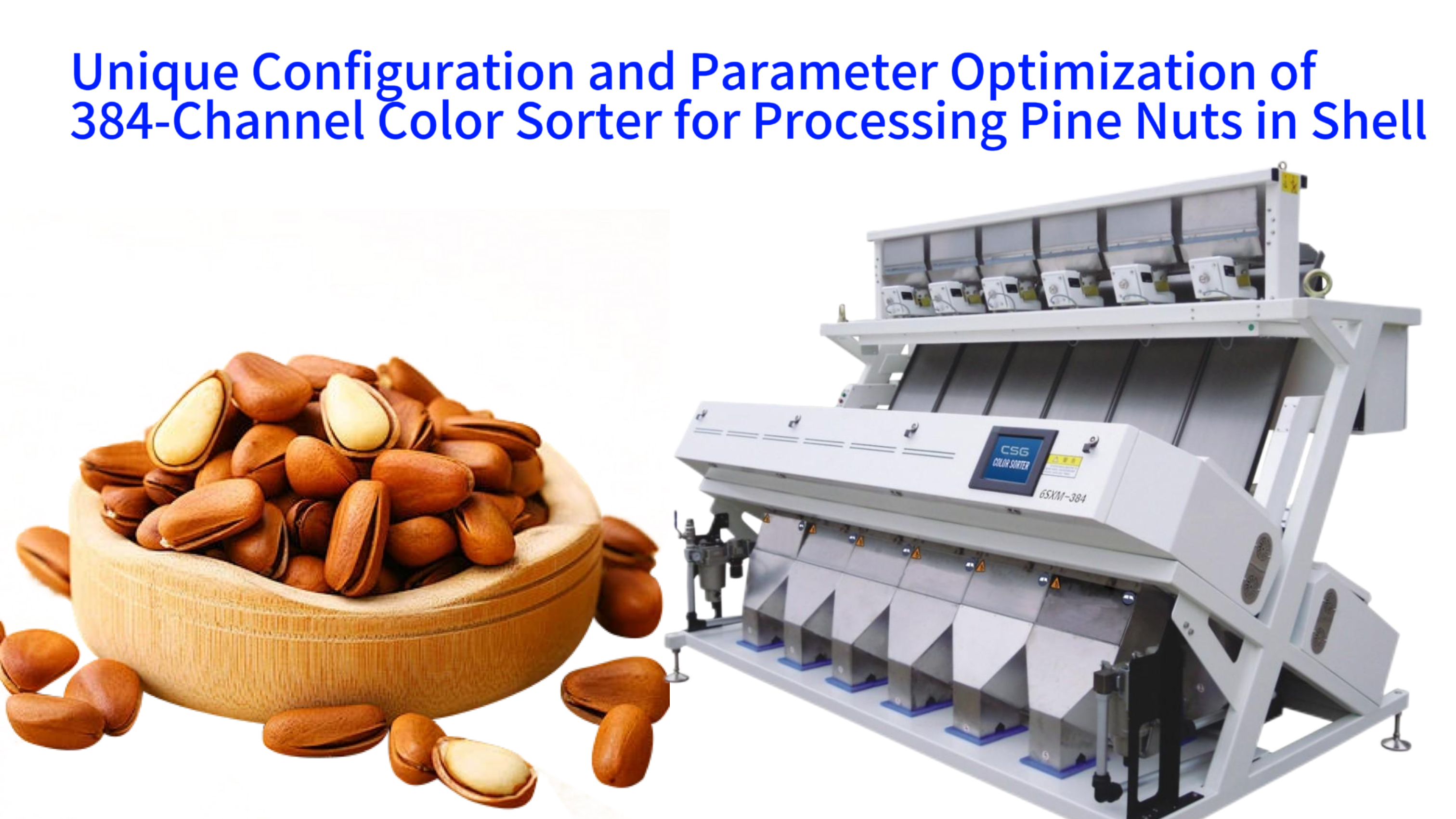
This comprehensive guide explores the specialized configuration and optimization strategies for 384-channel color sorters specifically designed for processing pine nuts in their shells. We will examine the unique challenges presented by pine nut processing, detail the technical adaptations required for optimal performance, and provide practical guidance for parameter optimization. The discussion covers advanced detection systems, specialized ejection mechanisms, and operational protocols that maximize sorting efficiency while preserving product quality. Additionally, we will analyze the economic benefits and return on investment achievable through proper system configuration and ongoing performance monitoring.
Understanding Pine Nut Processing Challenges
Common Defects Distribution
Pine Nut Physical Characteristics
| Characteristic | Value Range |
|---|---|
| Length | 8-12 mm |
| Specific Gravity | 0.5-0.7 |
| Moisture Content (Early Season) | 12-15% |
| Defect Detection Threshold | ≥0.3 mm |
| Market Purity Requirement | ≥99.5% |
Pine nuts present distinctive processing challenges that require specialized sorting solutions due to their unique physical characteristics and market quality standards. The irregular shape and varying sizes of in-shell pine nuts create difficulties in achieving consistent presentation to sorting sensors, while their natural resin content can cause sticking and clumping during processing. The subtle color variations between good product and defects demand extremely precise detection capabilities, as the difference between premium pine nuts and rejected material often involves minute color gradations. Additionally, the high economic value of pine nuts necessitates maximum product recovery rates while maintaining stringent quality standards demanded by international markets.
The processing environment for pine nuts introduces further complications that affect sorting system performance. The natural dust and fine particles generated during handling can interfere with optical systems, requiring robust protection and cleaning mechanisms. The relatively low bulk density of pine nuts impacts material flow dynamics and ejection efficiency, necessitating specialized handling systems. Seasonal variations in pine nut quality and moisture content further complicate the sorting process, demanding adaptable systems that can maintain performance despite changing raw material characteristics. Understanding these fundamental challenges provides the foundation for developing effective sorting solutions specifically tailored to pine nut processing requirements.
Physical Characteristics and Their Impact
The physical characteristics of in-shell pine nuts significantly influence sorting system design and configuration requirements. The typical length of pine nuts ranges from 8 to 12 millimeters with a tapered shape that creates orientation challenges during sorting. Their hard shell surface exhibits natural color variations from light tan to deep brown, often with subtle striations that can be mistaken for defects by less sophisticated sorting systems. The specific gravity of pine nuts falls between 0.5 and 0.7, making them particularly susceptible to air current variations during ejection processes. These physical properties demand careful consideration in feeding system design, detection parameter settings, and ejection mechanism configuration to achieve optimal sorting performance.
Common Defects and Contaminants
Pine nut processing involves removing various natural and process-induced defects that affect product quality and market value. Common defects include insect-damaged nuts characterized by tiny boreholes, mold contamination appearing as dark discoloration, and immature kernels exhibiting pale coloration and shriveled appearance. Foreign materials frequently encountered include pine cone fragments, twigs, stones, and occasionally metal fragments from harvesting equipment. The challenging aspect of pine nut sorting involves distinguishing these defects from acceptable product given the natural color variations and complex surface textures of the shells. Advanced sorting systems must reliably identify defects as small as 0.3 millimeters while minimizing false rejections of valuable product.
Market Quality Standards and Requirements
International markets for pine nuts enforce rigorous quality standards that directly influence sorting system configuration and performance requirements. Premium grade pine nuts typically require at least 99.5% purity levels with near-perfect color consistency and minimal shell damage. Export markets frequently impose strict limits on allowable defect levels, often permitting no more than 0.1% insect damage and 0.05% mold contamination. The sorting system must consistently achieve these standards while processing between 3 and 5 tons per hour depending on specific production requirements. These demanding quality parameters necessitate sophisticated sorting technology with precise calibration and continuous performance monitoring to ensure compliance with customer specifications and regulatory requirements.
Seasonal Variations and Processing Implications
Pine nut quality exhibits significant seasonal variations that impact sorting system performance and require adaptive configuration strategies. Early season nuts typically contain higher moisture content and softer shells, affecting their behavior in feeding and sorting systems. Late season nuts often display more pronounced color variations and higher incidence of defects as storage time increases. The harvesting method, whether manual collection or mechanical harvesting, further influences the initial quality of raw material entering the processing line. These seasonal factors necessitate regular adjustment of sorting parameters and occasional hardware modifications to maintain optimal performance throughout the processing season. Understanding these patterns enables processors to develop configuration protocols that accommodate natural variations in raw material characteristics.
Specialized System Configuration for Pine Nuts
Sorting System Component Breakdown
Processing Capacity & Performance
| Parameter | Specification |
|---|---|
| Channels | 384 |
| Camera Frame Rate | >4,000 fps |
| Processing Capacity | 3-5 tons/hour |
| Defect Removal Efficiency | >99% |
| Good Product Loss | <0.5% |
Configuring a 384-channel color sorter for pine nut processing requires careful consideration of multiple system components and their interaction with product characteristics. The feeding system must be precisely calibrated to handle the unique flow properties of pine nuts, ensuring consistent single-layer presentation to the detection system. This typically involves specialized vibratory feeders with custom-designed trays that accommodate the tapered shape and size distribution of pine nuts. The detection system requires specific lighting configurations that highlight the subtle color differences between acceptable product and various defects while minimizing shadows and reflections from the curved shell surfaces. These specialized configurations form the foundation for achieving high sorting efficiency and product quality.
The mechanical design of sorting systems for pine nuts incorporates several unique features to address the specific challenges of this application. The product trajectory through the sorting area must be optimized to ensure stable flight and clear separation between individual nuts, enabling accurate detection and precise ejection. Enclosures around optical components require enhanced sealing to protect against the fine dust generated during pine nut processing. Material contact surfaces utilize specialized coatings that resist the natural resins present in pine nuts, preventing buildup that could affect system performance. These design considerations collectively ensure reliable operation in the demanding environment of pine nut processing facilities while maintaining the precision required for high-value product sorting.
Advanced Detection System Configuration
The detection system configuration for pine nut sorting employs sophisticated optical technology specifically tuned to identify the subtle defects characteristic of this product. High-resolution cameras with precision optics capture detailed images of each pine nut at rates exceeding 4,000 frames per second, providing the data necessary for accurate defect identification. Specialized LED lighting systems illuminate the nuts from multiple angles to eliminate shadows and highlight surface features, with specific wavelength selections optimized for detecting mold, insect damage, and discoloration. The advanced detection algorithms analyze multiple characteristics including color, shape, and texture to distinguish between acceptable product and various defect types. This comprehensive approach ensures reliable identification of even the most subtle quality issues in pine nuts.
Specialized Feeding and Handling Systems
Feeding and handling systems for pine nut sorting require custom engineering to address the unique physical characteristics of this product. Vibratory feeders incorporate precisely tuned frequency and amplitude settings that gently separate clustered nuts while maintaining orientation control. Specially designed chute surfaces with micro-textured coatings prevent sticking and ensure consistent product acceleration into the sorting area. The smart material feeding systems include integrated cleaning mechanisms that remove dust and fine particles before product reaches the detection zone. These specialized handling components work together to present each pine nut optimally to the detection system, maximizing sorting accuracy while minimizing product damage that could reduce final quality and market value.
Ejection System Optimization
Ejection system optimization for pine nut sorting focuses on achieving precise defect removal while minimizing product loss and damage. The 384 individually controlled ejection nozzles are configured with specific timing parameters that account for the irregular shape and varying mass of pine nuts. Compressed air pressure is carefully calibrated to provide sufficient force for reliable ejection without causing nut damage or disturbing adjacent product. The high-speed ejection system incorporates advanced sequencing algorithms that coordinate multiple nozzles for larger defects while conserving air for single-nozzle operation on smaller imperfections. This precise control ensures maximum defect removal efficiency while preserving valuable product and minimizing operational costs associated with compressed air consumption.
Environmental Control and Protection Systems
Environmental control systems play a crucial role in maintaining sorting accuracy in pine nut processing applications where dust and temperature variations can affect performance. Enclosed sorting chambers with positive air pressure prevent dust infiltration around optical components, while integrated air curtain systems maintain clean viewing paths. Temperature stabilization systems ensure consistent performance of electronic components and optical systems despite variations in processing environment conditions. Dedicated dust extraction points at critical locations within the sorting system remove airborne particles before they can settle on optical surfaces. These environmental protection features collectively maintain optimal sorting conditions, ensuring consistent performance despite the challenging conditions typical of pine nut processing operations.
Parameter Optimization Strategies
Optimization Performance Metrics
Parameter optimization for pine nut sorting involves systematic adjustment of multiple variables to achieve the ideal balance between sorting accuracy, throughput, and product preservation. The process begins with comprehensive analysis of representative product samples to identify the specific defect types and quality parameters most critical to the application. Detection sensitivity settings are then calibrated to reliably identify these target defects while minimizing false rejections of acceptable product. This initial optimization establishes the foundation for further refinement based on operational experience and ongoing quality monitoring. The iterative nature of this optimization process ensures continuous improvement in sorting performance as operators gain experience with specific product characteristics and processing conditions.
Advanced optimization strategies leverage the sophisticated capabilities of modern sorting systems to adapt to variations in raw material quality and processing requirements. Machine learning algorithms analyze sorting results to identify patterns and subtle correlations that might escape manual observation. These systems can automatically adjust parameters in response to changing product characteristics, maintaining consistent performance despite natural variations in raw material quality. The extensive data collection and analysis capabilities of modern sorters provide valuable insights for further optimization, identifying opportunities to improve specific aspects of sorting performance. This data-driven approach to optimization represents a significant advancement over traditional trial-and-error methods, delivering superior results with reduced operator intervention.
Detection Sensitivity Calibration
Detection sensitivity calibration for pine nut sorting requires precise adjustment of multiple parameters to achieve optimal defect identification while minimizing false rejections. Color threshold settings are established through statistical analysis of sample populations, defining the acceptable range of color variations for premium product. Shape recognition parameters help distinguish between natural shell variations and actual defects like insect damage or cracking. Texture analysis settings identify surface imperfections that might indicate mold or other quality issues. The calibration process typically involves processing known samples with precisely identified defects to verify detection effectiveness, followed by adjustment of sensitivity parameters to achieve the desired balance between defect removal and product preservation. This meticulous calibration ensures consistent sorting performance aligned with specific quality requirements.
Throughput and Efficiency Optimization
Throughput optimization for pine nut sorting focuses on maximizing processing capacity while maintaining sorting accuracy and product quality. Feed rate adjustments balance the competing demands of processing efficiency and sorting precision, with optimal settings typically achieving 3-5 tons per hour depending on initial quality and specific requirements. Vibration parameters are fine-tuned to ensure even distribution across the full sorting width while maintaining proper product spacing for accurate detection and ejection. System timing coordinates the interaction between feeding, detection, and ejection components to maximize throughput without compromising performance. These optimization efforts typically achieve sorting efficiencies exceeding 99% while maintaining the high purity standards required for premium pine nut products in competitive international markets.
Product Recovery Enhancement
Product recovery enhancement strategies focus on minimizing the loss of acceptable pine nuts during the sorting process while maintaining effective defect removal. Ejection timing precision ensures that only identified defects are removed, with sophisticated algorithms compensating for product trajectory variations. Multi-stage verification processes recheck borderline decisions to prevent unnecessary rejection of valuable product. The optimization of air nozzle sequencing and pressure settings provides sufficient force for reliable ejection while minimizing disturbance to adjacent good product. These recovery enhancement techniques typically reduce good product loss to less than 0.5% while maintaining defect removal efficiency above 99%, significantly impacting operational economics given the high value of pine nuts in international markets.
Operational Parameter Fine-Tuning
Operational parameter fine-tuning addresses the day-to-day variations in pine nut characteristics and processing conditions that affect sorting performance. Humidity compensation algorithms adjust detection parameters to account for moisture-related changes in product appearance. Seasonal adaptation protocols modify sorting criteria to accommodate natural variations in pine nut color and texture throughout the processing season. Continuous monitoring systems track performance metrics and alert operators to deviations that might indicate need for parameter adjustment. This ongoing fine-tuning process maintains optimal sorting performance despite the dynamic nature of agricultural processing, ensuring consistent quality output regardless of variations in raw material characteristics or environmental conditions.
Performance Monitoring and Quality Control
Real-Time Performance Metrics
Maintenance & Calibration Schedule
| Frequency | Tasks |
|---|---|
| Daily | Optical surface cleaning, ejection nozzle check |
| Weekly | Calibration verification, feeder belt inspection |
| Monthly | System performance validation, air system maintenance |
| Quarterly | Complete system calibration, component inspection |
Performance monitoring for pine nut sorting systems involves comprehensive tracking of multiple metrics to ensure consistent operation and product quality. Real-time monitoring systems track key performance indicators including throughput rates, ejection frequencies, and sorting efficiency calculations. These systems provide immediate feedback on sorting performance, enabling rapid response to any deviations from established quality standards. Statistical process control methodologies analyze performance data to identify trends and patterns that might indicate developing issues before they affect product quality. This proactive approach to performance monitoring ensures consistent sorting results and provides the data necessary for continuous improvement of sorting operations.
Quality control protocols for pine nut sorting establish rigorous standards for product quality and systematic procedures for verifying compliance with these standards. Regular sampling and manual inspection provide independent verification of automated sorting performance, identifying any defects that might have passed through the system. These quality control checks also monitor for good product unnecessarily rejected by the sorter, providing data for further optimization of sorting parameters. Documentation systems maintain comprehensive records of quality metrics, enabling traceability and facilitating analysis of performance trends over time. This systematic approach to quality control ensures that final product consistently meets customer specifications and maintains the reputation for quality essential in competitive international markets.
Real-Time Performance Metrics Tracking
Real-time performance metrics tracking provides immediate visibility into sorting system operation and effectiveness. Key metrics monitored include processing throughput measured in kilograms per hour, ejection rates indicating the percentage of product being removed, and sorting efficiency calculations based on manual verification of accepted and rejected fractions. Modern sorting systems typically incorporate AI sorter technology that provides detailed analytics on defect type distribution and sorting accuracy for specific defect categories. These real-time metrics enable operators to maintain optimal system performance and quickly identify any issues that might affect product quality. The continuous monitoring of performance indicators forms the foundation for data-driven decision making in sorting operation management.
Quality Verification Procedures
Quality verification procedures establish systematic methods for validating sorting performance and ensuring consistent product quality. Regular sampling protocols collect representative samples from both accepted and rejected product streams for detailed manual inspection. Statistical analysis of these samples provides quantitative measures of sorting effectiveness including defect removal efficiency and good product retention rates. The verification process typically involves examination of multiple quality parameters including color consistency, physical damage, and the presence of specific defect types. These rigorous verification procedures provide independent confirmation of automated sorting performance and generate the data necessary for ongoing optimization of sorting parameters to meet evolving quality requirements.
Maintenance and Calibration Scheduling
Systematic maintenance and calibration scheduling ensures consistent sorting performance by addressing the gradual changes that occur during normal operation. Preventive maintenance protocols establish regular inspection and service intervals for critical components including optical systems, ejection mechanisms, and material handling components. Calibration schedules ensure that detection systems maintain accuracy through regular verification using standardized test materials. The maintenance program typically includes daily, weekly, and monthly tasks designed to address different aspects of system performance and reliability. This structured approach to maintenance and calibration minimizes unplanned downtime and maintains consistent sorting performance throughout the processing season, protecting the significant investment in sorting technology.
Data Analysis and Continuous Improvement
Data analysis and continuous improvement processes leverage the extensive operational data generated by modern sorting systems to identify opportunities for performance enhancement. Advanced analytics identify correlations between operational parameters and sorting results, revealing optimization opportunities that might not be apparent through casual observation. Statistical process control techniques monitor performance trends and alert operators to subtle changes that might indicate developing issues. The continuous improvement cycle incorporates these insights into systematic parameter adjustments and operational modifications that enhance sorting effectiveness over time. This data-driven approach to process improvement typically achieves annual performance enhancements of 5-10% through incremental optimization of sorting parameters and procedures.
Economic Analysis and Operational Efficiency
Economic Benefits Analysis
Operational Efficiency Metrics
| Metric | Performance |
|---|---|
| Throughput Efficiency | 85-95% of theoretical capacity |
| Sorting Efficiency | >99% defect removal |
| Cost Reduction | 15-25% operational cost savings |
| Value Enhancement | 25-35% product value increase |
| ROI Payback Period | 18-24 months |
Economic analysis of pine nut sorting operations evaluates the financial impact of sorting technology implementation and optimization. The analysis considers both direct financial factors including equipment costs, operational expenses, and maintenance requirements, as well as indirect benefits such as quality premium achievement and brand reputation enhancement. Return on investment calculations typically demonstrate payback periods between 12 and 24 months for sorting systems in pine nut processing, driven primarily by increased product value through quality improvement and reduced labor costs. The economic assessment provides the business case for investment in sorting technology and guides decisions regarding system configuration and operational parameters to maximize financial returns.
Operational efficiency analysis examines the interplay between various factors that influence the overall effectiveness of pine nut sorting operations. Throughput efficiency measures the relationship between theoretical maximum capacity and actual achieved processing rates, with well-optimized systems typically operating at 85-95% of theoretical capacity. Sorting efficiency quantifies the effectiveness of defect removal and product preservation, with premium systems achieving better than 99% efficiency in both dimensions. Resource utilization efficiency evaluates the consumption of utilities including electricity and compressed air relative to processing throughput. These efficiency metrics collectively determine the operational economics of sorting systems and guide optimization efforts to maximize overall processing effectiveness.
Return on Investment Calculation
Return on investment calculation for pine nut sorting systems involves comprehensive analysis of both costs and benefits over the equipment's operational lifespan. Capital investment includes not only the sorting equipment itself but also ancillary systems for feeding, dust control, and material handling. Operational costs encompass energy consumption, compressed air production, maintenance expenses, and labor requirements. Benefits calculation quantifies value creation through multiple mechanisms including quality premium achievement, yield improvement through reduced good product loss, and labor cost reduction through automation. The comprehensive ROI analysis typically demonstrates full investment recovery within 18-24 months of operation, with continuing financial benefits throughout the equipment's operational life exceeding 7-10 years.
Operational Cost Optimization
Operational cost optimization focuses on minimizing the ongoing expenses associated with pine nut sorting while maintaining performance standards. Energy consumption reduction strategies include optimizing compressor operation for air ejection systems and implementing power management features during periods of reduced throughput. Maintenance cost control involves systematic scheduling of preventive maintenance to avoid more expensive corrective repairs and strategic management of spare parts inventory to minimize carrying costs while ensuring availability. Labor efficiency improvements leverage automation features to reduce manual intervention requirements while maintaining system performance. These cost optimization efforts typically reduce operational expenses by 15-25% compared to suboptimal operation while maintaining or even enhancing sorting performance and final product quality.
Product Value Enhancement Analysis
Product value enhancement analysis quantifies the economic benefits achieved through quality improvement in sorted pine nuts. The analysis compares the market value of sorted product against unsorted material, typically identifying price premiums of 20-40% for premium quality sorted pine nuts. Value enhancement also occurs through improved process yield, with effective sorting reducing the loss of good product that occurs with less precise sorting methods. Additional value accrues through brand reputation enhancement and customer loyalty development associated with consistent product quality. The comprehensive value analysis demonstrates that quality-based sorting typically increases overall product value by 25-35% compared to unsorted product, creating significant economic benefit that justifies the investment in advanced sorting technology.
Capacity Utilization and Scalability Assessment
Capacity utilization and scalability assessment evaluates how effectively sorting systems meet current processing requirements while accommodating future growth opportunities. Utilization analysis examines the relationship between installed capacity and actual throughput, with optimal operation typically achieving 80-90% of maximum rated capacity. Scalability assessment considers the potential for increased throughput through operational improvements or system enhancements, identifying practical limits and upgrade pathways. The analysis also evaluates the flexibility of sorting systems to handle varying product types and quality requirements, an important consideration for operations that process multiple pine nut varieties or other complementary products. This comprehensive assessment ensures that sorting system implementation supports both current operational needs and future business development opportunities.
Future Developments in Pine Nut Sorting Technology
Technology Advancement Impact
Future developments in pine nut sorting technology focus on enhancing performance through advanced sensing capabilities, improved data analytics, and increased operational autonomy. Emerging sensor technologies including hyperspectral imaging and laser scanning provide additional data dimensions for defect identification, enabling more precise sorting decisions based on chemical composition and internal structure. Artificial intelligence and machine learning algorithms continuously improve sorting accuracy through adaptive learning from operational results. These technological advancements will further enhance sorting precision while reducing the need for manual intervention and parameter adjustment. The ongoing evolution of sorting technology promises continued improvement in processing efficiency and product quality for pine nut processors.
Sustainability considerations increasingly influence the development of pine nut sorting technology, with focus on resource efficiency and environmental impact reduction. Energy optimization features minimize power consumption through intelligent control of system components based on processing requirements. Material efficiency enhancements reduce good product loss while maintaining effective defect removal. Water consumption reduction addresses the significant environmental impact of traditional cleaning methods used in pine nut processing. These sustainability-focused developments align with broader industry trends toward environmentally responsible processing while delivering economic benefits through reduced resource consumption. The integration of sustainability principles into sorting technology development ensures that future systems will support both economic and environmental objectives in pine nut processing.
Advanced Sensing Technology Integration
Advanced sensing technology integration represents the most significant area of development in pine nut sorting systems, with new capabilities continuously emerging to enhance sorting precision. Hyperspectral imaging systems capture detailed chemical information about each nut, enabling identification of internal defects and contamination that escape conventional visual inspection. Terahertz wave scanning provides non-destructive internal structure analysis, detecting insect infestation and kernel development issues without damaging the product. These advanced sensing technologies integrate with conventional color sorting to provide comprehensive quality assessment based on multiple physical and chemical characteristics. The resulting multi-dimensional sorting decisions achieve unprecedented accuracy in defect identification while preserving more good product than previously possible with single-technology systems.
Artificial Intelligence and Machine Learning Applications
Artificial intelligence and machine learning applications transform pine nut sorting from rule-based systems to adaptive learning platforms that continuously improve performance. Deep learning algorithms analyze vast datasets of sorting decisions and outcomes to identify subtle patterns and correlations that inform future sorting decisions. These systems automatically adapt to seasonal variations in pine nut characteristics, maintaining consistent performance despite changes in raw material quality. The AI capabilities extend beyond defect identification to predictive maintenance, analyzing system operation data to identify developing issues before they cause downtime. These intelligent systems typically reduce manual adjustment requirements by 60-80% while improving sorting accuracy through continuous learning from operational results.
Connectivity and Industry 4.0 Integration
Connectivity and Industry 4.0 integration enable pine nut sorting systems to function as intelligent components within fully digitalized processing facilities. Real-time data exchange with other processing equipment optimizes overall production flow and coordinates quality parameters across multiple process stages. Cloud-based analytics platforms process operational data to identify optimization opportunities and performance trends across multiple facilities. Remote monitoring and management capabilities enable technical support and system optimization without physical presence, reducing service costs and minimizing downtime. These connectivity features transform sorting systems from standalone quality control devices into integrated components of smart processing facilities, delivering value beyond their immediate sorting function through enhanced operational intelligence and coordination.
Sustainability and Environmental Impact Reduction
Sustainability and environmental impact reduction initiatives focus on developing sorting technologies that minimize resource consumption while maintaining performance standards. Energy efficiency improvements target the highest consumption components including air compressors, lighting systems, and computing infrastructure. Water usage reduction addresses one of the most significant environmental impacts in pine nut processing through dry cleaning methods that eliminate or reduce water consumption. Material efficiency enhancements focus on maximizing product recovery while maintaining effective quality control, reducing the waste stream associated with sorting operations. These sustainability-focused developments typically reduce environmental impact by 20-30% compared to conventional sorting technology while delivering economic benefits through reduced operating costs, creating compelling business cases for technology adoption.